
Silver Jumps ₹20,000 in a Week, Trades at ₹2.95 Lakh per Kg; Check Latest Rates and Market Outlook
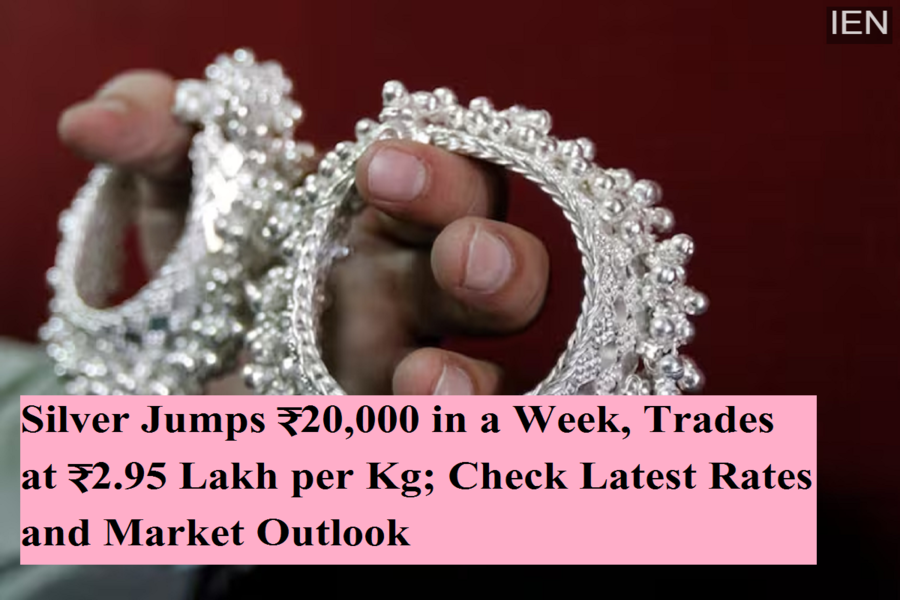
Silver prices have recorded a sharp weekly rally in domestic markets, rising by ₹20,000 per kilogram over the past seven days. As of the morning of March 1, 2026, silver is trading at ₹2,95,000 per kilogram across major Indian cities. The surge reflects strong investor demand amid global uncertainty and heightened geopolitical tensions.
In the international market, spot silver is currently priced at $89.72 per ounce, supporting the upward trend in domestic bullion rates.
Weekly Performance of Silver
On a weekly basis, silver has emerged as one of the strongest-performing commodities. Despite a brief correction on Friday, February 27—when prices in the Delhi bullion market slipped by ₹2,500 to ₹2,68,000 per kilogram—the broader weekly momentum remained firmly positive.
The ₹20,000 jump within a single week highlights the volatility in precious metals and the growing interest from investors seeking safe-haven assets. It is worth noting that in January, silver had crossed the ₹4 lakh per kilogram mark, underlining its recent price swings.
Latest Silver Rates in Major Cities
As of March 1, silver prices are uniform across several key cities at ₹2,95,000 per kilogram. The rates are as follows:
-
Delhi: ₹2,95,000 per kg
-
Mumbai: ₹2,95,000 per kg
-
Ahmedabad: ₹2,95,000 per kg
-
Chennai: ₹2,95,000 per kg
-
Kolkata: ₹2,95,000 per kg
-
Hyderabad: ₹2,95,000 per kg
-
Jaipur: ₹2,95,000 per kg
-
Bhopal: ₹2,95,000 per kg
-
Lucknow: ₹2,95,000 per kg
-
Chandigarh: ₹2,95,000 per kg
While local taxes and making charges may vary for retail buyers, these are the benchmark bullion rates currently prevailing in the market.
Gold Prices Also Witness Strong Weekly Gains
Silver’s rally comes alongside a notable rise in gold prices. Over the past week, 24-carat gold has become ₹9,430 more expensive, while 22-carat gold has gained ₹8,550.
In the international market, spot gold is trading at $5,172.17 per ounce, reflecting sustained global demand for precious metals.
The parallel rise in both gold and silver suggests a broader trend of capital shifting toward safe-haven investments.
Geopolitical Tensions Fuel Precious Metal Demand
The latest surge in precious metal prices follows escalating tensions in the Middle East. On February 28, 2026, Israel and the United States reportedly carried out airstrikes against Iran. In response, Iran launched missile and drone attacks targeting Israel and several other locations in the region.
The intensifying conflict has heightened global uncertainty, prompting investors to seek stability in assets traditionally considered safe during crises. Gold and silver typically benefit during such periods of geopolitical stress.
Market analysts believe that if tensions continue or escalate further, precious metals could see additional upward momentum.
Broader Impact on Commodities
Experts suggest that the impact may not be limited to gold and silver. The Middle East plays a crucial role in global energy and trade logistics. Any disruption, particularly around the Strait of Hormuz, could affect crude oil shipments and agricultural commodity supplies.
Such supply chain disruptions may lead to higher prices across multiple commodity segments. Rising crude oil prices, in turn, can influence inflation expectations, indirectly supporting precious metal prices.
What Investors Should Watch
Investors are advised to closely monitor international developments, currency movements, and central bank policies, all of which influence bullion prices. Domestic factors such as demand during the wedding and festive season may also play a role in short-term price movements.
With silver already up ₹20,000 in a week, the market remains highly dynamic. Whether the rally continues will largely depend on geopolitical developments and global economic cues in the coming days.
