
Should You Pay School Fees with a Credit Card? Understanding the Benefits and Risks
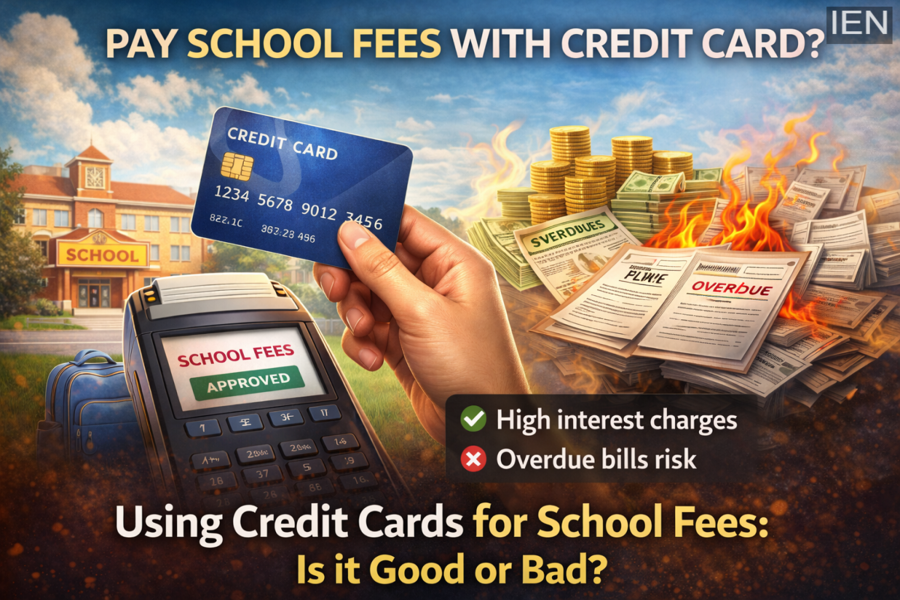
In today’s world, education has become one of the largest expenses for families. School fees, especially in big cities, have increased significantly over the past few years. Many parents are required to pay large amounts every term or semester, which can sometimes create financial pressure when it overlaps with other commitments such as rent, EMIs, insurance premiums, or travel expenses.
Because of this, some parents consider using credit cards to pay school fees as a temporary financial solution. While this option can offer convenience and short-term flexibility, it also comes with certain risks. Understanding both the advantages and potential downsides can help families make better financial decisions.
Why Some Parents Use Credit Cards for School Fees
Many schools today accept credit card payments directly or through online payment platforms. This has made it easier for parents to settle large payments quickly without needing immediate cash in their bank accounts.
One of the main reasons people choose this method is the interest-free period offered by credit cards. Most credit cards provide a grace period of around 40 to 50 days, depending on the billing cycle. If the cardholder pays the full outstanding amount within this period, no interest is charged.
For example, if a parent expects their salary or another source of funds within a few weeks, paying the school fees with a credit card can provide temporary financial relief. In such situations, the credit card acts as a short-term payment bridge rather than a loan.
The Risk of High Interest Charges
The biggest drawback of using a credit card for school fees arises when the full bill is not paid on time. Credit cards generally carry some of the highest interest rates in consumer finance.
If the outstanding amount is carried forward into the next billing cycle, interest begins to accumulate quickly. Over time, the cost of borrowing can increase significantly. What initially started as a simple school fee payment could turn into an expensive debt.
For families already managing multiple financial obligations, this can create additional financial stress.
Convenience Fees Can Increase the Cost
Another factor that parents should consider is the convenience fee charged by some schools or payment platforms when fees are paid via credit card.
Although this fee may seem small at first, it increases the overall cost of the payment. If interest charges are also added due to delayed repayment, the total expense can rise even further.
Before making the payment, it is always advisable to carefully check the charges mentioned on the payment page.
The Attraction of Reward Points and Cashback
Credit cards often offer reward points, cashback, or other benefits for large transactions. Since school fees can run into thousands or even lakhs of rupees annually, many parents see this as an opportunity to earn rewards.
While these benefits can be appealing, financial experts caution that reward points should not be the primary reason for using a credit card for such payments. If the card bill is not cleared within the interest-free period, the interest cost can easily exceed the value of any rewards earned.
When Using a Credit Card Can Make Sense
Using a credit card for school fees can be practical in certain situations. For example, if parents are confident that they can pay the entire bill before the interest-free period ends, the credit card simply provides short-term flexibility.
In such cases, the payment method may also offer small benefits such as reward points or cashback without increasing the overall cost.
However, if there is any possibility that the payment will be delayed beyond the grace period, the decision may lead to unnecessary financial burden.
The Right Approach to Using Credit Cards for Fees
Financial planners generally recommend a simple rule: use a credit card for large payments only when you are sure you can repay the full amount within the interest-free period.
By following this approach, parents can enjoy the convenience of digital payments and short-term flexibility without falling into high-interest debt.
Ultimately, a credit card is a financial tool that works best when used responsibly. For school fees and other major expenses, careful planning and disciplined repayment remain the key to avoiding unnecessary financial stress.
