
Shopkeepers may avoid scan-based payments! With the introduction of UPI MDR, they might request payment via cheque or RTGS.
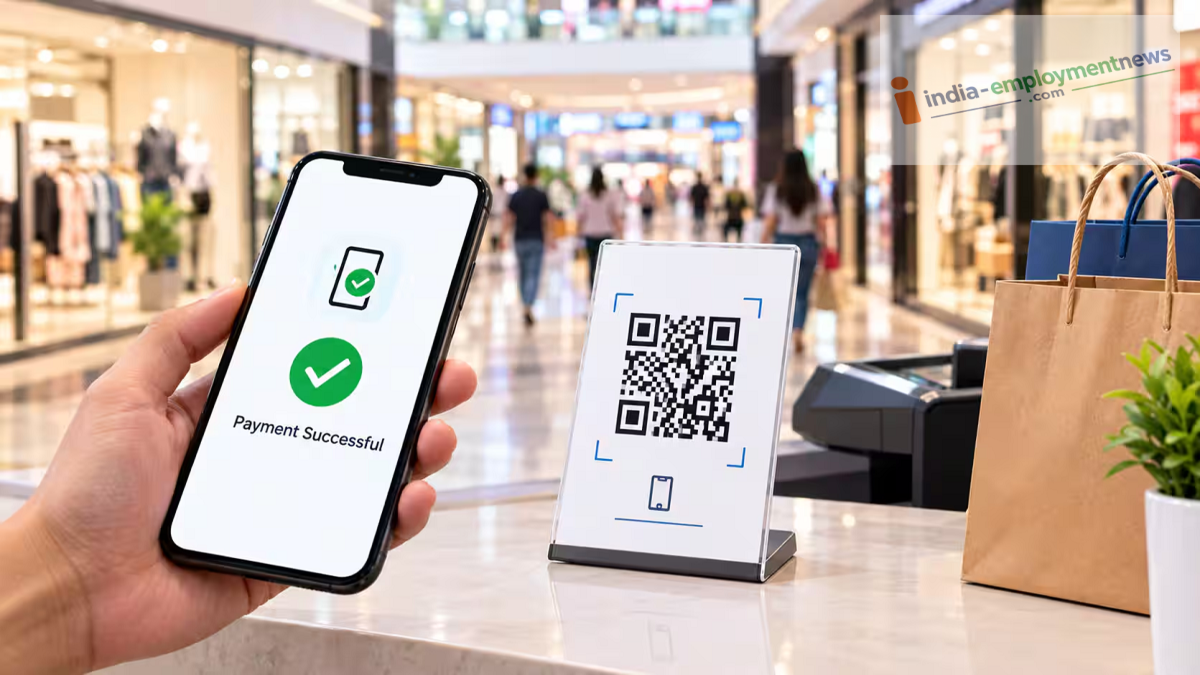
Following the implementation of the Merchant Discount Rate (MDR) on UPI, shopkeepers may become reluctant to accept digital scan-based payments. Instead, for high-value purchases, they might ask customers to pay via cheque or RTGS.
In the near future, shopkeepers might avoid accepting digital payments for expensive purchases. This is because, under the new system, a Merchant Discount Rate (MDR) of 0.4% will apply to transactions over ₹2,000. To avoid this, shopkeepers might refuse digital payments because it would directly cut into their profit margins.
When you make a purchase exceeding ₹2,000 at a large showroom using UPI or a card, the shopkeeper is required to pay a portion of the transaction amount—such as 0.4% (up to a maximum of ₹300) for UPI transactions, or 1% to 2% for credit card transactions—to the bank as a fee. In sectors like gold, silver, or automobiles, profit margins are often already quite slim; consequently, shopkeepers would naturally prefer not to bear this additional cost themselves.
In short, the landscape of payment methods is set to shift—a significant development, especially given that UPI has become the preferred mode of payment for millions of Indians. From purchasing home appliances and paying insurance premiums to booking hotels, customers are increasingly opting for QR codes and UPI apps over traditional methods like cards or bank transfers.
What is UPI MDR?
UPI MDR (Merchant Discount Rate) is a type of digital payment processing fee. When a customer makes a payment to a shop or merchant via UPI, the fee paid to the bank and the payment service provider to facilitate the transaction is known as the MDR. This fee is charged to the shopkeepers or merchants. It was initially scheduled to be implemented from October 15, 2026, but was deferred due to the festive season. The National Payments Corporation of India (NPCI) is expected to announce a new official implementation date soon. Under these rules, merchants cannot recover the UPI Merchant Discount Rate (MDR) charges from customers; in other words, these costs will not be added to your bill. Since merchants cannot pass this burden on to customers—and naturally wish to avoid bearing the loss themselves—they might opt for alternative payment methods.
Who is exempt from the UPI MDR?
Under the new UPI MDR regulations, general customers, small merchants with an annual turnover of up to ₹20 lakh, small transactions of up to ₹2,000, and peer-to-peer (P2P) transfers—such as sending money to friends or relatives—will be fully exempt. This means that small merchants whose monthly collection via UPI is less than ₹1 lakh (or who have an annual turnover of up to ₹20 lakh) will not be required to pay any MDR.
Local grocery stores, vegetable vendors, milk suppliers, and small street vendors will remain entirely outside the scope of these charges. Furthermore, merchants will not be liable to pay any MDR on UPI payments of ₹2,000 or less.
