
Rupee Gains Against US Dollar as RBI Steps In, Currency Rises to 96.18 Amid Softer Oil Prices
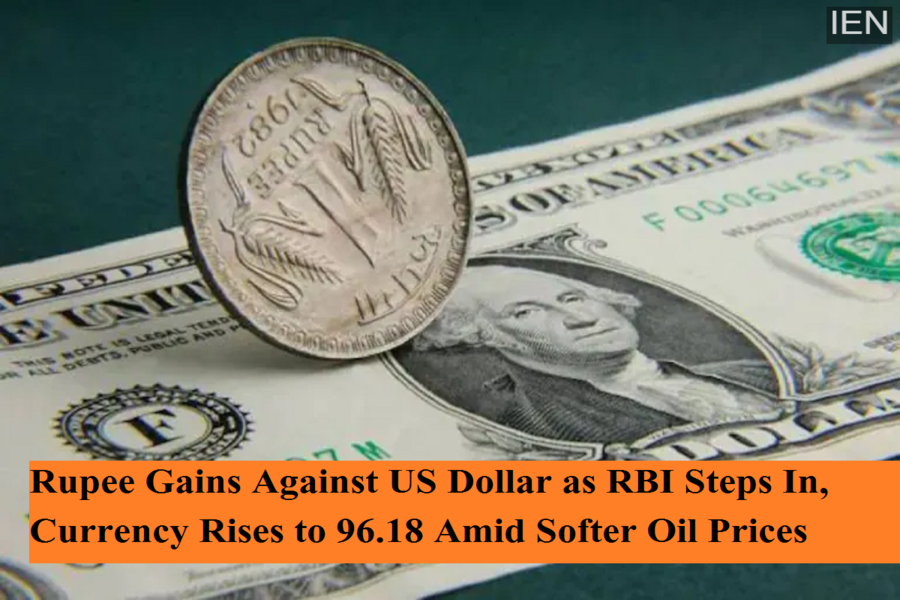
The Indian rupee strengthened against the US dollar during early trade on Friday after signs of easing geopolitical tensions and active intervention by the Reserve Bank of India helped improve market sentiment. The domestic currency appreciated by 18 paise to reach 96.18 against the US dollar in the interbank foreign exchange market.
The recovery in the rupee came after a slight cooling in global crude oil prices and fresh confidence in the RBI’s efforts to stabilize the currency market amid rising volatility.
Rupee Recovers After Recent Record Lows
The rupee opened at 96.30 per US dollar before strengthening further to 96.18 during early trading hours. In the previous session, the Indian currency had already recovered by 50 paise from its all-time closing low to settle at 96.36 against the dollar.
Forex market experts believe the latest rebound was driven by a combination of easing oil prices, diplomatic developments related to Iran, and expectations surrounding the RBI’s planned liquidity measures.
RBI’s Active Intervention Boosts Market Confidence
Currency traders said market sentiment improved significantly after reports that the RBI would conduct a $5 billion buy-sell swap auction on May 26. Analysts expect this move to inject additional rupee liquidity into the banking system and help the central bank manage excessive volatility in the foreign exchange market.
According to Amit Pabari, Managing Director of CR Forex Advisors, the RBI’s proactive stance has reassured traders that the central bank remains ready to intervene if global conditions worsen further.
Experts believe such measures could help support the rupee in the near term, while the absence of supportive triggers may gradually push the currency closer to the 97-per-dollar level.
Iran Diplomacy Signals Ease Pressure on Markets
Another major factor supporting the rupee was a temporary easing in geopolitical concerns linked to Iran and West Asia.
Forex traders pointed to recent remarks by Marco Rubio, who suggested that diplomatic discussions related to the Iran situation were moving in a constructive direction. Although Rubio cautioned against excessive optimism, his comments helped calm global markets for the time being.
As fears of immediate escalation eased, Brent crude oil prices cooled slightly near the $104-per-barrel level, reducing short-term pressure on emerging market currencies including the rupee.
Dollar Index Slips Slightly
Meanwhile, the dollar index — which measures the strength of the US dollar against a basket of six major currencies — slipped marginally by 0.01 percent to trade around 99.24.
Despite the slight decline in the dollar index, analysts say the greenback remains broadly strong due to elevated US bond yields and global risk concerns.
Crude Oil Prices Continue To Influence Rupee Movement
Global crude oil prices continue to remain one of the biggest factors affecting the Indian currency.
Brent crude futures were trading around $104.21 per barrel, up nearly 1.59 percent in global markets. Rising oil prices generally increase India’s import bill, putting pressure on the rupee because the country imports a significant portion of its energy requirements.
Analysts say continued uncertainty around West Asia and shipping routes near the Strait of Hormuz could keep oil prices volatile in the coming weeks.
Stock Markets Open Higher
Indian equity markets also witnessed positive momentum during early trade.
- The BSE Sensex rose by 332.39 points to reach 75,507.09.
- The NIFTY 50 gained 84.60 points to trade at 23,747.40.
However, foreign institutional investors (FIIs) continued to remain cautious. Exchange data showed that FIIs sold equities worth ₹1,891.21 crore on a net basis during Thursday’s session.
Government Monitoring Current Account Deficit
Amid concerns over the weakening rupee and rising trade deficit, Piyush Goyal said the government is considering several measures to control the growing current account deficit (CAD).
The government is reportedly evaluating strategies to manage external risks while balancing import costs and export growth.
What Analysts Expect Next
Currency experts believe the rupee’s direction in the near term will largely depend on:
- Crude oil price movement
- Geopolitical developments in West Asia
- RBI intervention measures
- Foreign investment flows
- Global dollar strength
Analysts also noted that the rupee would need to consistently close below the 94.80 level to signal a broader trend reversal and sustained strengthening against the dollar.
