
Rules Changing from April 1, 2026: Tax, Banking, LPG & Rail Updates That Will Impact Your Wallet
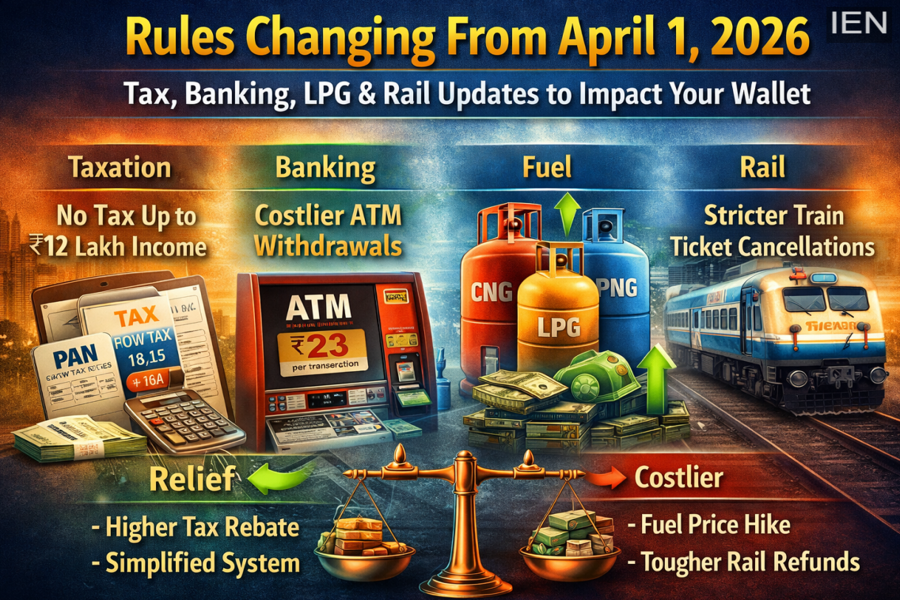
Starting April 1, 2026, several major rule changes across taxation, banking, fuel, and railways will come into effect, directly influencing household expenses across India. With the beginning of the new financial year, some updates will bring relief, while others may increase your daily costs.
Here’s a complete breakdown of what’s changing and how it may affect you.
Major Tax System Overhaul
One of the biggest changes is the implementation of the new tax framework. The updated system aims to simplify compliance and reduce confusion.
The Central Board of Direct Taxes is introducing a more streamlined structure where terms like “assessment year” and “previous year” will be replaced with a simpler “tax year” concept.
No Tax Up to ₹12 Lakh Income
Under the revised tax regime, individuals earning up to ₹12 lakh annually may not have to pay any income tax, thanks to an enhanced rebate under Section 87A.
This move is expected to benefit the middle class significantly, increasing disposable income and boosting savings potential.
Changes in Tax Documents
Tax documentation is also being revamped:
- Form 16 and Form 16A will be replaced
- New forms (likely Form 130 and Form 131) will be introduced
- Aim: Make tax filing simpler and more transparent
PAN Card Rules Get Stricter
Applying for a PAN card will now require stricter documentation:
- Aadhaar alone may not be sufficient
- Proof of date of birth (such as a Class 10 certificate or passport) will be mandatory
This step is aimed at improving verification and reducing fraud.
LPG, CNG, PNG Prices May Change
Fuel prices are expected to see revisions:
- LPG cylinder rates may be updated
- CNG and PNG prices could fluctuate
- Aviation fuel (ATF) changes may impact airfares
Global factors, including supply disruptions and geopolitical tensions, could influence pricing trends.
ATM Withdrawals to Become Costlier
Banking services are also set to become slightly more expensive:
- Free ATM transaction limit remains capped (usually 5 transactions)
- Beyond that, charges may increase to ₹23 per transaction
- Failed transactions could cost up to ₹25
This change may increase the cost of frequent cash withdrawals.
Lower Cash Withdrawal Limits
Some banks are revising daily withdrawal limits:
- Earlier limit: Around ₹1 lakh per day
- New limits: ₹50,000 to ₹75,000 (depending on card type)
This may impact users who rely heavily on cash transactions.
Train Ticket Cancellation Rules Tightened
Railway rules are also becoming stricter:
- No refund if ticket is canceled within 8 hours of departure
- 50% refund if canceled 8–24 hours before
- 25% deduction if canceled 24–72 hours before
- Standard charges apply for cancellations beyond 72 hours
These changes aim to reduce last-minute cancellations but may inconvenience travelers.
What Becomes Costlier vs Cheaper?
Likely Relief:
- Zero tax up to ₹12 lakh income
- Simplified tax filing system
Likely Cost Increase:
- ATM withdrawals
- Fuel (LPG, CNG, PNG, ATF)
- Travel cancellations
Final Takeaway
The new financial year brings a mix of benefits and added expenses. While tax relief may boost savings, higher banking charges and fuel costs could offset some gains.
To stay ahead, it’s important to:
- Plan your finances wisely
- Reduce unnecessary ATM usage
- Keep track of fuel price trends
- Understand new tax rules before filing
