
Rs 37,989 Crore Subsidy Provided for Rooftop Solar Panels; UP Leads the Way
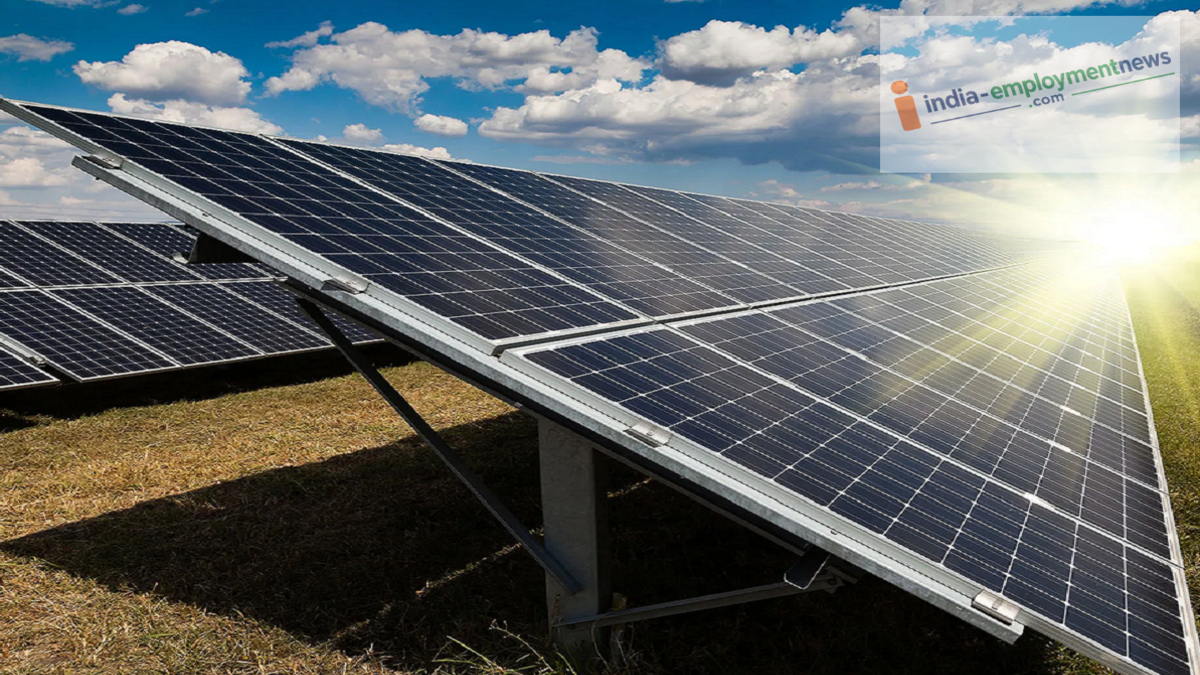
Under the 'Pradhan Mantri Surya Ghar Yojana', solar panels have been installed in 6.91 million (69.1 lakh) households so far. The government has provided a subsidy of Rs 37,989 crore to the beneficiaries. Furthermore, there is a target to cover 10 million (one crore) households by March 2027.
For families struggling with rising electricity bills, installing rooftop solar panels is proving to be highly beneficial. If you are also considering installing solar panels on your roof, the central government’s 'PM Surya Ghar Muft Bijli Yojana' (PM Solar Home Free Electricity Scheme) could be useful for you. Under this scheme, a subsidy of approximately Rs 37,989 crore has been disbursed to date, and as of November 26, 2024, solar systems have been installed in about 6.91 million households.
According to data from the Union Ministry of New and Renewable Energy (MNRE), a solar power generation capacity of 20.2 gigawatts (GW) has been added through the households participating in the scheme. The government aims to extend this scheme to 10 million households by March 2027, meaning solar panels are yet to be installed in approximately 3.09 million (30.9 lakh) more households to meet this target.
How much subsidy is available for installing solar panels?
The government has allocated a budget of Rs 75,021 crore for this scheme, which was launched in February 2024. Under this initiative, eligible domestic consumers can receive a central subsidy of up to Rs 78,000 for rooftop solar systems with a capacity of up to 3 kilowatts (kW). The primary objective of this initiative is to reduce electricity bills for households and promote the use of solar energy.
Highest Number of Installations in UP
According to state-wise data, as of November 27, Uttar Pradesh has recorded approximately 989,000 (9.89 lakh) solar installations. It is followed by Gujarat with 956,000 (9.56 lakh) installations and Maharashtra with 943,000 (9.43 lakh) installations. A significant portion of the total installations has been recorded in these three states.
Meanwhile, the installation rate—measured against the number of applications received for solar panel installations—stood at 77.6% in Kerala, 75.5% in Madhya Pradesh, and 82.6% in Tamil Nadu. In contrast, this rate was 17.6% in Bihar and 15.2% in West Bengal.
Simplifying the process with a QR tool
To streamline the process of installing solar systems, the government has introduced a QR code-based tool. Through this, individuals can estimate the appropriate capacity of a solar system for their rooftops, the associated costs, potential electricity savings, and the time required to recover their investment.
According to government estimates, installing solar panels on 10 million (one crore) households could generate approximately 1 trillion (1,000 billion) units of renewable electricity over 25 years. This is also expected to result in a reduction of nearly 720 million (72 crore) tonnes of carbon emissions.
