
Retail Inflation Rises to 3.4% in March 2026: Food Prices Push Up Costs—What Lies Ahead?
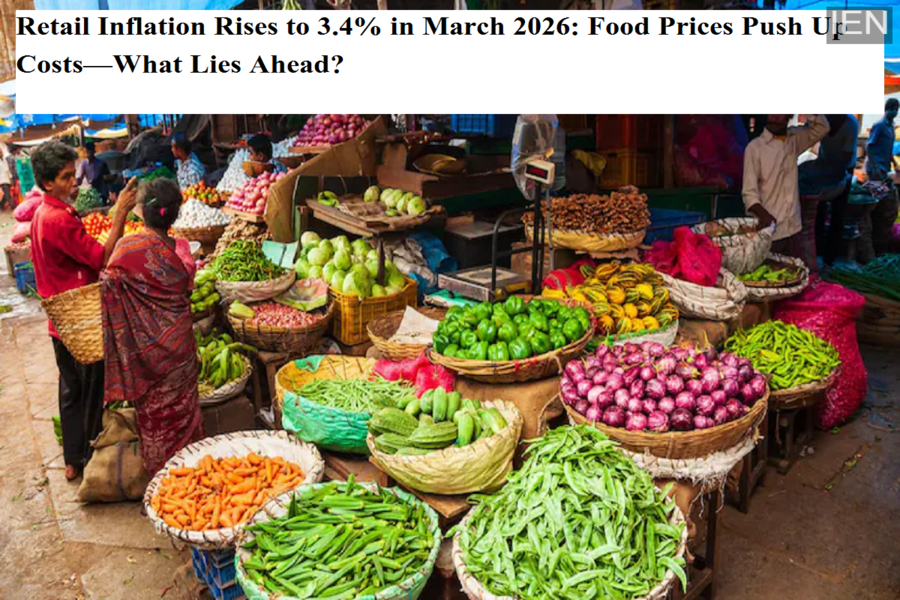
India’s retail inflation edged higher in March 2026, reaching 3.4%, up from 3.2% in February. The rise was largely driven by increasing food prices, according to the latest data released on April 13.
While inflation remains below the key 4% mark—offering some relief—the upward trend signals growing pressure on household budgets, especially in rural areas.
Food Prices Drive Inflation Higher
The biggest contributor to the rise in inflation was the food category.
Key Data:
- Food inflation rose to 3.87% in March (vs 3.47% in February)
- Rural food inflation: 3.96%
- Urban food inflation: 3.71%
This indicates that everyday essentials like vegetables and groceries are becoming costlier, particularly in villages.
Rural Areas Face Higher Inflation
Inflation pressure was more pronounced in rural India compared to urban regions.
CPI Breakdown:
- Rural inflation: 3.63%
- Urban inflation: 3.11%
This gap highlights the stronger impact of rising food prices on rural households.
CPI Index Movement
The Combined Consumer Price Index (CPI) showed a steady increase:
- March 2026: 104.84
- February 2026: 104.57
- March 2025: 101.39
This gradual rise reflects ongoing price pressures across sectors.
Which Sectors Saw the Biggest Price Rise?
Several categories recorded noticeable increases:
- Personal care & services: +18.65%
- Gold & jewellery: +45.92%
- Silver jewellery: +148.61%
- Food & beverages: +3.71%
- Clothing & footwear: +2.75%
- Housing, fuel & utilities: +1.97%
Interestingly, transport inflation remained flat at 0%, indicating stable fuel or travel costs during the period.
Some Items Became Cheaper
Despite the overall rise, a few food items saw price corrections:
- Onion: -27.76%
- Potato: -18.98%
- Garlic: -10.18%
- Arhar dal: -9.56%
- Pulses (pea/chana): -7.87%
These declines helped partially offset the inflation surge.
Items That Became Significantly Costlier
Some commodities witnessed sharp price increases:
- Tomato: +35.99%
- Cauliflower: +34.11%
- Copra (coconut): +45.52%
These spikes directly impact household food expenses.
States with Highest Inflation
Certain states recorded higher inflation than the national average:
- Telangana: 5.83%
- Andhra Pradesh: 4.05%
- Karnataka: 3.96%
- Tamil Nadu: 3.77%
- Rajasthan: 3.64%
This shows regional variation in price trends.
What to Expect in Coming Months
Looking ahead, inflation may face upward pressure due to global and domestic factors:
- Rising crude oil prices
- Increased shipping and insurance costs
- Ongoing geopolitical tensions in West Asia
These factors could push prices higher across sectors beyond food.
Final Takeaway
While inflation at 3.4% is still within a manageable range, the rise in food prices is a concern—especially for rural households. With global uncertainties and supply pressures building up, inflation trends will remain a key factor to watch in the coming months.
For consumers, careful budgeting and tracking price trends will be essential to manage rising costs effectively.
