
Report Reveals Completing Education Up to Class 12 Remains a Challenge for Girls
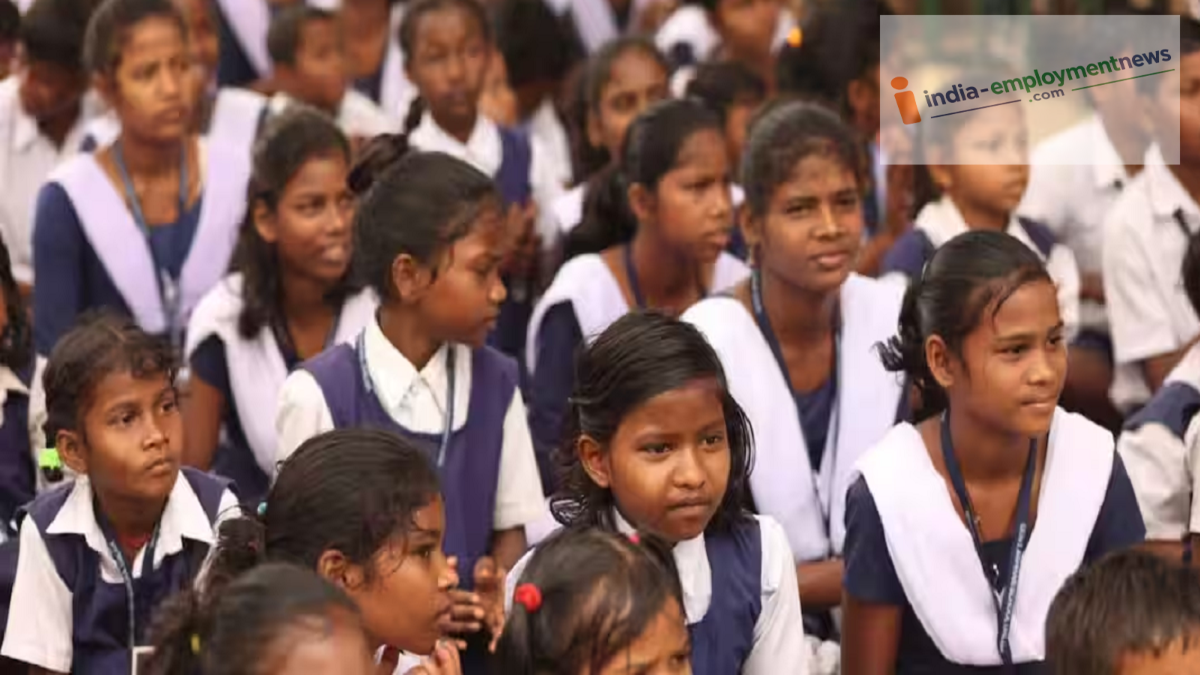
According to a UNESCO report, for every 100 boys who complete higher secondary education in rural India, only 59 girls do the same. This indicates that completing education up to Class 12 remains a challenge for them.
India has made significant progress over the last 25 years in narrowing the gap between boys and girls in school education. Despite this, completing education up to Class 12 remains a major challenge for girls in rural areas. The new UNESCO report highlights that while 100 boys complete higher secondary education (Classes 11 and 12) in rural India, only 59 girls do so. In contrast, boys and girls in urban areas have reached parity in completing this level of education.
The report, titled “Gender Equality in Access to Education,” examines gender disparity in the education sector across 31 low- and middle-income countries. It notes that while India has largely addressed the initial gaps regarding girls’ education over time, the benefits of this national-level progress have not reached all sections of society equally. Girls in rural areas and from economically disadvantaged families, in particular, face greater difficulties in continuing their education.
Girls’ Education in Villages Remains a Challenge
The UNESCO report records India’s overall adjusted Gender Parity Index for completing higher secondary education at 0.89. This figure stands at 0.59 for rural areas and 1.0 for urban areas. To understand this index simply: a value of 1 signifies parity between boys and girls. India’s overall figure of 0.89 implies that for every 100 boys who complete higher secondary education, approximately 89 girls reach the same level. In rural areas, this figure drops to 59, whereas parity between the two has been observed in urban areas. The report indicates that looking solely at the national average fails to capture the true picture of the educational status of all girls. Despite the better situation in urban areas, rural girls face numerous obstacles in completing their education up to the 12th grade.
Significant Progress in Indian School Education Over 25 Years
The report also highlights the changes in India’s school education sector over the past two and a half decades. In the year 2000, India was among the 47 countries where the issue of girls dropping out of school was more severe compared to boys. According to the report, India has reduced this initial gap by approximately 65% over the last 25 years. This progress demonstrates sustained efforts to improve girls’ access to education. However, the persisting disparity between rural and urban areas indicates that work is still required on multiple fronts.
The Challenge of Girls Dropping Out of School
Retaining older girls in the education system remains a major challenge in rural areas. According to the ASER 2024 report, 8.1% of girls aged 15 to 16 in rural India were not enrolled in school; this figure stood at 7.9% in 2022. These figures reflect school enrollment status rather than the number of girls completing 12th grade. Nevertheless, they signal that difficulties persist regarding the continuation of girls’ education once they reach adolescence. A UNESCO report noted that among countries where girls face educational disadvantages, the average Gender Parity Index for the poorest families was 0.6, whereas it stood at 0.92 for the wealthiest 20% of families. This reveals that economic status can also widen the gap between the education of girls and boys.
51% of 5-Year-Olds Directly Enrolling in Class 1
Another significant issue regarding early childhood schooling in India has emerged from UNESCO’s Global Education Monitoring Report 2026. According to the report, 51% of 5-year-old children in India are enrolling directly in Class 1 instead of attending pre-school—such as Anganwadis, nursery, or kindergarten. The report indicates that children are entering formal schooling before the recommended age; India’s National Education Policy (NEP) 2020 stipulates a minimum age of 6 years for admission to Class 1. The report notes that in some states, pre-primary enrollment for 5-year-olds exceeds 90%. Meanwhile, the scholarship model in rural areas of Karnataka has been commended. Gujarat, Maharashtra, Kerala, and Nagaland are also highlighted for their better performance in this regard.
