
RBI Simplifies Auto Payments: No OTP Needed for Recurring Transactions Up to ₹15,000
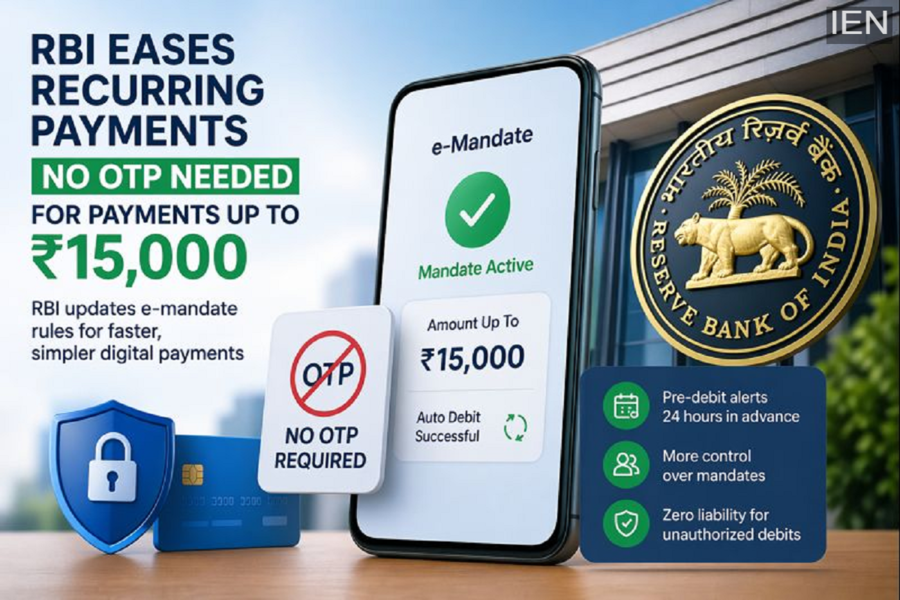
In a major push to streamline digital payments, the Reserve Bank of India has introduced a revamped e-mandate framework that eliminates the need for repeated OTP verification for smaller recurring transactions. The new rules, which came into effect immediately, are expected to make everyday digital payments faster, smoother, and more user-friendly.
Seamless Payments Without Repeated Authentication
Under the updated guidelines, users will no longer need to enter a One-Time Password (OTP) for recurring payments of up to ₹15,000, provided they have already approved the mandate once using Additional Factor Authentication (AFA). This means that once a user registers an e-mandate securely, subsequent payments—such as subscriptions, utility bills, or EMIs—will be processed automatically without repeated verification.
However, the central bank has maintained that transactions exceeding ₹15,000 will still require authentication each time, ensuring that higher-value payments remain protected under stricter security protocols.
Unified Rules Across Payment Systems
The RBI’s latest framework replaces earlier fragmented guidelines and introduces a standardized set of rules for recurring transactions across all digital payment platforms. This move is aimed at bringing consistency and clarity to the system while enhancing user convenience.
The updated system is particularly beneficial for services that rely on auto-debit features, such as OTT subscriptions, electricity bills, insurance premiums, and loan repayments. By removing frequent OTP requirements, the process becomes quicker without compromising on safety for high-value transactions.
Expansion to Cross-Border Transactions
Another significant highlight of the new framework is its expanded scope. The RBI has extended e-mandate provisions to include cross-border recurring payments, broadening the usability of this system beyond domestic transactions. This step reflects India’s growing integration with global digital payment ecosystems.
Additionally, banks have been instructed not to charge customers any extra fees for availing e-mandate services for recurring payments, ensuring that users benefit from this सुविधा without additional costs.
Higher Limits for Select Financial Categories
While the general cap for OTP-free transactions is set at ₹15,000, the RBI has introduced special exemptions for certain financial categories. Payments such as insurance premiums, mutual fund investments, and credit card bill payments can now be processed without AFA for amounts up to ₹1 lakh, as long as they are registered under e-mandates.
This relaxation acknowledges the higher value and essential nature of these transactions, offering users more flexibility while maintaining a structured framework.
Stronger Transparency and User Alerts
To enhance transparency and user control, the RBI has made it mandatory for banks and payment service providers to send pre-debit notifications at least 24 hours before processing any recurring payment. These alerts will include key details such as the merchant’s name, transaction amount, and debit date.
This advance notice allows customers to review the transaction and cancel or opt out of the mandate if they detect any discrepancy or unauthorized activity before the payment is processed.
Greater Control Over Mandates
The new guidelines empower users with full control over their recurring payment instructions. Customers can now modify, pause, or cancel their e-mandates at any time. Any such changes will require authentication through AFA, ensuring that control remains secure.
Users can also set upper transaction limits for mandates, preventing unexpected deductions beyond a predefined amount. This feature adds an extra layer of financial discipline and security.
Enhanced Security Measures
The RBI has further strengthened consumer protection by extending its zero-liability policy to e-mandate transactions. This ensures that customers will not be held responsible for unauthorized electronic debits, provided they report the issue promptly.
Moreover, users will have the flexibility to choose how they receive transaction alerts—via SMS, email, or other available channels—giving them better visibility and control over their financial activities.
What is Additional Factor Authentication (AFA)?
Additional Factor Authentication (AFA), also known as Multi-Factor Authentication (MFA), is a security mechanism that requires users to provide more than just a password to verify their identity. This could include OTPs, biometric verification, or device-based authentication, making digital transactions significantly more secure.
With this comprehensive overhaul, the RBI aims to strike a balance between convenience and security. The updated e-mandate rules are expected to enhance user experience while maintaining robust safeguards in India’s rapidly evolving digital payments landscape.
