
RBI Eases Auto Payments: No OTP Needed for Transactions Up to ₹15,000—Here’s What It Means for Users
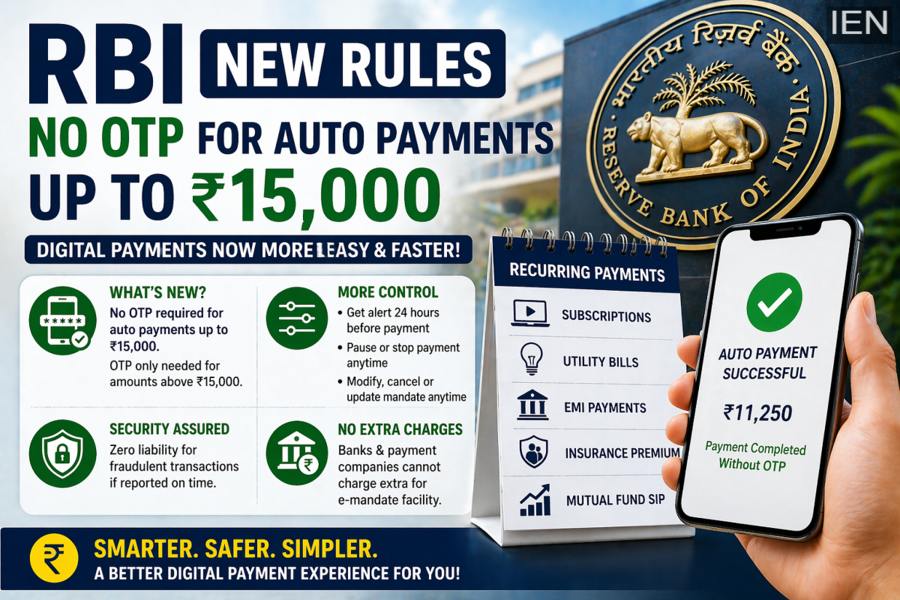
In a major move to simplify digital transactions, the Reserve Bank of India (RBI) has revised its rules for recurring payments under the e-mandate framework. The new guidelines aim to make automatic payments smoother and more user-friendly, especially for everyday expenses like subscriptions, utility bills, and EMIs.
With this update, users will no longer need to enter a One-Time Password (OTP) for every recurring payment—provided the transaction amount is within the specified limit. Let’s break down what has changed and how it impacts consumers.
What Is the New Rule?
Under the revised e-mandate guidelines, users will only need to authenticate their payment once while setting up the mandate. After that, recurring payments of up to ₹15,000 will be processed automatically without requiring OTP verification each time.
However, for transactions exceeding ₹15,000, OTP authentication will still be mandatory to ensure security.
This change is expected to significantly reduce friction in digital payments and improve the overall user experience.
Where Will This Rule Apply?
The updated rule applies to all types of recurring or auto-debit payments, including:
- OTT and app subscriptions
- Utility bills such as electricity and water
- Loan EMIs
- Membership renewals
By removing the need for repeated OTP entries, the RBI aims to eliminate interruptions in scheduled payments and enhance convenience for users.
Higher Limit for Select Payments
In a notable relaxation, the RBI has allowed a higher threshold for certain essential payments. For categories like:
- Insurance premium payments
- Mutual fund SIPs
- Credit card bill payments
Users can make recurring payments of up to ₹1 lakh without OTP, as long as the e-mandate has been properly set up and authorized.
This move is particularly beneficial for individuals managing large financial commitments through automated systems.
More Control for Users
Alongside convenience, the RBI has also strengthened user control and transparency under the new framework.
Key features include:
- Advance Notification: Users will receive an alert at least 24 hours before the payment is deducted
- Option to Cancel: Payments can be paused or stopped before processing
- Mandate Flexibility: Users can modify, suspend, or cancel the e-mandate at any time
These measures ensure that users remain fully in control of their finances while benefiting from automation.
Focus on Security
Despite easing OTP requirements, the RBI has not compromised on safety. Strong safeguards have been built into the system to protect users from unauthorized transactions.
If a fraudulent or incorrect transaction occurs, customers can avail zero liability protection, provided the issue is reported promptly. This means the financial burden will not fall on the user in such cases.
No Extra Charges Allowed
The RBI has also made it clear that banks and payment service providers cannot charge any additional fees for offering e-mandate services. This ensures that users can enjoy the benefits of automated payments without incurring extra costs.
What This Means for You
The latest RBI update is a step forward in India’s digital payment ecosystem. By reducing dependency on OTP for small recurring payments, the system becomes faster and more efficient, especially for routine transactions.
At the same time, enhanced user controls and security measures ensure that convenience does not come at the cost of safety.
For consumers, this means fewer interruptions, quicker payments, and greater flexibility—making everyday financial management much easier.
Final Takeaway
The RBI’s revised e-mandate rules strike a balance between ease of use and strong security. If you frequently rely on auto-pay for bills, subscriptions, or investments, this update will save time and streamline your payment experience.
Just ensure your mandates are correctly set up—and enjoy seamless, hassle-free transactions going forward.
