
RBI Cracks Down on Sarvodaya Cooperative Bank, Raising Fresh Concerns Over Depositors’ Safety
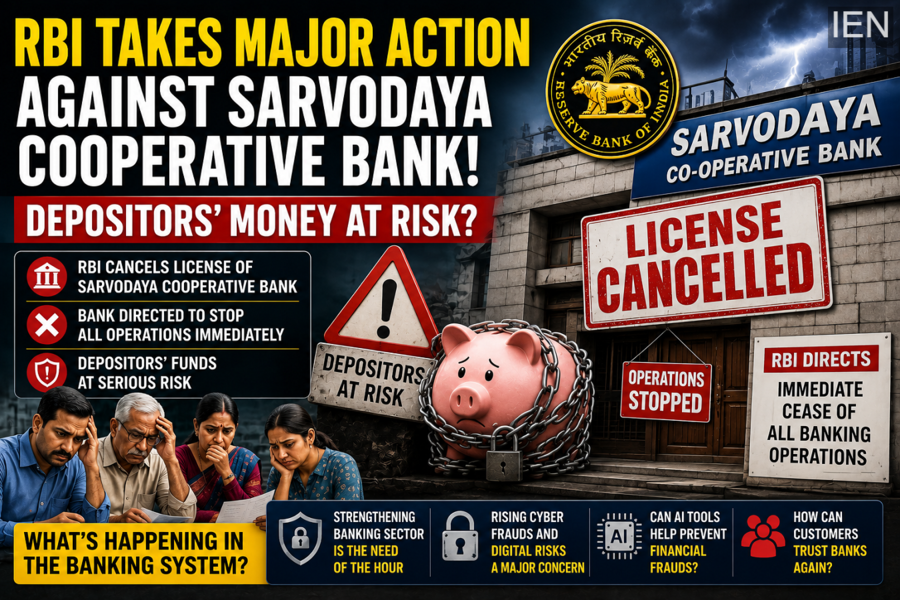
India’s banking sector is once again under intense scrutiny after the Reserve Bank of India (RBI) took strict action against Sarvodaya Cooperative Bank by cancelling its banking licence. The move has triggered fresh concerns among customers regarding the safety of their deposits, especially in cooperative banks that have faced increasing regulatory pressure in recent years.
The RBI’s latest action comes at a time when the banking industry is already dealing with multiple challenges, including cyber fraud risks, compliance failures, weak governance structures, and rising concerns over digital security. Financial regulators are now adopting a more aggressive approach to strengthen public confidence in the banking system and prevent operational failures that could affect depositors.
According to reports, the RBI directed Sarvodaya Cooperative Bank to immediately stop banking operations following the cancellation of its licence. The decision means the bank can no longer accept deposits, process transactions, or conduct regular banking activities. Such actions are usually taken when regulators believe a bank no longer has sufficient financial strength or operational capability to continue functioning safely.
The development has once again highlighted the growing concerns surrounding India’s cooperative banking sector. Cooperative banks play an important role in serving local communities, small businesses, and rural customers, but several institutions in this segment have faced financial stress, governance issues, and compliance problems over the years.
Banking experts believe the RBI is now trying to tighten oversight across the financial system to avoid situations that could threaten customer savings or destabilize trust in smaller financial institutions. The regulator has increasingly focused on improving risk management, cybersecurity preparedness, transparency, and operational discipline among banks.
The cancellation of Sarvodaya Cooperative Bank’s licence also comes amid a broader wave of regulatory action in the financial sector. In recent years, authorities have acted against multiple financial institutions over concerns related to compliance failures and operational irregularities. The action against Paytm Payments Bank earlier had already sparked widespread discussions about regulatory tightening in India’s digital banking and fintech ecosystem.
In another recent development, concerns were also raised around banking operations involving government-related transactions after regulatory attention reportedly intensified on certain banking practices. These incidents have collectively increased public discussion around how safe customer money remains in smaller or weaker banking institutions.
Cyber fraud and technology-related financial crimes are becoming a major concern for regulators globally, including in India. With rapid digital adoption in banking, fraudsters are increasingly using advanced tools, artificial intelligence-driven scams, phishing attacks, and fake digital interfaces to target both banks and customers. Regulators are therefore pushing banks to strengthen digital monitoring systems and improve fraud prevention mechanisms.
Financial analysts say the RBI’s strict stance sends a strong signal that regulatory violations or weak financial health will not be tolerated, regardless of the size of the institution. The central bank appears focused on preventing risks before they become large-scale financial crises.
For ordinary customers, however, such developments naturally raise questions about trust and financial safety. Many depositors depend on cooperative banks for savings accounts, fixed deposits, loans, and daily banking services. News of licence cancellations often creates panic among account holders who worry about access to their money.
Experts note that depositors in regulated banks are generally protected under the Deposit Insurance and Credit Guarantee Corporation (DICGC) framework, which currently insures bank deposits up to a certain limit per depositor. However, despite such protections, uncertainty and delays can still create stress for affected customers.
Banking professionals advise customers to remain cautious while selecting financial institutions for large deposits. Experts recommend checking a bank’s financial stability, regulatory track record, digital security standards, and governance reputation before making major investments or fixed deposits.
The latest RBI action may also accelerate broader reforms within the cooperative banking sector. Analysts believe regulators could introduce stricter compliance rules, stronger technology audits, and tighter financial monitoring to improve transparency and reduce future risks.
While the RBI’s actions may appear harsh in the short term, many experts argue that stronger regulatory intervention is necessary to maintain long-term stability in India’s financial system. By acting early against weak institutions, regulators aim to protect customer interests and reinforce trust in the broader banking ecosystem.
As India’s banking industry rapidly evolves through digital transformation and fintech expansion, the balance between innovation, regulation, and customer protection is likely to remain a major focus area for policymakers and financial institutions alike.
