
Ration Card Update 2026: Government's ASHA AI System Will Call Beneficiaries to Check Ration Distribution
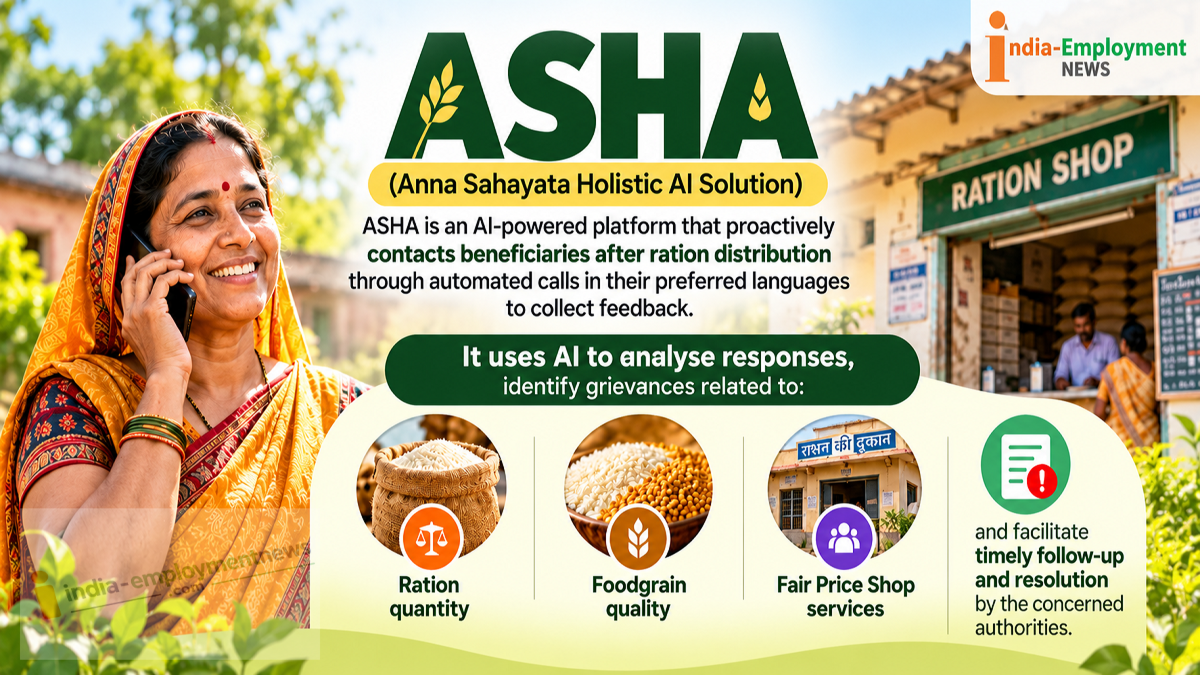
Ration Card Latest News 2026: The central government is using artificial intelligence to improve the ration distribution system and collect feedback directly from beneficiaries. The Department of Food and Public Distribution has highlighted an AI-powered solution called ASHA, which contacts beneficiaries through phone calls after they receive their ration.
ASHA stands for Anna Sahayata Holistic AI Solution. The system is designed to gather feedback about ration distribution, identify complaints that require attention and support follow-up action to resolve those issues.
The department shared information about the initiative through its official social media account on October 30, 2026.
The initiative could help authorities better understand problems experienced by beneficiaries under the public distribution system, particularly those related to ration delivery and service quality.
What Is ASHA AI in the Ration Distribution System?
ASHA, or Anna Sahayata Holistic AI Solution, is an artificial intelligence-based feedback system associated with ration distribution.
Its main purpose is to communicate with beneficiaries after ration has been distributed and collect information about their experience.
Traditionally, beneficiaries may need to approach a ration dealer, government office or designated grievance channel when they face problems.
ASHA introduces another way for authorities to receive feedback.
Instead of relying only on complaints initiated by beneficiaries, the system can contact them through phone calls and ask about their ration distribution experience.
The feedback can then help identify issues that may require attention from the relevant authorities.
However, the department's announcement does not specify the full geographic coverage, number of beneficiaries contacted or technical details of the system.
How Does the ASHA AI System Work?
According to the Department of Food and Public Distribution, ASHA connects with beneficiaries through phone calls after ration distribution.
The system collects their feedback and helps identify actionable grievances.
The general process described by the announcement involves the following stages:
-
A beneficiary receives ration through the applicable distribution system.
-
ASHA contacts the beneficiary through a phone call.
-
Feedback is collected about the ration distribution experience.
-
The AI-powered system helps identify complaints that may require action.
-
Relevant grievances can be taken forward for follow-up and resolution.
The department has not provided a detailed public call script or confirmed the exact questions beneficiaries will be asked.
Therefore, users should not assume that every call will follow an identical format.
What Problems Could ASHA Help Identify?
The purpose of ASHA is to identify actionable grievances arising from ration distribution.
Depending on the information collected and the system's operational scope, such feedback could help authorities understand problems involving ration delivery.
For example, beneficiaries may wish to report concerns about the quantity of ration received, difficulties during distribution or the quality of service.
These are examples of issues that can arise in a public distribution system, not a confirmed list of complaint categories supported by ASHA.
The department has not published a comprehensive grievance classification list in the supplied announcement.
The effectiveness of the initiative will depend on how accurately feedback is recorded and how efficiently responsible authorities act on the identified complaints.
ASHA AI Ration System 2026: Key Details
| Particulars |
Information |
|---|---|
| Initiative |
ASHA |
| Full form |
Anna Sahayata Holistic AI Solution |
| Department |
Department of Food and Public Distribution |
| Technology |
Artificial intelligence |
| Communication method |
Phone calls |
| Target group |
Ration distribution beneficiaries |
| Main purpose |
Collect feedback after ration distribution |
| Additional function |
Identify actionable grievances |
| Follow-up |
Supports complaint resolution efforts |
| Announcement |
October 30, 2026 |
Will Every Ration Card Holder Receive an ASHA Call?
The department has confirmed that ASHA connects with beneficiaries through phone calls after ration distribution.
However, it has not stated that every ration card holder across India will receive a call.
The announcement also does not specify whether the initiative is operating nationwide, being introduced in selected locations or expanding in phases.
Therefore, beneficiaries should not assume that receiving an ASHA call is mandatory or guaranteed.
Similarly, the absence of a call should not be interpreted as a problem with a person's ration card or eligibility.
Can ASHA Help Improve Ration Distribution?
One potential benefit of an AI-powered feedback system is that it can help authorities gather information directly from beneficiaries.
This may provide additional insight into problems that are not always reported through traditional complaint channels.
A structured feedback process could also help officials identify recurring issues.
For example, if multiple beneficiaries report similar difficulties in a particular area, the information may help authorities recognise a pattern that requires investigation.
However, identifying a grievance is different from resolving it.
Successful implementation will depend on whether complaints are forwarded to the appropriate officials and whether effective action is taken.
The department's announcement states that ASHA supports follow-up for resolution, but it does not provide a guaranteed resolution time.
Why Is AI Being Used for Ration Beneficiary Feedback?
Artificial intelligence can assist organisations in processing information collected from large numbers of users.
In a public service system, AI tools may help organise feedback and identify matters that require human attention.
The ASHA initiative reflects an effort to apply such technology to ration distribution.
Rather than relying exclusively on beneficiaries to submit written complaints, a phone-based system can offer another channel for gathering feedback.
This could be useful for people who are less comfortable using websites or mobile applications.
However, the accessibility and effectiveness of the service will depend on factors such as language support, call quality and the ability of beneficiaries to communicate their concerns.
The supplied announcement does not confirm which languages ASHA supports.
Important Safety Advice for Ration Card Holders
Because ASHA uses phone calls, beneficiaries should remain alert to fraudulent callers impersonating government representatives.
A person claiming to call from a government department should not automatically be trusted.
Ration card holders should never disclose sensitive banking information simply because a caller claims to be collecting feedback.
In particular, avoid sharing OTPs, UPI PINs, ATM PINs, passwords or other confidential financial credentials.
The official ASHA announcement describes feedback collection and grievance identification. It does not say that beneficiaries must make payments, share banking passwords or complete financial transactions during calls.
If a caller demands money to release ration benefits or threatens ration card cancellation unless an OTP is provided, beneficiaries should independently verify the claim through authorised government channels.
How Can Beneficiaries Report Ration Distribution Problems?
Beneficiaries do not need to wait for an ASHA call to raise concerns about ration distribution.
They can use existing grievance channels made available by their state or Union Territory's food and civil supplies department.
Depending on the location, these may include designated helplines, online complaint facilities and local food supply offices.
The National Food Security Act framework also provides grievance redressal mechanisms.
Beneficiaries can consult the official Department of Food and Public Distribution website for information about government programmes and relevant resources.
Official website: Department of Food and Public Distribution.
Does ASHA Change Ration Card Eligibility?
The department's announcement does not introduce any change to ration card eligibility rules.
ASHA is described as a feedback and grievance-support solution.
It is not presented as a new ration card registration scheme, an e-KYC requirement or a replacement for existing distribution procedures.
Beneficiaries should continue following the applicable rules issued by their state government and relevant authorities.
They should also avoid believing unverified messages claiming that an ASHA phone call is required to keep their ration card active.
ASHA AI Ration Update 2026: Final Details
The Department of Food and Public Distribution has highlighted ASHA, an AI-powered solution that contacts ration beneficiaries after distribution to collect feedback.
The system is designed to identify actionable grievances and support follow-up efforts for their resolution.
The key takeaway: ASHA introduces a technology-based feedback channel for ration beneficiaries, but the announcement does not establish that every household will receive a call or that existing ration card rules have changed. Beneficiaries should provide genuine feedback while protecting their personal and financial information.
Source: Department of Food and Public Distribution, Government of India, official social media update, October 30, 2026. Read the official ASHA announcement.
