
Ration Card: Could these ration cards be suspended? Get this done soon.
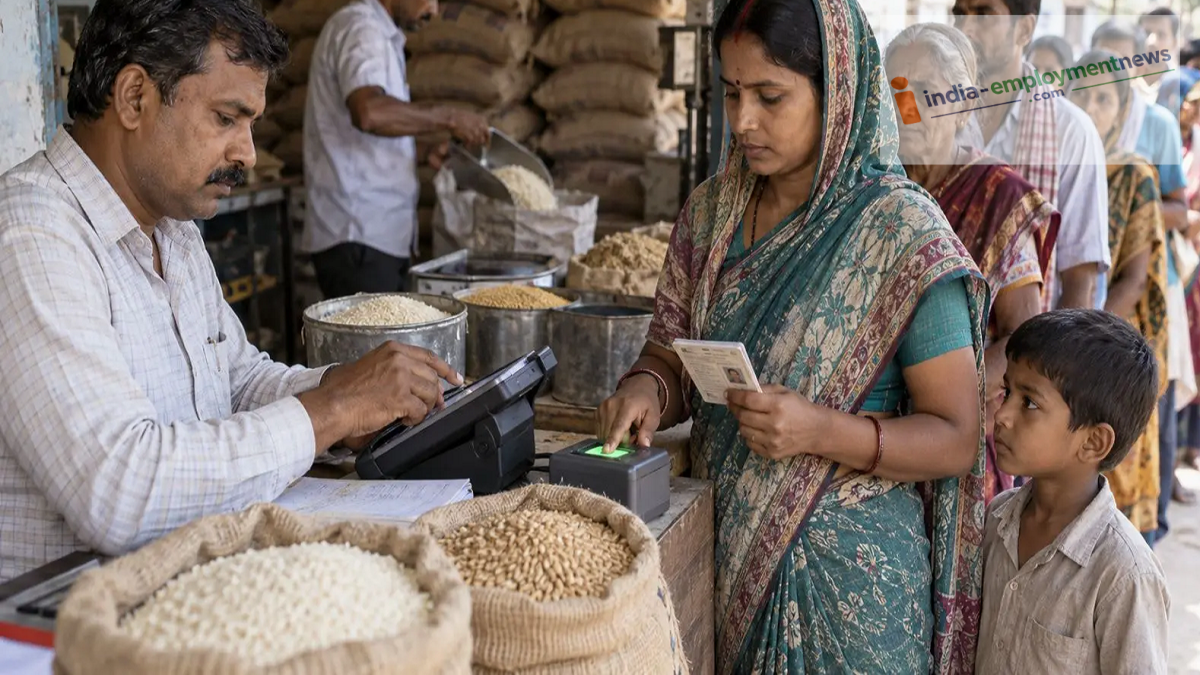
Ration Card: A new system regarding ration cards is set to come into effect on October 1, 2026. Under this, some ration cards could face suspension. However, this suspension will be temporary; holders will be given three months to complete verification and e-KYC.
Ration Card: An important update has been released for ration card holders. According to the Department of Food and Public Distribution, a new system concerning "silent" ration cards (those unused for a long period) and duplicate beneficiaries under Smart-PDS will be implemented starting October 1, 2026. Under this, certain ration cards may be temporarily deactivated. However, this does not mean that all ration cards will be cancelled from October 1. Beneficiaries associated with cards flagged for review will have three months to prove their eligibility.
Which ration cards could face suspension?
According to the government's revised Targeted Public Distribution System Control Order, ration cards against which no rations have been drawn for the past six months may come under scrutiny. Such cards could be classified as inactive or unused for a long duration. Additionally, individuals whose names appear as beneficiaries in more than one location may also be investigated.
Will the ration card be cancelled immediately?
No. The official system specifies "temporary deactivation." This does not mean immediate or permanent cancellation of the ration card.
If a beneficiary has not collected rations for six months, the state government may temporarily suspend the card and re-verify eligibility. This process will involve e-KYC and field verification.
The beneficiary will be given three months to complete this process.
What happens if a duplicate beneficiary is found?
If an individual's name appears as a duplicate beneficiary (registered in more than one location, either within the same state or in another state), their benefits will not be immediately or permanently terminated. Such individuals will also be allowed to prove their identity and eligibility. Verification can be completed within three months through the submission of necessary documents, e-KYC, and other checks. Further decisions will be taken only after the verification process is complete.
What will change in SMART-PDS from October 1?
According to the Department of Food and Public Distribution, the Standard Operating Procedure (SOP) designed to identify 'silent' (inactive) ration cards and duplicate beneficiaries is set to be implemented under the SMART-PDS system starting October 1, 2026. The objective of this system is to maintain accurate and updated Public Distribution System (PDS) records, ensuring that the benefits of government rations actually reach eligible families.
How much e-KYC has been completed across the country?
According to government data, approximately 90.64 percent of e-KYC processes had been completed by July 30, 2026.
The department has also issued an SOP for linking mobile numbers and updating e-KYC records via ePOS (Electronic Point of Sale) machines. Ration card beneficiaries can complete their e-KYC through the facilities available at Fair Price Shops (ration shops).
What should ration card holders do?
Individuals who have not collected rations for a long time should check the status of their ration cards. It is also advisable to complete the e-KYC process for any family member for whom it is still pending.
If a ration card is categorized as 'silent' or 'duplicate,' the beneficiary will be allowed to complete the necessary verification within three months.
Claims about the cancellation of all ration cards are incorrect.
Most importantly, not all ration cards are being cancelled starting October 1. The new system primarily focuses on identifying and re-verifying ration cards that have remained unused for a long period and identifying duplicate beneficiaries. Therefore, before accepting any viral claims or misleading news as true, it is essential to verify the information through official sources such as the Department of Food and Public Distribution, the state government, or the relevant ration department.
