
Railways: How do you call a doctor if you fall ill while traveling by train? Understand the entire process...
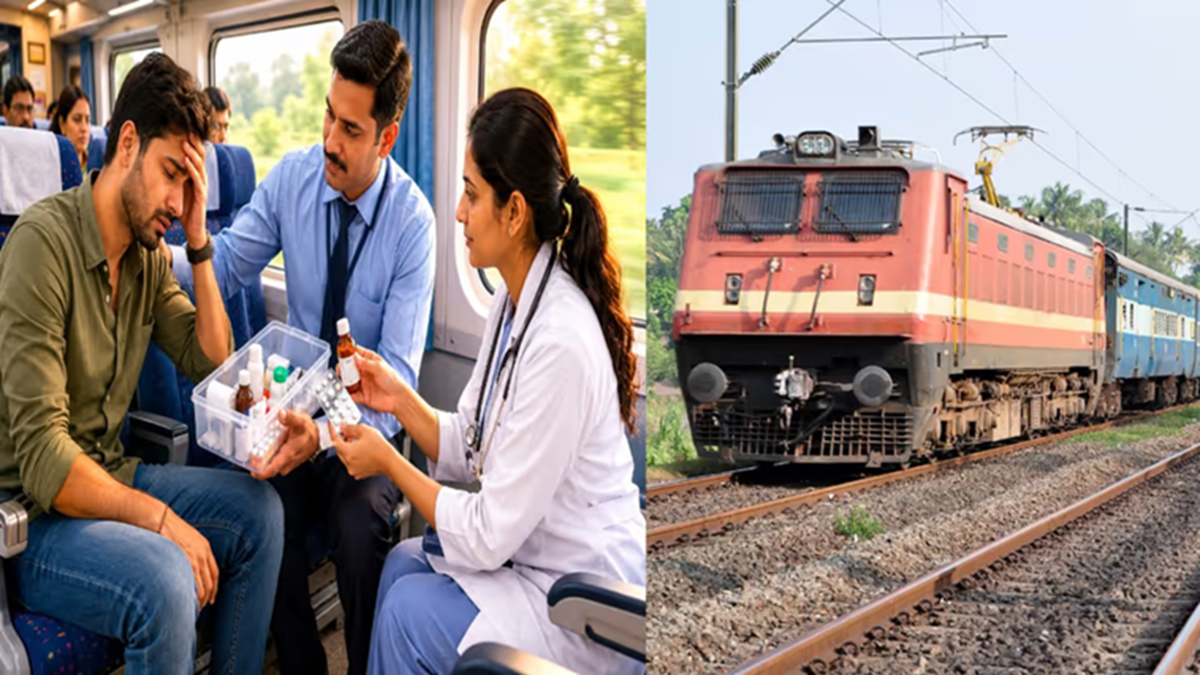
Train Travel Tips: "I had booked a ticket on the North East Express to travel from Delhi to Patna. I was feeling unwell the night before the journey, but the train was scheduled for the next morning, so I set out anyway. The train departed from Anand Vihar around 8 AM. Shortly after leaving Etawah at approximately 11:50 AM, my condition worsened; I was suffering from a fever and body aches. I sought help via the railway helpline number 139, and a doctor attended to me when the train stopped at Kanpur. He examined me and administered two doses of three tablets each. The train had to be held for an extra two minutes because of this. I thanked the doctor and the railway authorities; shortly after, I began to feel better." My colleague, Nilesh Kumar, shared this experience regarding this special railway facility.
If you fall ill while traveling by train, you too can avail yourself of this assistance from the railways. You can summon a doctor to the train with just a single phone call or by requesting the TTE (Travelling Ticket Examiner) on board. The charge for this 'Doctor on Board' service is nominal, and an official receipt is provided. Let us understand the entire process in this report.
Railway's Onboard Medical Assistance Service
Passengers traveling on Indian Railways sometimes face sudden health issues such as stomach pain, chest pain, vomiting, or nausea. In such situations, the primary concern is how to obtain immediate medical treatment while the train is in motion. Recognizing this difficulty, Indian Railways provides onboard medical assistance. Under this facility, once notified, a railway medical team reaches your seat at the very next major station. If you or a fellow passenger suddenly falls ill during the journey, you can avail of this service using the methods described below.
4 Easiest Ways to Summon a Doctor on the Train
Call the 139 helpline: This is the railway's all-in-one emergency number. Call this number, select your preferred language, and choose the 'Medical Assistance' option.
Inform the TTE or onboard staff: Immediately notify your coach's TTE, the train guard, or the pantry car staff. They alert the railway control room directly via wireless message.
RailMadad App or Website: Open the RailMadad app on your phone or visit the website, go to the 'Medical Assistance' section, and register your complaint.
Post on Social Media (X): Post details of the issue along with your PNR number, train number, and seat number, tagging @RailMinIndia and @RailwaySeva.
Essential information to provide when seeking help:
PNR number (this reveals your live train location and seat details).
Train name and number.
Full details of the coach and seat or berth number.
Patient's current condition (e.g., chest pain, high fever, vomiting, unconsciousness, or injury).
The railway medical team mobilizes upon receiving the alert
As soon as the information is received, the railway control room issues an alert and notifies the railway hospital or medical team at the nearest upcoming station on the train's route.
The medical team—accompanied by attendants and necessary life-saving medicines—waits on the platform before the train arrives.
As soon as the train stops at the platform, the doctor comes directly to your seat in the coach to examine the patient and administer medication.
If the patient's condition is critical (e.g., a heart attack), the train can be stopped for an emergency even at stations where it does not have a scheduled halt.
Also Read: Delhi Metro makes waves globally! It has surpassed New York, Paris, and Hong Kong to claim the top spot in this category.
Hospitalization arranged if necessary
The railways charges a fixed consultation fee of ₹100 for the onboard doctor service. You receive an official receipt after the doctor provides treatment.
Common medicines administered during first aid are often free, but there may be additional charges for specialized or extra life-saving drugs. If the patient's condition is critical and shows no improvement despite on-board treatment, they are admitted to the nearest railway hospital or a major government or private hospital via an ambulance kept ready at the station.
Disclaimer: This content has been sourced and edited from NDTV India. While we have made modifications for clarity and presentation, the original content belongs to its respective authors and website. We do not claim ownership of the content.
