
Railways: Can you carry alcohol while traveling by train? Find out what the railway rules say..
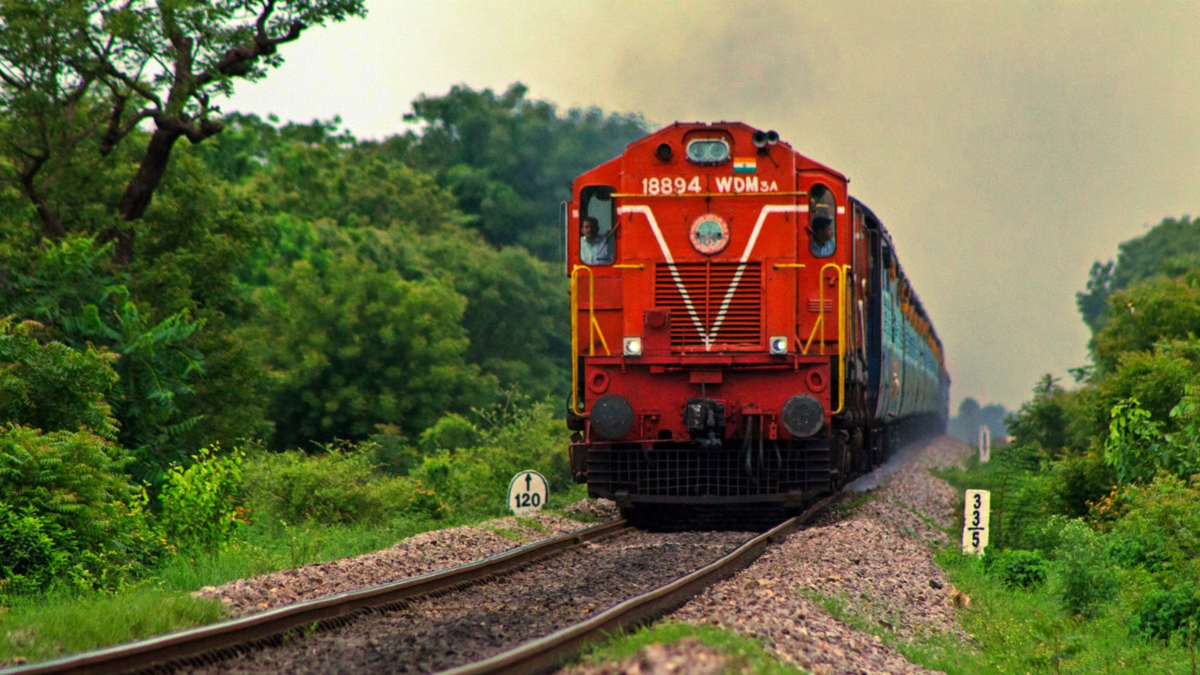
Indian Railways Alcohol Carrying Rules: Millions of passengers travel via Indian Railways every day, yet there is often confusion regarding the rules for carrying liquor on trains. Many believe that carrying a sealed bottle of liquor accompanied by a receipt is entirely legal.
However, the reality is quite different. There is no single nationwide limit for carrying liquor on trains. In fact, permission to carry liquor and the permissible quantity depend entirely on the excise laws of the starting station, the states along the route, and the destination state.
**Even a sealed liquor bottle can land you in jail**
Legally purchasing liquor in one state does not automatically grant you the right to transport it by train to any other state. Liquor is completely prohibited in states like Bihar and Gujarat. Consequently, if your train passes through these states or if one of them is your destination, you could face legal action under the respective state's excise laws—even if the bottle is sealed. Items considered legal in one state can become illegal the moment they cross into another state's jurisdiction. Therefore, it is essential to check the excise regulations of all states along your route before commencing your journey.
**Consuming alcohol on the train is an offense**
Carrying liquor while traveling and consuming it on board are two entirely different matters. Drinking alcohol or creating a nuisance inside the train or on station premises is strictly illegal. Section 145 of the Railways Act mandates strict action against passengers found drinking, intoxicated, or harassing co-passengers. Offenders can face imprisonment of up to six months, a fine of up to ₹5,000, or both. Under this law, a first-time offense can result in a fine of up to ₹1,000 or imprisonment for up to six months. A repeat offense can lead to the fine being increased to ₹5,000. Additionally, railway officials or police personnel on duty may confiscate the intoxicated passenger's ticket and even deboard them at the next station.
**Carrying an open bottle on the train is even riskier**
If an open bottle of alcohol is found in your possession, the Railway Protection Force (RPF) or Government Railway Police (GRP) may take strict action depending on the circumstances. An open bottle implies that you were consuming alcohol during the journey; therefore, it is safest never to carry an open bottle while traveling by train.
**Do not confuse Delhi Metro rules with railway regulations**
People often mistakenly assume that Delhi Metro rules apply to Indian Railways as well. Under DMRC regulations, passengers are permitted to carry a maximum of two sealed bottles within the metro network; however, this allowance is exclusive to the metro system and cannot be considered a general rule for Indian Railways. Furthermore, as soon as you cross from Delhi into Haryana or any other state, that state's specific excise regulations come into effect. Consequently, before carrying alcohol, you should familiarize yourself with the local excise laws to avoid potential action by the local police.
**Age limits for alcohol are also crucial**
It is not just the quantity of bottles that matters; the legal age for purchasing and possessing alcohol varies by state—for instance, the legal age is 21 in Delhi but 25 in some other states. Therefore, it is essential to keep age eligibility requirements in mind.
Ultimately, carrying alcohol on a train depends on the states involved in your journey. If your route passes through a "dry state," you should completely avoid carrying alcohol with you. The most important point regarding carrying alcohol is that, even if you are permitted to carry a sealed bottle, consuming alcohol inside the train can land you in legal trouble and even lead to imprisonment.
Disclaimer: This content has been sourced and edited from NDTV India. While we have made modifications for clarity and presentation, the original content belongs to its respective authors and website. We do not claim ownership of the content.
