
Railway Employees’ Major Demand to the Government: A Minimum Salary of ₹52,600 and a ‘Multiple Fitment Factor’ Strategy
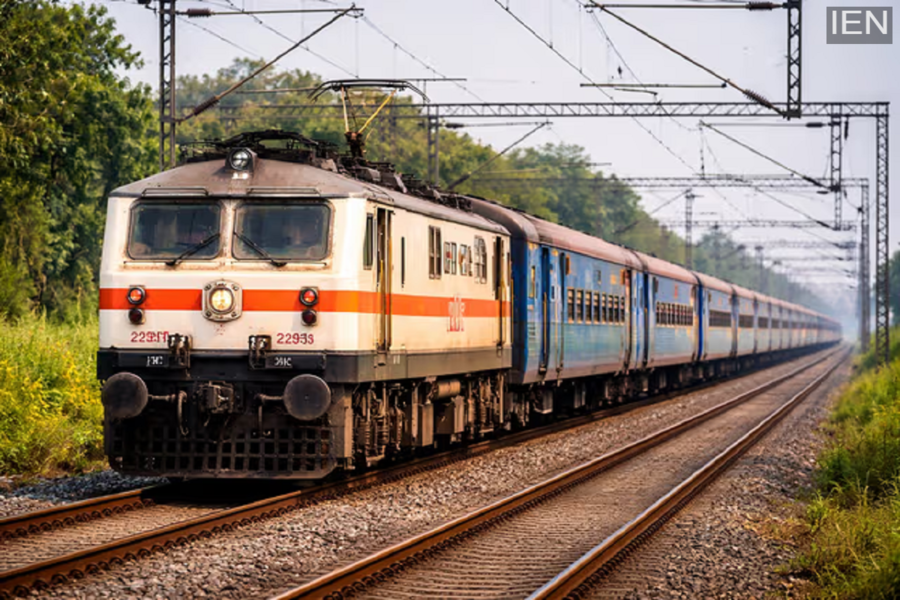
Major Demands by Railway Employees for the 8th Pay Commission: A proposal to raise the minimum salary to ₹52,600 and to introduce distinct fitment factors for different pay levels. Discover IRTSA’s plans regarding allowances and pensions.
8th Pay Commission: The IRTSA (Indian Railway Technical Supervisors Association)—the body representing technical supervisors within the railways—has released its list of demands for the 8th Pay Commission. This time, the demand is not merely for a salary hike, but also for a fundamental change in the ‘methodology’ used to determine salaries.
Fitment Factor: Not a ‘One-Size-Fits-All’ Approach
Until now, the Pay Commission has historically applied a single, uniform fitment factor (the multiplier used to calculate salary increases) for all employees. However, the IRTSA advocates for this factor to be differentiated based on the level of responsibility associated with each role.
Lower Levels (L1–L5): A 2.92-fold increase.
Upper Levels (L17–L18): An increase of up to 4.38 times.
If this demand is accepted, the minimum basic salary within the railways would rise to ₹52,600.
Why Separate Rules for ‘Technocrats’?
The Association argues that the work performed by the technical staff responsible for operating the railways (such as JEs and SSEs) is inherently hazardous. They are required to work extended hours and bear a significantly higher degree of accountability. Consequently, their remuneration should exceed that of their non-technical counterparts. Specifically, there is a demand to raise the starting salary for a Junior Engineer (JE) to ₹1,57,400.
Substantial Increases in Allowances: From Internet Costs to Education
Employees have also demanded revisions to the Dearness Allowance (DA) and other associated benefits.
- New Inflation Index: To determine the DA, the calculation should incorporate modern-day expenses such as internet usage, bottled water, and health insurance premiums.
- HRA: A proposal has been put forward to set the House Rent Allowance (HRA) at 40% of the basic pay plus DA for employees residing in major metropolitan cities. Education Expenses: The Children’s Education Allowance (CEA) should be extended up to the post-graduate level, and the monthly amount should be increased to ₹10,000.
- Leave and Retirement Benefits
- Leave: There is a demand to increase the limit for Leave Encashment (payment for unutilized leave) at the time of retirement from the current 300 days to 600 days.
- Pension: A strong demand has been raised to reinstate the Old Pension Scheme (OPS) for employees recruited after 2004.
- Gratuity: It has been proposed to increase the maximum limit for Retirement and Death Gratuity to ₹50 lakh.
| Cadre (Post) | Proposed Level | Proposed Starting Salary (₹) | Comparison with Current |
|---|---|---|---|
| Junior Engineer (JE) | Level-7 | ₹1,57,400 | ~4.45 times increase |
| Senior Section Engineer | Level-8 | ₹1,66,800 | ~3.71 times increase |
| Principal SSE (Manager) | Level-11 | ₹2,57,000 | New category proposed |
