
Property Transfer in India: Why Mutation Alone Doesn’t Grant Ownership and What You Must Do Instead
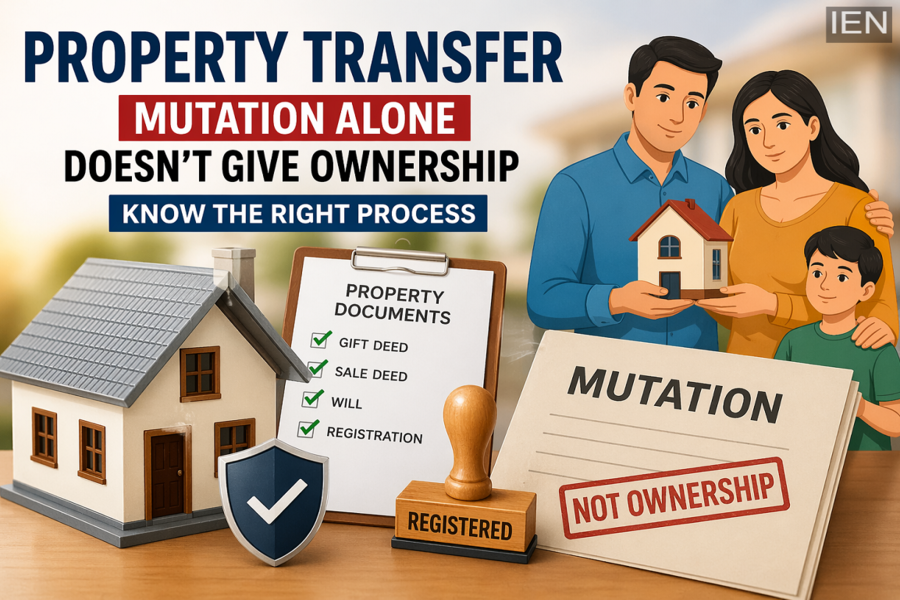
When it comes to transferring property in India, a widespread misconception continues to mislead many families—especially when parents plan to pass assets to their children. A large number of people believe that completing the mutation process is enough to establish legal ownership. However, legal experts caution that this assumption can lead to serious complications in the future.
In reality, mutation is only an administrative step and does not confer ownership rights. Understanding the correct legal process is crucial to avoid disputes, financial hurdles, and potential litigation.
What Is Mutation—and What It Is Not
Mutation refers to updating the ownership details of a property in local municipal or revenue records. This process ensures that property tax bills are issued in the correct name after a change in possession.
However, mutation is not proof of ownership. It is simply a record-keeping mechanism maintained by government authorities. Even if your name appears in these records, it does not legally establish you as the rightful owner of the property.
In other words, mutation helps the government track property-related taxes, but it does not transfer legal title. Courts and financial institutions do not consider mutation alone as valid evidence of ownership.
How Legal Ownership Is Actually Transferred
To legally transfer property, especially from parents to children, specific documents must be executed and registered under the law. These documents form the foundation of ownership rights.
1. Gift Deed
A Gift Deed is one of the most reliable ways to transfer property during the owner’s lifetime. It allows a person to voluntarily give property to another individual without monetary consideration.
- Must be written, signed, and registered
- Requires payment of applicable stamp duty and registration charges
- Becomes effective immediately after execution
This is often considered the safest and clearest method for transferring ownership within families.
2. Sale Deed
A Sale Deed is used when property is transferred in exchange for money. It is a legally binding document that establishes ownership after a financial transaction.
- Mandatory for buying or selling property
- Requires registration with local authorities
- Acts as primary proof of ownership
3. Will (Vasiyat)
If a property owner wants the transfer to happen after their death, a Will is the appropriate legal instrument.
- Comes into effect only after the owner passes away
- Can be modified during the owner’s lifetime
- Should be clearly drafted to avoid disputes
Although registration of a Will is not mandatory, it is highly recommended for added legal strength.
Special Case: Ancestral Property
The process becomes more complex when dealing with ancestral property. Unlike self-acquired assets, ancestral property is jointly owned by all legal heirs.
This means:
- No single individual can transfer the property without consent
- All legal heirs have equal rights
- A Partition Deed is often required to divide shares legally
Failing to follow proper procedures in such cases can easily lead to prolonged legal disputes.
Risks of Relying Only on Mutation
Relying solely on mutation without valid legal documents can create serious problems down the line. Some common issues include:
- Difficulty in selling the property due to lack of clear ownership proof
- Loan rejection by banks and financial institutions
- Family disputes over ownership claims
- Increased risk of legal battles and court cases
Without a registered legal document, proving ownership becomes extremely difficult, even if mutation records are in your name.
Steps to Avoid Property Disputes
To ensure a smooth and legally sound property transfer, consider the following steps:
- Clearly determine whether the property is self-acquired or ancestral
- Choose the correct legal method—Gift Deed, Sale Deed, or Will
- Ensure all documents are properly drafted and registered
- Pay the required stamp duty and registration charges
- Safely maintain all original ownership documents and records
Only after completing these legal formalities should mutation be carried out to update government records.
Final Takeaway
Mutation is an important administrative process, but it is not a substitute for legal ownership. To protect your family’s financial future and avoid unnecessary disputes, always rely on properly executed legal documents for property transfer.
Understanding the distinction between mutation and ownership can save you from costly mistakes—and ensure that your assets are passed on smoothly and securely to the next generation.
