
Post Office KVP: 7.5% Annual Interest and Doubled Amount on Maturity – Understand the Rules for Opening and Closing Accounts Before Investing
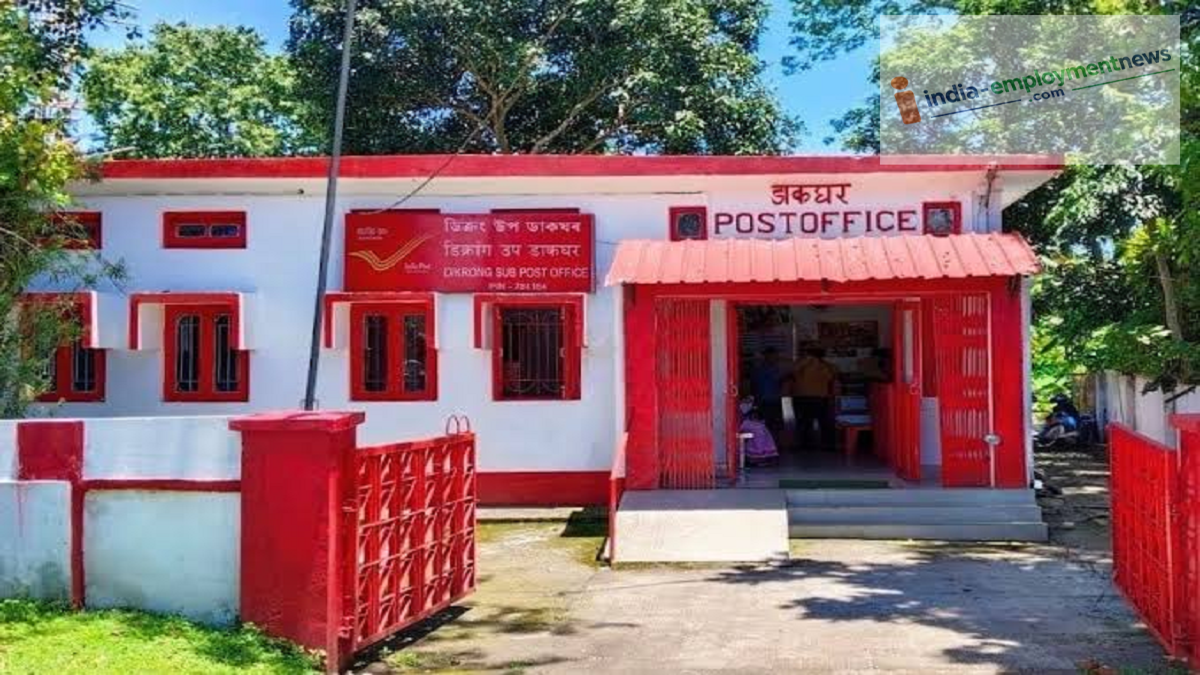
Before investing in the Post Office ‘Kisan Vikas Patra’ (KVP) scheme, it is essential to be aware of the relevant rules. This scheme offers an annual interest rate of 7.5%, allows you to start with as little as ₹1,000, and doubles your investment upon maturity. Learn about the rules regarding account opening, e-banking, and premature closure.
If you are considering investing in the Post Office Kisan Vikas Patra (KVP) scheme, it is crucial to understand all the associated rules beforehand. The scheme provides an annual compound interest rate of 7.5%, and the deposited amount doubles by the time of maturity.
A key feature is that you can begin your investment with just ₹1,000, and there is no upper limit on the investment amount. The scheme includes specific provisions covering various aspects, such as single and joint accounts, e-banking facilities, premature account closure, and the option to pledge the account as collateral.
Minimum Investment Amount
A minimum deposit of ₹1,000 is required. Any amount beyond this must be in multiples of ₹100. There is no maximum limit on the investment, and an individual may open as many accounts as they wish.
Eligibility to Open an Account
To open an account, one must be a resident citizen of India. Accounts can be opened as single accounts or as joint accounts (with up to three adults). There are two types of joint accounts: ‘Type A’, where all account holders (or the surviving holders) operate the account jointly; and ‘Type B’, where any one of the account holders (or the surviving holders) can operate the account individually.
A guardian may open an account on behalf of a minor. A guardian may also open an account on behalf of a mentally unsound person; such an account is now referred to as an ‘authorized account.’ A minor who has attained the age of 10 years may open an account in their own name. Upon reaching the age of 18, the individual must submit a new account opening form and fresh KYC documents to the post office; only then will the account be converted into an account for an adult.
Account opening via e-banking
Yes, an account can also be opened using the e-banking facility. A prerequisite for this is having a post office savings account, as internet banking access is granted only after such an account is established.
Rules for premature account closure
An account cannot be closed before its maturity under any circumstances, except in three specific situations: first, in the event of the death of a sole account holder, or the death of one or all holders of a joint account; second, if the pledgee (the party to whom the account is pledged) is a gazetted officer and seizes the account; and third, upon a court order.
In such cases, the principal amount is returned along with simple interest calculated for the full months, based on the prevailing post office savings account interest rate applicable from time to time.
Pledging and transfer facilities
An account may be pledged as security or transferred. To do so, one must submit the prescribed application form at the post office, accompanied by a letter of consent from the pledgee. This facility is available for the President or a Governor, the Reserve Bank of India (RBI), scheduled banks, cooperative societies and cooperative banks, government or private corporations, government companies, and local bodies. Housing finance companies approved by the National Housing Bank and notified by the Central Government are also eligible.
An account can be transferred from one person to another only under four specific circumstances: upon the death of the account holder (to a nominee or legal heir), upon the death of one of the holders of a joint account (to the surviving holder(s)), pursuant to a court order, or in the event that the account is pledged. In the event of the death of a single account holder or all joint account holders, the funds are paid to the nominee; if there is no nominee, they are paid to the legal heirs.
What to do before investing
Full details of the scheme are provided in the ‘Kisan Vikas Patra Rules, 2019’. Investors are advised to review the rules issued by the government from time to time.
Key points for you
Overall, the Post Office ‘Kisan Vikas Patra’ (KVP) scheme is an excellent option for those looking to invest—starting from a minimum of ₹1,000 with no upper limit—and double their money upon maturity. However, the rules regarding premature account closure and transfer are quite restrictive and apply only in specific circumstances. Therefore, before investing, be sure to consult the ‘Kisan Vikas Patra Rules, 2019’ and any updated regulations issued by the government from time to time. (This information has been sourced from the official Post Office KVP scheme page.)
