
PNG vs LPG: Which Cooking Gas Option Is Safer, Cheaper and More Convenient for Homes?
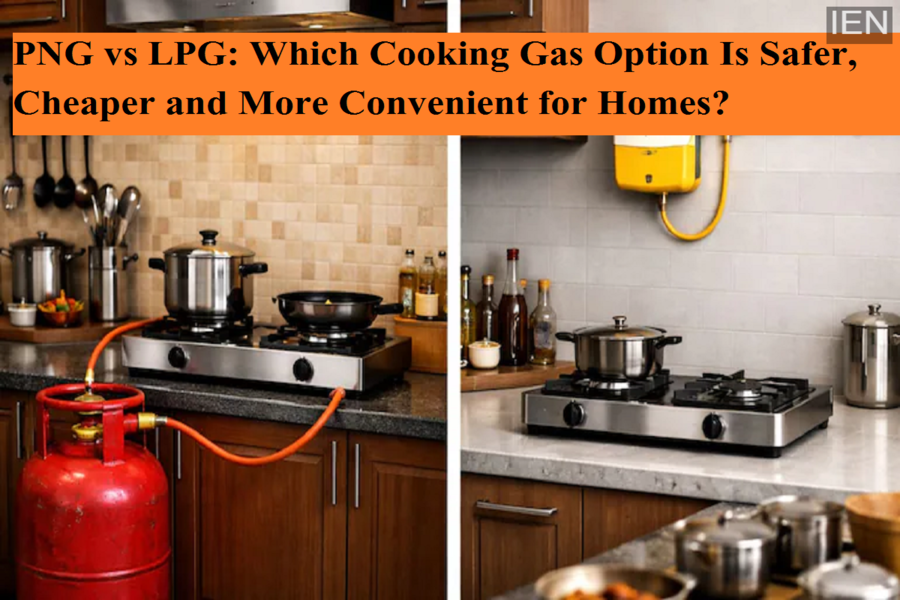
When it comes to cooking gas in Indian homes, two options dominate the conversation — PNG (Piped Natural Gas) and LPG (Liquefied Petroleum Gas). While LPG cylinders have been a household staple for decades, PNG connections are becoming increasingly common in urban areas as gas pipeline networks expand.
For many families, the choice between PNG and LPG is not just about convenience. It also affects monthly expenses, kitchen safety, storage space, and daily ease of use. If you have ever wondered which option is better for your home, here is a detailed and easy-to-understand comparison.
What Is PNG?
PNG stands for Piped Natural Gas. As the name suggests, this gas is delivered directly to homes through an underground or fixed pipeline network.
Once a household gets a PNG connection, a gas meter is installed and a pipeline runs directly to the kitchen stove. This means there is no need to store a cylinder inside the house. Users receive a monthly bill based on actual gas consumption, similar to an electricity or water bill.
PNG is mostly available in metro cities, large towns and selected urban clusters where city gas distribution infrastructure has been developed.
What Is LPG?
LPG stands for Liquefied Petroleum Gas. This is the traditional cooking gas supplied in portable cylinders, which are delivered to homes after booking.
LPG has been used in Indian kitchens for many years and remains the most common cooking fuel in small cities, towns and rural areas. Both public sector and private companies supply LPG cylinders for domestic use.
Unlike PNG, LPG requires users to replace or refill the cylinder once the gas runs out.
PNG vs LPG: Key Differences Explained
Although both PNG and LPG are used for cooking, they differ significantly in the way they are supplied, billed, stored and managed.
1. Supply Method
This is the most obvious difference.
- PNG is supplied directly through a pipeline.
- LPG is supplied through a physical cylinder.
With PNG, there is no need to wait for delivery or keep a spare cylinder. With LPG, users must monitor cylinder usage and book a replacement before it runs out.
2. Cost and Billing
The cost comparison between PNG and LPG often depends on city-wise pricing, usage patterns and government policies.
PNG Billing
PNG users pay only for the gas they consume. The bill usually arrives monthly, making it easier to manage household cash flow.
LPG Billing
LPG users must pay the full cylinder amount upfront at the time of booking or delivery. Even if the cylinder lasts for several weeks, the entire payment is made in one go.
In many urban areas, PNG may work out to be more economical over time, especially for households with frequent or high cooking needs. However, actual savings can vary depending on local tariff rates.
3. Storage and Space
PNG
PNG does not require storage of gas inside the home in the form of a cylinder. It flows continuously through the pipeline when needed.
LPG
LPG is stored inside a pressurized cylinder, which occupies space in the kitchen or utility area. Some households also keep an extra backup cylinder.
For smaller apartments or compact kitchens, PNG may feel more space-efficient and clutter-free.
Which Is Safer: PNG or LPG?
Safety is one of the biggest concerns when choosing a cooking gas system, and this is where PNG often gets an edge.
Why PNG Is Considered Safer
PNG is generally considered safer because natural gas is lighter than air. In case of a leak, it tends to rise upward and disperse more quickly, reducing the chance of dangerous accumulation.
Why LPG Needs More Caution
LPG is heavier than air. If there is a leak, the gas may settle near the floor or in low-lying areas, increasing the risk of fire or explosion if not detected in time.
Another important difference is that PNG is not stored in large quantity inside the home, while LPG remains stored in the cylinder until it is used.
That said, both PNG and LPG can be safe when used properly. Regular maintenance, proper ventilation, timely inspections and awareness of leak signs are essential in both cases.
Which One Is More Convenient?
When it comes to daily ease of use, PNG is often seen as the more convenient option.
Benefits of PNG Convenience
- No need to book a refill
- Continuous gas supply
- No fear of the gas ending suddenly during cooking
- Monthly billing instead of lump-sum payment
LPG Convenience Limitations
With LPG, many households have experienced the inconvenience of a cylinder running out unexpectedly — often in the middle of cooking. Unless a spare cylinder is available, this can create an immediate problem.
For working families and busy households, PNG often offers a smoother day-to-day experience.
Why Is PNG Not Available Everywhere?
Despite its benefits, PNG is still not available in all parts of India.
The main reason is infrastructure. PNG requires a large and expensive pipeline network, along with meters, regulators and city gas distribution systems. That is why it is mostly found in developed urban pockets and selected cities.
In many rural and semi-urban areas, LPG continues to be the most practical and widely accessible fuel option.
Which Option Is Better for Your Home?
The answer depends largely on where you live and what facilities are available.
PNG May Be Better If:
- Your area has an active PNG connection network
- You want more convenience
- You prefer monthly usage-based billing
- You want to avoid cylinder storage and replacement hassles
LPG May Be Better If:
- PNG is not available in your locality
- You live in a small town or rural area
- You need a widely accessible and established option
- You prefer a portable and independent fuel source
Final Verdict
If PNG is available in your area, it can be a smart long-term choice for many households thanks to its convenience, continuous supply, cleaner setup and generally stronger safety profile.
However, LPG remains a reliable and practical cooking gas option, especially in places where pipeline connectivity has not yet reached.
In simple terms, PNG wins on convenience and safety in connected urban areas, while LPG continues to be the more accessible option across much of India.
