
PM Swamitva Yojana: Don't have documents for your ancestral village land? This special government scheme will solve your problem..
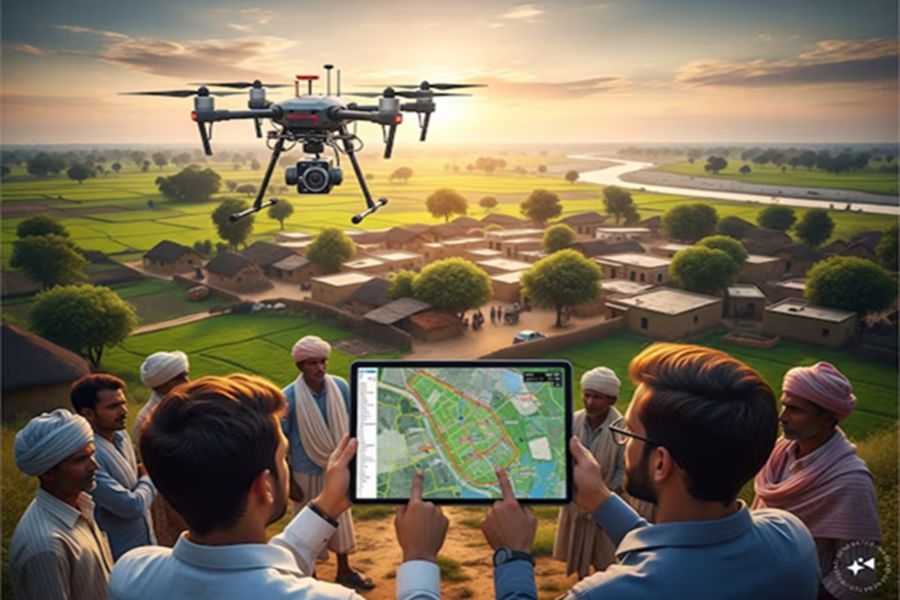
In rural India, disputes and confusion often persist regarding the ownership of ancestral lands. Many families lack documents for their ancestral properties, making it difficult to obtain bank loans, compensation, or even sell their property. However, the central government's "PM Swamitva Yojana" (SVAMITVA Scheme) offers a solution to this problem. This scheme uses drone technology to map inhabited land in villages and issues "property cards" or "title deeds" to owners. If you, too, are interested in transferring such land to your name, detailed information about this scheme can make your work easier.
The "PM Swamitva Yojana" is a Central Sector Scheme under the Ministry of Panchayati Raj, launched nationwide by Prime Minister Narendra Modi on April 24, 2021, National Panchayati Raj Day. Its full name is "SVAMITVA" (Survey of Villages Abadi and Mapping with Improvised Technology in Village Areas). The scheme's primary objective is to establish clear ownership rights by conducting drone surveys of inhabited lands in rural areas. This will reduce property disputes in villages and provide legal documents to owners.
The scheme was launched as a pilot phase in 9 states in 2020-21 and is now implemented nationwide. Drone mapping is conducted in collaboration with the Survey of India, digitizing land parcels. To date, approximately 109.9 million parcels have been digitized, and drone surveys have been completed in more than 325,000 villages. This scheme is especially beneficial for families who do not have old ancestral land documents, as it provides a 'Record of Rights' based on the new mapping.
Benefits of the PM Swamitva Yojana
Legal Security: Property cards provide clear ownership of property, reducing disputes. For example, beneficiaries in Jhansi, Uttar Pradesh, have reported a reduction in property disputes.
Economic Empowerment: Bank loans are easily available based on the card. Many beneficiaries in Madhya Pradesh have started their own businesses using loans under the scheme.
Women's Empowerment: In many areas, women have been made co-owners of 89% of properties.
Digital Integration: Cards are available through e-distribution, and over 1.43 lakh cards have been distributed so far.
What are the eligibility criteria?
The scheme is for rural homeowners who live in inhabited lands in villages. Specifically:
For ancestral lands where documents are missing.
Village residents who are claimants to the property.
The scheme is applicable in all states, but is implemented through the State Revenue Department and the Panchayati Raj Department. If your village has been selected under the scheme, you are eligible. To date, over 2.85 lakh maps have been submitted to the states.
How to Get a Property Card: Step-by-Step Process
If you don't have ancestral land documents, the scheme generates a new document through drone mapping. Here's the complete process:
Village Selection and Survey: A village is selected for the scheme. The Survey of India maps the land using drones.
Digitization of Maps: After the survey, the maps are digitized and submitted to the state revenue department.
Inquiry and Verification: Beneficiaries can inspect the maps at the village panchayat or revenue office. This is where they verify their property claim.
Submitting an Application: Apply to the local panchayat or revenue department. If documents are missing, the claim will be validated based on survey data. Provide identity proof (such as an Aadhaar card) and information related to the land claim.
Card Preparation and Distribution: After verification, the property card is generated. It is distributed through e-distribution or special events.
Online Tracking: Track progress through the scheme's website (svamitva.nic.in) or the Gram Naksha app.
Required Documents: The scheme relies primarily on survey data, but an Aadhaar card, a voter ID, or other identification proof may be required for the application. The scheme works even if old documents are missing because it creates a new 'Record of Rights'.
Disclaimer: This content has been sourced and edited from News18 Hindi. While we have made modifications for clarity and presentation, the original content belongs to its respective authors and website. We do not claim ownership of the content.
