
PM Surya Ghar Yojana: 1 Lakh Homes Joined in Just 8 Days, Learn How to Install Rooftop Solar in 6 Easy Steps
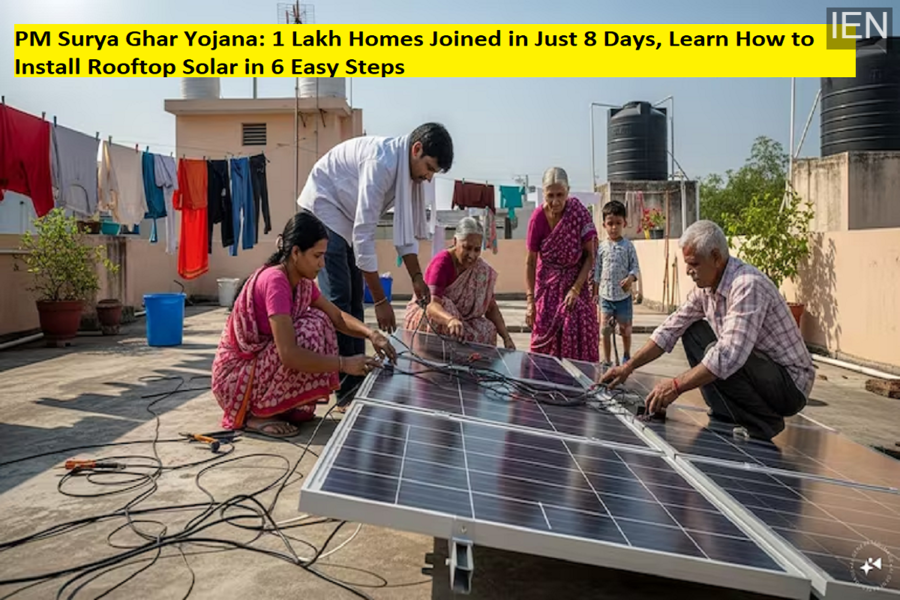
PM Surya Ghar Muft Bijli Yojana is rapidly gaining popularity across India as more households shift toward clean and affordable energy solutions. According to recent updates shared by Union Minister Pralhad Joshi, nearly one lakh new homes are joining the scheme every eight days, highlighting the growing interest in rooftop solar systems among Indian families.
The flagship scheme aims to reduce electricity expenses by helping citizens install rooftop solar panels with substantial government subsidies. Under the program, eligible households can receive up to 300 units of free electricity every month through solar power generation.
Here’s a complete guide on subsidy benefits, installation costs, expected savings, and the simple six-step application process.
What Is PM Surya Ghar Yojana?
The PM Surya Ghar scheme is a central government initiative designed to encourage residential rooftop solar adoption across India.
The program offers:
- Financial subsidy for rooftop solar installation
- Reduced electricity bills
- Clean and renewable energy usage
- Easy loan support for households
The scheme has become especially popular among middle-class households struggling with rising electricity bills.
Subsidy Details: How Much Financial Support Is Available?
Without subsidy support, rooftop solar installation generally costs between ₹60,000 and ₹80,000 per kilowatt (kW). Under the PM Surya Ghar scheme, however, the government covers around 40% to 60% of the installation cost through subsidy benefits.
Subsidy Structure Under the Scheme
| Solar Capacity | Subsidy Amount |
|---|---|
| 1 kW System | Up to ₹30,000 |
| 2 kW System | Up to ₹60,000 |
| 3 kW or More | Maximum ₹78,000 |
The subsidy remains capped at ₹78,000 even if the installed system exceeds 3 kW capacity.
Extra Benefits for Uttar Pradesh Residents
Some state governments are offering additional support beyond the central subsidy.
For example, residents of Uttar Pradesh may receive an extra ₹30,000 state subsidy in addition to the central government benefit.
This means eligible households in Uttar Pradesh could potentially save up to ₹1,08,000 on rooftop solar installation costs.
Cost and Savings Calculation
The scheme becomes especially attractive when long-term electricity savings are considered.
Example: 3 kW Solar System
Suppose a household installs a 3 kW rooftop solar system costing around ₹1,80,000.
After receiving the central subsidy of ₹78,000:
- Actual out-of-pocket expense becomes approximately ₹1,08,000
A 3 kW solar setup can generate nearly:
- 250 to 300 units of electricity every month
Assuming electricity rates of ₹8 per unit:
- Monthly savings may reach around ₹2,200
- Annual savings could exceed ₹26,000
Based on these calculations:
- Investment recovery period becomes approximately 4 years and 1 month
- In states offering additional subsidy like Uttar Pradesh, the recovery period may reduce to nearly 3 years
Since rooftop solar panels generally last more than 25 years, households can continue enjoying free electricity benefits for nearly two decades after recovering the initial investment.
Who Can Apply?
To avail benefits under the scheme, applicants must meet these basic eligibility conditions:
- Must be an Indian citizen
- Must own a residential rooftop
- Must have a valid electricity connection
How to Apply for PM Surya Ghar Yojana in 6 Simple Steps
The government has made the entire process online and relatively simple for households.
Step 1: Register on the Official Portal
Visit the official portal:
PM Surya Ghar Portal
Enter:
- State details
- DISCOM information
- Consumer number
- Mobile number
- Email ID
Step 2: Submit Rooftop Solar Application
Login using your consumer number and mobile number, then fill out the online application form for rooftop solar installation.
Step 3: Get Feasibility Approval and Install Solar Plant
After DISCOM approval, select any registered vendor listed on the portal to install the rooftop solar plant at your home.
Step 4: Apply for Net Metering
Once installation is completed:
- Upload plant details on the portal
- Apply for net meter installation
Step 5: Inspection and Commissioning
DISCOM officials will inspect the installed solar plant.
After successful inspection and net meter installation:
- Commissioning certificate will be generated on the portal
Step 6: Receive Subsidy in Bank Account
Upload:
- Bank account details
- Cancelled cheque
After verification, subsidy amount is transferred directly into the applicant’s bank account within around 30 days.
Low-Interest Loan Facility Also Available
For households unable to bear the upfront installation cost, the government is also facilitating low-interest loans through banks.
According to reports:
- Loans are available without collateral
- Interest rates are around 7%
- Rates are linked closely to RBI repo rate
This significantly reduces EMI burden for consumers planning rooftop solar installation.
Final Thoughts
The PM Surya Ghar Yojana is quickly emerging as one of India’s most impactful clean energy initiatives. With rising electricity costs and growing environmental awareness, rooftop solar systems are becoming increasingly attractive for households across the country.
Generous subsidies, long-term savings, easy online application procedures, and affordable loan support are encouraging lakhs of families to switch toward solar energy.
As adoption continues accelerating, the scheme is expected to play a major role in India’s renewable energy expansion and household energy independence.
