
PM Surya Ghar Scheme: On-Grid or Off-Grid—Which Solar Panel Installation Is More Beneficial?
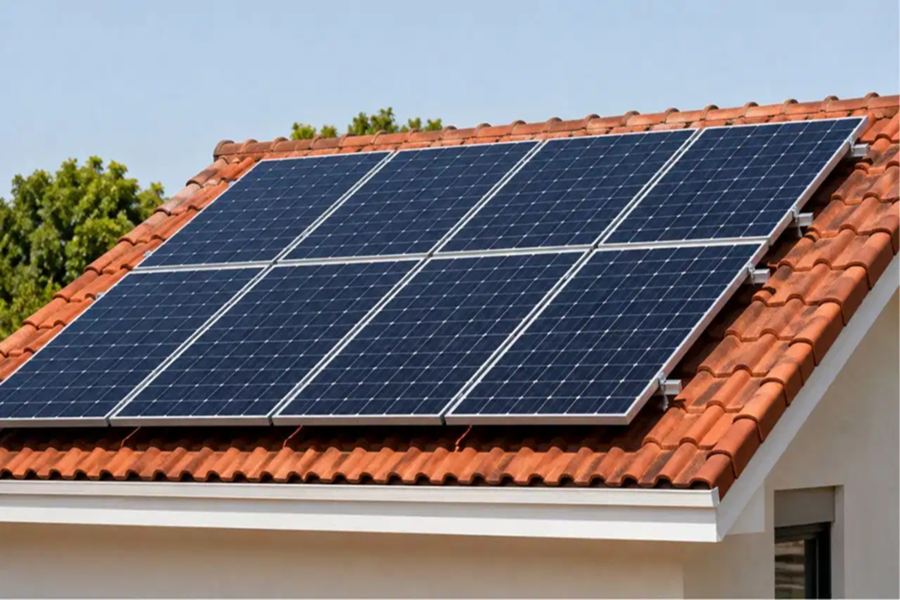
There is immense enthusiasm among the public regarding the Central Government's 'PM Surya Ghar Muft Bijli Yojana' (PM Surya Ghar Free Electricity Scheme). Everyone wants to install solar panels on their rooftops to escape the burden of expensive electricity bills permanently. However, there is a significant technical catch involved before one fills out the application form for this scheme. Two types of solar systems are currently available in the market: on-grid and off-grid. If you inadvertently choose the wrong type of panel without having complete information, you could miss out on the substantial government subsidy of up to ₹78,000. Let's decode the entire financial and technical logic behind this.
**How Does an On-Grid System Bring Your Electricity Bill Down to Zero?**
On-grid solar technology operates by connecting directly to the government's electricity grid. Its most significant economic advantage is that it requires absolutely no use of expensive batteries. During the day, when sunlight is intense, the electricity generated by these panels easily powers your household appliances.
If the electricity generated exceeds your consumption, the surplus energy is fed back into the government grid under a 'Net Metering' arrangement. At night—when the panels are not generating electricity—you can draw power back from the grid. Through this entire process, the government purchases your surplus electricity, resulting in your monthly bill dropping to zero or even a negative balance by the end of the month. Most importantly, the subsidy of up to ₹78,000 under the PM Surya Ghar scheme is provided *exclusively* for the installation of this specific type of system.
**Why Is Government Assistance Not Available for Off-Grid Systems?**
An off-grid solar system has no direct connection to the government electricity department's network. It is a completely independent infrastructure that relies heavily on large-capacity batteries. During the day, the panels generate electricity, which powers the household while simultaneously charging the batteries with the surplus energy. At night, the house is illuminated using the power stored in these very batteries.
Since this system requires expensive batteries, its initial installation cost is two to three times higher than that of an on-grid system. Furthermore, the consumer bears the heavy financial burden of replacing these batteries every four to five years. This is precisely why the government does not offer any subsidies for this expensive system. This infrastructure is suitable only for remote hilly or rural areas that experience prolonged power outages lasting 12 to 15 hours.
**The Hybrid Model Offers Permanent Relief from Power Cuts**
If your area experiences intermittent power outages, yet you do not wish to forgo the benefits of government subsidies, a hybrid solar system is an excellent solution. This technology represents a perfect blend of both on-grid and off-grid systems. Since it remains connected to the grid, you are eligible to receive the full subsidy offered under government schemes. Additionally, a small battery can be integrated into the system to provide power backup. However, compared to a standard on-grid setup, this infrastructure does place a slightly heavier burden on your wallet.
**Which Option Makes the Most Financial Sense for You?**
If you reside in a city or town where power outages are virtually non-existent, investing in an on-grid system is, without a doubt, the most prudent course of action. This approach offers three distinct advantages. First, the system is significantly more affordable and qualifies for substantial subsidies. Second, the implementation of net metering eliminates any anxiety regarding electricity bills. Third, since the system does not require batteries, it is free from maintenance hassles, and the solar panels continue to provide trouble-free service for up to 25 years.
