
PM Surya Ghar Scheme Explained: Can You Get Solar Subsidy on a Shop or Commercial Rooftop?
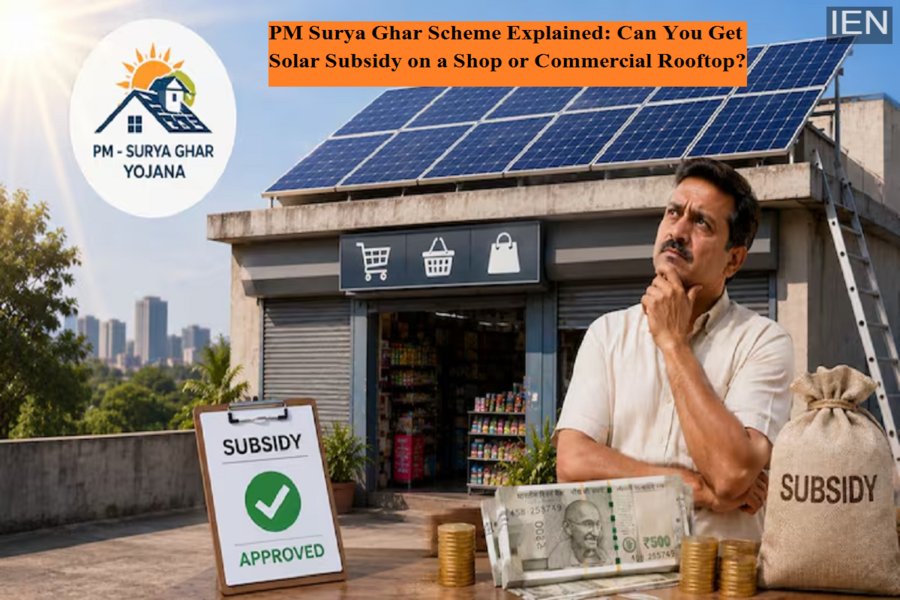
The Government of India’s PM Surya Ghar Muft Bijli Yojana has become one of the country’s most talked-about rooftop solar schemes, encouraging millions of households to install solar panels and reduce electricity bills. As residential users continue benefiting from subsidies and net-metering, many shop owners and small business operators are now asking an important question:
Can the PM Surya Ghar subsidy scheme also be used for shops, offices, showrooms, or commercial rooftops?
The answer is partly yes — and partly no.
Can You Install Solar Panels on a Shop Rooftop?
Yes, absolutely.
Business owners can install rooftop solar systems on:
- Shops
- Offices
- Showrooms
- Warehouses
- Commercial buildings
- Small factories
They can also benefit from net-metering and significantly reduce electricity bills.
However, there is one important limitation.
Commercial Properties Do Not Get PM Surya Ghar Subsidy
According to government rules, the subsidy offered under the PM Surya Ghar scheme is currently meant only for residential electricity consumers.
This means:
- Domestic connections qualify for subsidy
- Commercial electricity connections do not qualify
So if your property has a purely commercial electricity meter, you can install solar panels, but you will not receive direct government subsidy under the scheme.
Why Commercial Solar Still Makes Financial Sense
Even without subsidy, installing solar panels on commercial properties is still considered highly beneficial.


4
Experts say commercial consumers usually pay much higher electricity tariffs compared to residential users.
Major Benefits of Commercial Solar Installation
1. Massive Reduction in Electricity Bills
Commercial electricity rates are significantly higher than household rates.
Installing rooftop solar can reduce:
- Monthly power bills
- Fixed electricity charges
- Peak-hour electricity expenses
In many cases, businesses may reduce power costs by nearly 80% to 90%.
2. Net-Metering Benefits
With net-metering:
- Excess electricity generated during daytime is sent back to the grid
- Units exported are adjusted in future electricity bills
This becomes especially useful for shops or offices that consume less electricity during non-working hours.
3. Income Tax Benefits
Businesses can also claim tax advantages on solar investments.
Commercial users may benefit through:
- Accelerated depreciation
- Tax savings on solar system investments
- Reduced operational costs
This makes solar installation financially attractive for long-term business planning.
Subsidy Route vs Freedom Route: Which Is Better for Businesses?
Recent discussions around rooftop solar rules have highlighted two broad installation approaches:
- Subsidy route
- Freedom route
Experts say the “Freedom Route” is generally considered more suitable for commercial consumers.
What Is the Freedom Route?
Under the Freedom Route:
- Businesses are not restricted to government-approved vendor lists only
- Buyers get more flexibility in selecting technology
- Paperwork is usually simpler
Commercial consumers can choose advanced technologies such as:
- HJT solar panels
- HDT panels
- Hybrid inverters
- Lithium battery backup systems
These systems are often better suited for:
- Heavy electricity loads
- Long operating hours
- Commercial energy needs
Why Businesses Prefer Advanced Solar Systems
Commercial properties often require:
- Higher power generation
- Better backup systems
- Stable daytime performance
- Long-term cost savings
Because of this, many businesses prefer premium solar setups rather than lower-cost residential subsidy systems.
Important Rule for Mixed Residential-Commercial Buildings
There is one situation where subsidy may still become possible.
If:
- Your house and shop are located in the same building
- The solar system is connected through a residential electricity meter
…then you may apply under the PM Surya Ghar residential category and potentially receive subsidy benefits.
However, this depends on:
- Meter classification
- Utility rules
- Local DISCOM approval
- Residential eligibility conditions
If the Meter Is Fully Commercial, Subsidy Will Not Apply
If your electricity connection is officially categorized as:
- Commercial
- Shop meter
- Office connection
…then PM Surya Ghar subsidy benefits will generally not be available.
In such cases, businesses must install solar systems without subsidy support.
How Quickly Can Businesses Recover Solar Investment?
Solar experts say most commercial rooftop systems can recover their installation cost within:
- 3 to 4 years in many cases
This happens through:
- Electricity bill savings
- Tax benefits
- Lower operating expenses
Since solar panels typically last 20–25 years, businesses may continue enjoying low-cost electricity for many years after recovering initial investment.
Rooftop Solar Demand Rising Rapidly in India


7
India’s rooftop solar sector is growing rapidly as rising electricity costs push both households and businesses toward renewable energy solutions.
Small traders, showroom owners, office operators, and manufacturers are increasingly exploring solar power to:
- Reduce monthly expenses
- Improve energy independence
- Protect against rising power tariffs
What Shop Owners Should Remember
Key Takeaways
- Shops can install rooftop solar systems
- Commercial users do not get PM Surya Ghar subsidy
- Net-metering benefits are available
- Businesses can claim tax advantages
- Freedom Route offers more flexibility
- Mixed-use buildings may qualify under residential meters
Experts believe rooftop solar will continue becoming one of the most profitable long-term investments for businesses as electricity prices rise across India.
