
PM Jan Dhan Yojana: How banking for the common person transformed in 12 years—from account opening to DBT and digital payments
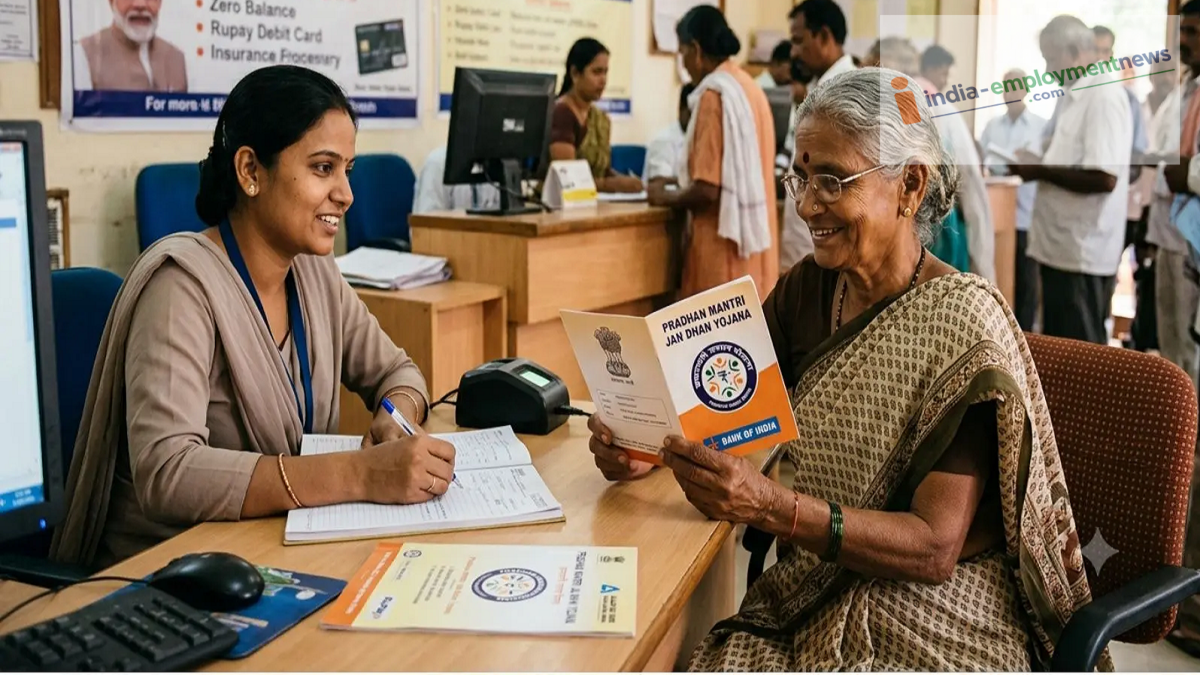
PM Jan Dhan Yojana: It has been 12 years since the launch of the Pradhan Mantri Jan Dhan Yojana (PMJDY). Launched on August 28, 2014, the scheme aimed to bring individuals who were previously outside the formal financial system into the banking fold. Under the scheme, the facility to open Basic Savings Bank Deposit Accounts without a minimum balance requirement was introduced. Additionally, features such as RuPay debit cards, overdraft facilities, and insurance coverage were included.
PM Jan Dhan Yojana: After 12 years, the picture extends far beyond just the number of bank accounts. Jan Dhan accounts have become a crucial foundation for Direct Benefit Transfers (DBT) under government schemes, social security programs, and digital financial services. However, a true assessment of financial inclusion requires looking not only at how many accounts were opened but also at how many are being actively used.
Over 59 crore Jan Dhan accounts; deposits exceed ₹3.15 lakh crore
According to data available on the Ministry of Finance’s PM Jan Dhan Yojana portal as of August 26, 2024, there are a total of 59.15 crore Jan Dhan accounts in the country. Of these, approximately 45.99 crore accounts are held in rural and semi-urban bank branches, while about 13.16 crore are in urban and metropolitan centers.
The total deposits in these accounts stand at approximately ₹3,15,482 crore. This indicates that Jan Dhan accounts are no longer merely dormant accounts created solely to receive government benefits; they now also hold the personal savings of the people.
A major advantage of the Jan Dhan Yojana has been the ease of linking bank accounts with government welfare schemes. Through the DBT system, the government can transfer funds from various schemes directly into the beneficiary’s bank account. According to India’s official DBT portal, Direct Benefit Transfers amounting to ₹2,06,360 crore have been recorded so far in the 2026-27 financial year, while cumulative DBT transfers exceed ₹53.23 lakh crore. However, since this entire amount was not routed solely through Jan Dhan accounts, it would be incorrect to attribute it directly as an achievement of PMJDY. While Jan Dhan accounts are a vital part of the DBT ecosystem, the overall DBT figures encompass all eligible bank accounts and schemes.
This shift represents a crucial aspect of financial inclusion. Previously, there was a heavy reliance on cash payments, intermediaries, or local-level arrangements to access government assistance. Payments made through bank accounts have strengthened the mechanism for delivering funds directly to beneficiaries.
Increased Banking Participation Among Women
A significant achievement of the Jan Dhan Yojana is the expansion of banking access for women. Data from August 26, 2026, records approximately 32.96 crore female beneficiaries, meaning women account for more than half of the total Jan Dhan accounts.
The significance of this extends beyond merely having a bank account. When a bank account is held in a woman’s name, it can enhance her direct access to government assistance, savings, and other financial services.
Moving Towards Digital Finance with RuPay Cards
Jan Dhan account holders are also provided with RuPay debit cards. By August 26, 2026, approximately 41.34 crore RuPay cards had been issued.
However, an important distinction must be made here: the issuance of a RuPay card is not the same as its regular usage. Similarly, the mere deposit of funds into a bank account is not conclusive proof of the account’s regular use.
Therefore, the next phase of the Jan Dhan Yojana—following its 12-year journey—should focus not just on opening accounts, but on fostering active usage and ensuring genuine access to services such as digital payments, insurance, pensions, savings, and small loans.
Digital Payments Have Transformed the Banking Landscape
India’s digital payment infrastructure has expanded rapidly over the past decade. UPI, AePS, mobile banking, and other digital channels have taken banking beyond the confines of physical branches and ATMs. The RBI has also highlighted the expansion of Digital Banking Units, new use cases for UPI, offline payments, and other digital channels as key drivers for advancing financial and digital inclusion.
However, it would be incorrect to attribute the entire growth of digital payments in India solely to the Jan Dhan Yojana. The expansion of UPI and digital payments is the result of a broader digital financial ecosystem; the Jan Dhan Yojana played a pivotal role in this ecosystem by bringing a vast number of people into the formal banking network.
Are all Jan Dhan accounts active?
This is where the next challenge for the Jan Dhan Yojana arises. Opening an account is the first step towards financial inclusion, not the final destination.
In its financial inclusion strategy, the RBI has identified the issue of inactive or inoperative accounts as a significant concern. Factors such as the lack of regular income, insufficient knowledge about financial products, a lack of awareness, and limited access to banking services may contribute to this situation.
Therefore, while the figure of over 59 crore accounts certainly demonstrates extensive reach, it cannot be concluded that all account holders use their accounts on a monthly basis.
