
Planning to buy gold? Before selling old jewellery, understand the full breakdown of tax, GST, and making charges..
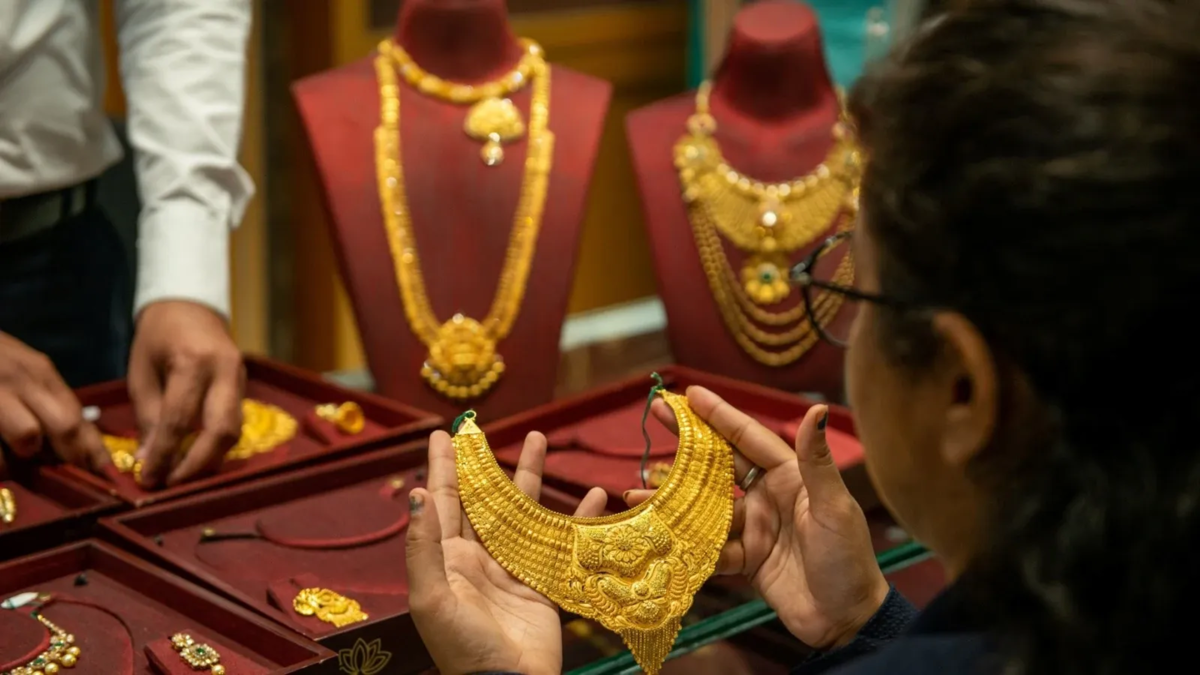
Gold prices continue to fluctuate, yet there is an expectation that they might rise. You might be considering selling your old jewelry to buy new pieces amidst this potential price surge. While this may seem like a profitable move right now, discovering the hidden details behind it might come as a shock.
What is the hidden factor?
Most people assume that the value of gold purchased years ago has appreciated significantly by now. However, there is a crucial detail you might be overlooking: selling old gold attracts Capital Gains Tax on the profit earned. Furthermore, when you use the proceeds from selling old gold to purchase new jewelry, you also have to pay GST and making charges. Consequently, a financial loss is inevitable. Let us explain how and when tax is levied on old jewelry, and when it is actually advisable to sell your old pieces to buy new ones.
When is tax levied on old jewelry?
According to experts, the tax applicable on the sale of gold jewelry depends on the holding period. A key point to note is that if you have held the gold jewelry for more than two years, it is classified as a long-term capital asset. The profit generated from its sale is termed Long-Term Capital Gain (LTCG). Under current regulations, this attracts a tax of 12.5%, and the benefit of indexation is not available. Conversely, if the jewelry is sold within two years or less, the profit is treated as Short-Term Capital Gain (STCG) and is taxed according to your applicable income tax slab rate.
If jewelry is sold for ₹10 lakh, how much tax applies?
Let us understand this with an example. If you sell old jewelry for ₹10 lakh, it does not mean that Capital Gains Tax will be levied on the entire ₹10 lakh amount. Tax is levied only on the profit generated from the difference between the purchase price and the selling price. This essentially means that factors such as the original purchase price of the jewelry, the date of purchase, and costs associated with the sale are taken into account when calculating the tax.
Suppose you purchased jewelry for ₹4 lakh several years ago and are selling it today for ₹10 lakh. In this case, your profit is ₹6 lakh. You are required to pay tax only on this ₹6 lakh profit, not on the entire ₹10 lakh sale value. Therefore, knowing the purchase price and the holding period is crucial for calculating the tax.
Impact of GST when buying new jewelry?
When you use the proceeds from selling old jewelry to purchase new jewelry, you are required to pay an additional 3% GST. Suppose you sell old gold worth ₹10 lakh, where 60% of the amount represents capital gains. After tax deductions, you would be left with approximately ₹9.22 lakh. When you use this amount to buy new jewelry, the impact of the 3% GST means the effective value available for the new jewelry would be around ₹8.95 lakh. Similarly, on a sale of ₹1 crore, the total tax impact could reach approximately ₹10.49 lakh, leaving a net value of about ₹89.51 lakh for the new gold.
Disclaimer: This content has been sourced and edited from Dainik Jagran. While we have made modifications for clarity and presentation, the original content belongs to its respective authors and website. We do not claim ownership of the content.
