
Pension News: Individuals imprisoned during the Emergency will receive ₹10,000 per month and can travel for free on government buses..
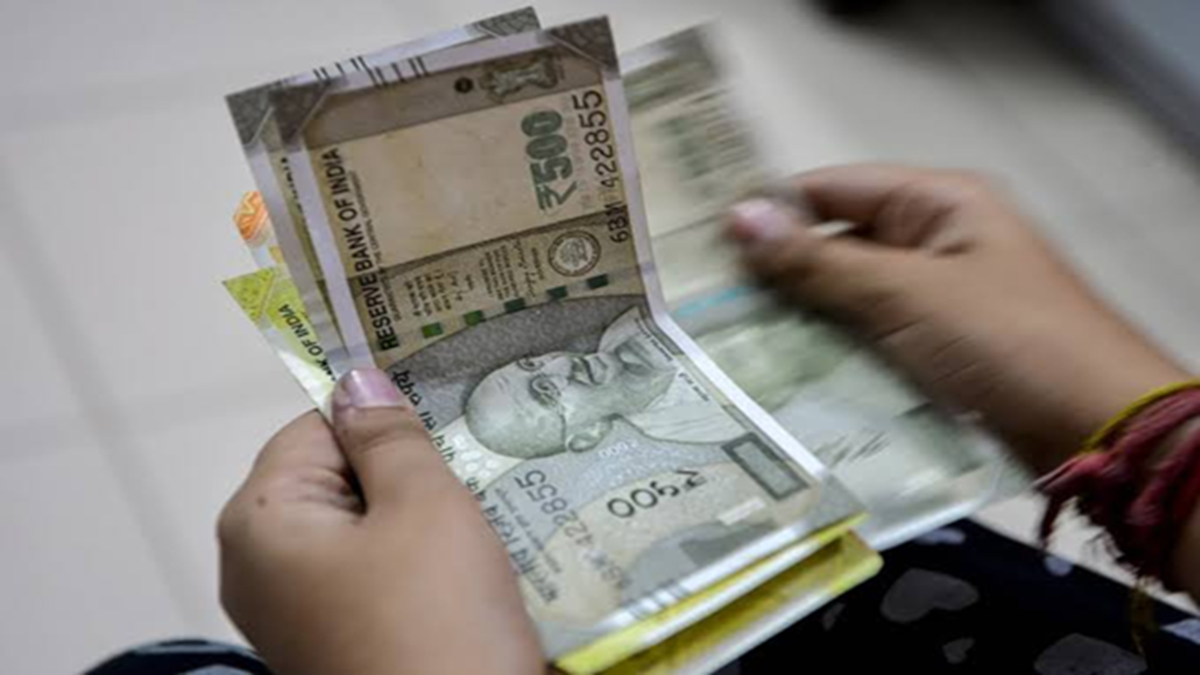
West Bengal Pension News: West Bengal's Suvendu Adhikari has announced a monthly pension of ₹10,000, free travel on government buses, and medical assistance for 325 individuals who were imprisoned during the Emergency. Addressing an event at the state secretariat, Suvendu stated that these individuals endured great hardships to protect democracy during the Emergency. He said, "These brave warriors faced immense difficulties. The state's new government is founded upon the very ideals upheld by these brave warriors."
Chief Minister Adhikari stated that the state government has selected 325 individuals—who were jailed for participating in protests during the Emergency—for the 'Paschim Banga Loktantra Senani Samman' (West Bengal Democracy Fighter Honour). He mentioned that each of these 325 individuals identified by the Bengal government would receive a monthly pension of ₹10,000. Additionally, they would be entitled to free travel on government buses. He further noted that they would receive monthly medical assistance of ₹1,000 for treatment at government hospitals.
BJP Observes 'Constitution Murder Day'
Adhikari stated that if a beneficiary has passed away, the said benefits would be extended to their spouse. He remarked that the new government is built upon the values and principles of those who made sacrifices for the country. The current Bharatiya Janata Party (BJP) government at the Centre observes June 25th every year as 'Constitution Murder Day' to commemorate the Emergency imposed by the then Indira Gandhi government in 1975.
Honouring Individuals with Awards and Pensions
Several BJP-ruled states have also honoured individuals imprisoned for opposing the Emergency with awards and pensions. The Bharatiya Janata Party, which holds power at the Centre, came to power in West Bengal for the first time following the state assembly elections held this year.
Remembering Freedom Fighters
Earlier, Adhikari paid tribute to the freedom fighters who sacrificed their lives in the struggle for independence on the occasion of the 84th anniversary of the 'Quit India Movement'. Recalling the 'Do or Die' slogan of the Father of the Nation, Mahatma Gandhi, Suvendu Adhikari stated in a social media post that thousands of Indians made the ultimate sacrifice for the dream of an independent India.
Addressing the people on this significant day of August 9, he further said, "I offer my deep gratitude and sincere tribute to all those brave freedom fighters. Their unparalleled valour and ultimate sacrifice form the foundation of the independent India we cherish today."
The Emergency in India was in force for 21 months, from June 25, 1975, to March 21, 1977. It was imposed when President Fakhruddin Ali Ahmed, acting on the recommendation of the then Prime Minister Indira Gandhi, declared a national emergency under Article 352 of the Indian Constitution on the grounds of internal disturbance.
Key reasons for the imposition of the Emergency
Allahabad High Court Verdict: On June 12, 1975, Justice Jagmohanlal Sinha delivered a verdict setting aside Indira Gandhi's 1971 election from the Rae Bareli constituency. He also found her guilty of electoral malpractice and barred her from contesting elections for six years.
Jayaprakash Narayan's (JP) Movement: A massive nationwide mass movement (known as 'Sampoorna Kranti' or Total Revolution) led by JP was underway, demanding Indira Gandhi's resignation. During a huge rally at Delhi's Ramlila Maidan on June 25, 1975, a call was made to the police and the army not to obey unconstitutional orders.
Economic and Political Instability: The political atmosphere was extremely tense due to rising inflation and unemployment following the 1971 Indo-Pak war, alongside student movements in Gujarat and Bihar.
Key events and impact during the Emergency
Suspension of Fundamental Rights: Citizens were deprived of their fundamental rights guaranteed by the Constitution (such as the freedom of expression and the right to assemble peacefully without arms). Arrests of opposition leaders: Prominent opposition leaders and activists—such as Atal Bihari Vajpayee, L.K. Advani, Jayaprakash Narayan, Morarji Desai, Chaudhary Charan Singh, and Biju Patnaik—were imprisoned.
Censorship of the press: Strict censorship was imposed on newspapers and the media. Newspapers were required to obtain government approval before publication.
Constitutional amendment: Through the 42nd Constitutional Amendment, the government vastly expanded the powers of Parliament and the Prime Minister while curtailing the powers of the judiciary.
Sanjay Gandhi's controversial programs: During this period, large-scale campaigns for forced sterilization (family planning) and slum clearance in Delhi were carried out, sparking widespread public discontent.
End of the Emergency and announcement of elections
In January 1977, Indira Gandhi unexpectedly announced that Lok Sabha elections would be held in March, and political prisoners were released. The Emergency officially ended on March 21, 1977. Subsequently, the Indian National Congress suffered a crushing defeat in the March 1977 elections; both Indira Gandhi and her son Sanjay Gandhi lost their seats. The Janata Party won a massive majority in the election, and Morarji Desai became India's first non-Congress Prime Minister.
Disclaimer: This content has been sourced and edited from Money Control. While we have made modifications for clarity and presentation, the original content belongs to its respective authors and website. We do not claim ownership of the content.
