
PCSAP Portal: Government Promotes Digital Self-Assessment of Foodgrain Procurement Centres Across India
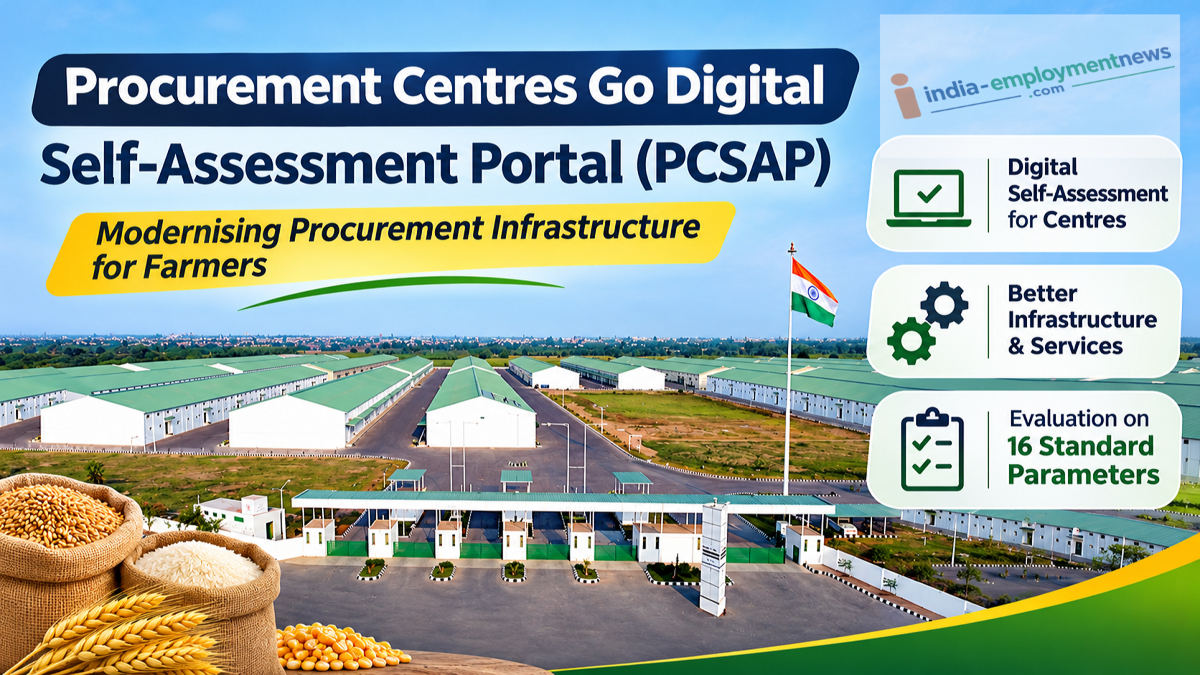
PCSAP Digital Assessment System: The Government of India is focusing on digital monitoring and standardised evaluation of foodgrain procurement infrastructure across the country. In a recent update, the Department of Food and Public Distribution highlighted the role of PCSAP, a digital system designed to help procurement centres in different States and Union Territories assess their facilities and operational arrangements using 16 standard parameters.
The initiative is intended to bring greater consistency to the assessment process while helping authorities identify areas where procurement infrastructure and services may require improvement.
The department's announcement draws attention to the growing importance of technology-based assessment in managing agricultural procurement operations.
What Is PCSAP and Why Is It Important?
PCSAP is a digital self-assessment platform associated with the evaluation of procurement centres operating across India's States and Union Territories.
According to the Department of Food and Public Distribution, the system enables procurement centres to assess themselves against 16 standard parameters.
The use of common assessment criteria provides a structured framework for examining procurement centre arrangements.
Foodgrain procurement centres play an important role in the agricultural supply chain. These facilities serve as collection points where eligible agricultural produce is procured under applicable government procurement arrangements.
Their functioning can affect farmers' experiences during the procurement process, particularly in areas such as accessibility, administrative arrangements and operational efficiency.
A digital assessment mechanism can help authorities review centre-level conditions in a more organised manner.
Digital Self-Assessment Based on 16 Standard Parameters
One of the main features highlighted by the government is PCSAP's use of 16 standard parameters for evaluating procurement centres.
Rather than relying entirely on differently structured local assessment practices, the platform provides a common basis for self-assessment.
This approach can support greater consistency in the information recorded by procurement centres across different regions.
A standardised framework can also make it easier to identify gaps, compare assessment outcomes and determine which facilities may need closer administrative attention.
However, the department's brief public update does not provide the complete list of the 16 parameters. Therefore, the exact criteria and their individual assessment requirements should be confirmed through official PCSAP documentation.
How PCSAP Can Support Foodgrain Procurement Operations
Government procurement centres form an important connection between agricultural producers and the public food management system.
During procurement seasons, large numbers of farmers may visit designated centres to sell eligible crops under the applicable procurement programme.
Effective management of these facilities requires coordination between procurement agencies, local officials and other stakeholders.
A digital self-assessment system can potentially support this process by providing structured information about centre-level readiness and operational arrangements.
For example, standardised assessment records may help administrators understand where infrastructure improvements, additional resources or procedural changes should be considered.
Such benefits depend on how the platform is implemented and how authorities use the information collected.
Common Evaluation Standards Across States and Union Territories
India's agricultural procurement arrangements operate across regions with different infrastructure conditions, crop patterns and administrative requirements.
Consequently, procurement centres may face different operational challenges depending on their locations.
The PCSAP framework introduces a common set of assessment parameters that can be applied across States and Union Territories.
This standardisation may help authorities examine procurement centre conditions using comparable criteria while recognising regional differences.
It can also provide a foundation for more systematic reporting and administrative review.
The department has not, in the cited update, announced any new ranking of states or procurement centres based on PCSAP assessments.
Why Digital Monitoring Matters for Farmers
Farmers depend on properly functioning procurement facilities to participate in government procurement programmes.
Problems involving centre arrangements, administrative coordination or inadequate infrastructure can create inconvenience during busy procurement periods.
Digital assessment tools can help bring attention to such operational concerns by creating a structured process for documenting centre-level conditions.
If assessment findings are reviewed and acted upon effectively, they may contribute to improvements in procurement centre management.
However, PCSAP should not be confused with a direct farmer payment platform, a crop registration portal or a grievance registration service. The department's announcement specifically describes its function as digital self-assessment of procurement centres.
Technology and Transparency in Public Food Management
Digital platforms are increasingly relevant to public administration because they can support organised recordkeeping, consistent reporting and more efficient access to operational information.
In foodgrain procurement, standardised digital records may help reduce variations in how centre-level assessments are documented.
They can also support evidence-based administrative planning when combined with appropriate verification and follow-up.
Nevertheless, self-assessment alone does not guarantee improved procurement services. Effective results require reliable reporting, review by responsible authorities and corrective action wherever shortcomings are identified.
The PCSAP initiative provides a framework through which such information can be collected in a more structured manner.
Does PCSAP Change MSP or Farmer Procurement Rules?
The Department of Food and Public Distribution's announcement does not indicate any revision to Minimum Support Price (MSP), farmer eligibility conditions, crop procurement rates or payment procedures.
Its focus is on evaluating procurement centres through a digital self-assessment mechanism.
Farmers seeking information about crop procurement schedules, registration requirements, MSP rates or payment status should continue referring to their respective state procurement agencies and official government notifications.
Any changes to procurement rules would need to be confirmed separately through the relevant authorities.
Government Emphasises Standardised Procurement Centre Assessment
The Department of Food and Public Distribution's latest communication highlights PCSAP as a technology-supported mechanism for evaluating procurement facilities across India.
By enabling digital self-assessment against 16 standard parameters, the system offers a common framework for recording and reviewing procurement centre conditions.
The initiative reflects an administrative approach that places greater emphasis on structured information and digital evaluation.
For procurement agencies and state authorities, the value of the platform will ultimately depend on the accuracy of assessments and the steps taken to address identified deficiencies.
Source Credit: Department of Food & Public Distribution, Government of India — Official X (Twitter) Account @fooddeptgoi, November 2026.
Add a farmer-friendly summaryTrim repeated explanations
