
PAN Rules 2026 Update: New Forms, Mandatory DOB Proof & Stricter Document Checks Explained
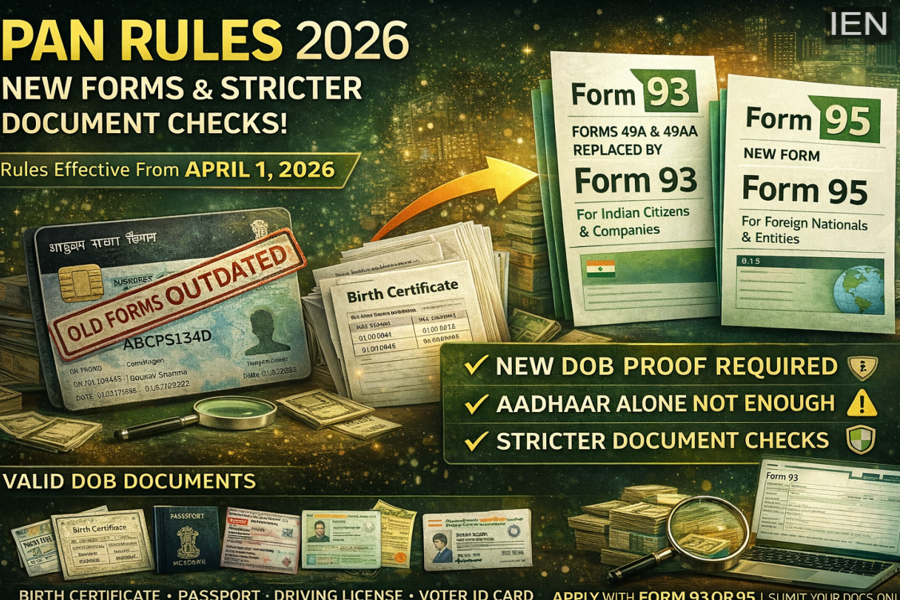
Applying for a PAN card is set to become more structured and secure from April 2026, as the government introduces major changes to the application process. These updates aim to improve verification, reduce fraud, and bring better tracking of financial transactions.
Here’s a complete breakdown of what has changed and what applicants need to know before applying for a PAN card.
New PAN Application Forms Introduced
Under the updated rules, the traditional PAN application forms have been replaced:
- Old forms 49A (for Indian citizens) and 49AA (for foreign applicants) are now discontinued
- New forms have been introduced:
- Form 93 – for Indian citizens and domestic entities
- Form 95 – for foreign nationals and organizations
This change simplifies categorization while aligning with updated compliance requirements.
Aadhaar Alone Is No Longer Enough
Earlier, PAN could often be issued based solely on Aadhaar verification. However, under the new rules, Aadhaar alone will not be sufficient.
What’s changed:
- Applicants must now submit additional supporting documents
- PAN details must exactly match Aadhaar information
- Any mismatch in name or details may lead to rejection
This ensures stronger identity verification and reduces duplication or misuse.
Date of Birth Proof Now Mandatory
One of the biggest changes is the mandatory requirement of Date of Birth (DOB) proof.
Accepted documents include:
- Birth Certificate
- Voter ID Card
- Class 10 Marksheet
- Driving License
- Passport
Without valid DOB proof, PAN applications may not be processed.
How to Apply for PAN Card Now
The application process remains online but with updated steps:
- Visit official portals like NSDL or UTIITSL
- Select the appropriate form (Form 93 or Form 95)
- Fill in personal and financial details
- Upload required documents
- Pay the application fee
- Receive an acknowledgment number to track status
New Rules for Financial Transactions
Along with PAN application changes, rules for using PAN in financial transactions have also been updated:
- PAN required if cash deposits exceed ₹10 lakh annually
- Mandatory for vehicle transactions above ₹5 lakh
- Required for hotel/restaurant payments above ₹1 lakh
- Property transactions threshold may increase to ₹20 lakh
- Changes also proposed for insurance-related transactions
These measures aim to ensure transparency in high-value transactions.
Why These Changes Were Introduced
The government’s objective behind these reforms is clear:
- Strengthen identity verification
- Prevent tax evasion
- Track high-value transactions effectively
- Improve compliance across the financial system
By tightening PAN-related rules, authorities can better monitor income and expenditure patterns.
What Applicants Should Keep in Mind
Before applying for PAN, make sure:
- Your Aadhaar details are accurate and updated
- You have valid DOB proof documents ready
- All submitted information matches across documents
- You choose the correct application form
Final Thoughts
The updated PAN rules for 2026 mark a shift toward stricter compliance and better financial transparency. While the process may feel slightly more detailed than before, it ultimately ensures greater security and accuracy.
If you’re planning to apply for a PAN card, being prepared with the right documents and understanding the new rules will help you avoid delays and ensure a smooth application process.
