
Old Pension Scheme Demand Grows Amid 8th Pay Commission Talks, Government Faces Policy Dilemma
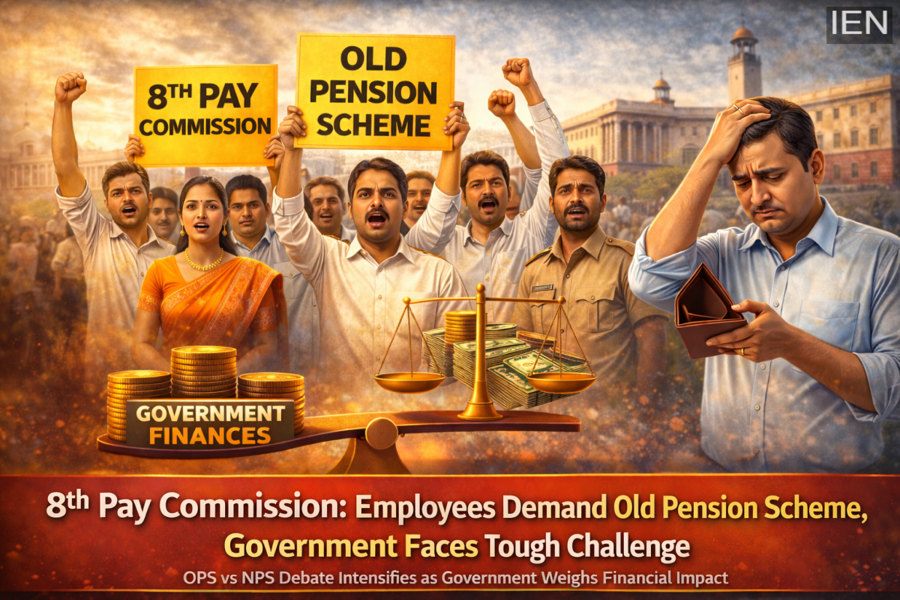
As discussions around the 8th Pay Commission gain momentum in India, the debate over the Old Pension Scheme (OPS) has once again intensified. Several government employee unions across the country have renewed their demand for restoring the old pension system, arguing that it offers greater financial security after retirement compared to the current pension framework.
The issue has become a significant policy challenge for the government, as balancing employee expectations with fiscal responsibility remains a complex task. While employees emphasize retirement stability under the old system, economic experts warn that bringing back OPS could create a substantial financial burden on public finances.
Why Government Employees Want the Old Pension Scheme Back
The Old Pension Scheme was discontinued for most government employees after the introduction of the National Pension System (NPS) in 2004. Under OPS, retired employees were entitled to a fixed monthly pension based on their last drawn salary, ensuring stable and predictable income after retirement.
Government employees argue that this guaranteed pension provided long-term financial security and protected retirees from economic uncertainties. In contrast, the National Pension System is a market-linked pension plan, where returns depend on investments in equity and debt markets.
Because NPS returns are not guaranteed, many employees believe it exposes them to financial risks after retirement. As a result, several employee associations have been demanding that the government restore OPS instead of continuing with the NPS framework.
Protests and Growing Pressure on the Government
In recent months, the demand for restoring the Old Pension Scheme has gained momentum in several states. Government employees and their unions have organized demonstrations and protests to push their demand.
These protests highlight the growing dissatisfaction among public sector workers who believe the current pension system does not provide the same level of security as OPS.
The renewed debate has also gained political attention, particularly at a time when discussions about the 8th Pay Commission are becoming more prominent. Employee unions hope that pension reforms could be considered alongside salary revisions under the upcoming pay commission.
Financial Challenges in Bringing Back OPS
While employee groups strongly support the restoration of OPS, economic experts and policymakers warn that such a move could significantly strain government finances.
The Old Pension Scheme is a defined-benefit system, meaning the government guarantees pension payouts regardless of economic conditions. This structure requires continuous financial commitments from the government budget.
In contrast, the National Pension System operates as a defined-contribution scheme, where both the employee and the government contribute to a pension fund that is invested in financial markets.
Experts say that switching back to OPS for millions of government employees could dramatically increase long-term pension liabilities for both central and state governments.
Why the Decision Is Not Easy for the Government
The government now faces a complex situation. On one hand, there is growing pressure from employee organizations demanding guaranteed retirement benefits. On the other hand, financial experts warn that reverting to the Old Pension Scheme could create long-term fiscal challenges.
Reintroducing OPS could increase government expenditure significantly and affect budget allocations for other public welfare programs and development projects.
Because of these competing concerns, policymakers may need to explore a balanced approach that addresses employee security while maintaining fiscal sustainability.
What Lies Ahead
With the 8th Pay Commission expected to shape the future of government salaries and benefits, the debate around pension reforms is likely to continue in the coming months.
Employee unions are expected to intensify their campaigns for the restoration of OPS, while policymakers will continue evaluating the financial implications of any potential changes.
For now, the issue remains one of the most sensitive topics in public sector employment policy, with far-reaching implications for both government finances and the financial security of millions of employees.
