
Now your car battery will also have an Aadhaar number! Why has the government introduced these new guidelines, and what benefits will you get?
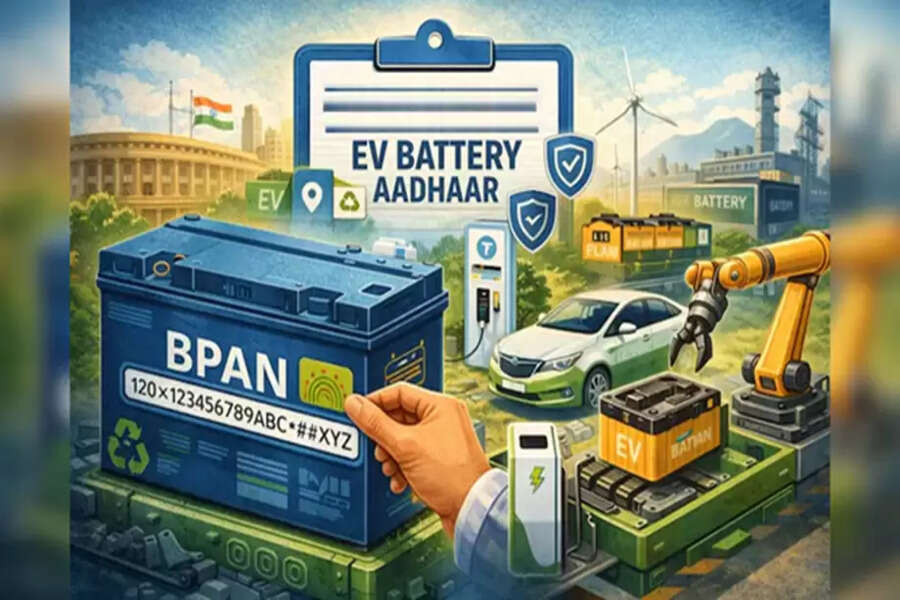
If you drive an electric vehicle (EV) or are planning to buy one in the future, this news is directly relevant to you. The Union Ministry of Road Transport has proposed assigning an 'Aadhaar-like identification number' to electric vehicle batteries. The aim is to track the entire lifecycle of the battery, from manufacturing and use to recycling and final disposal. This will ensure transparency and security throughout the entire cycle. In simple terms, in the future, no EV battery will be 'anonymous'. Every battery will have a complete record.
BPAN number will be 21 characters long, and will record all data
According to the draft guidelines prepared by Union Minister Nitin Gadkari's ministry, every EV battery will be assigned a unique 21-character Battery Pack Aadhaar Number (BPAN). This responsibility will lie with the battery manufacturer or importing company. Furthermore, it will be mandatory to upload all digital data related to the battery, including details from raw materials to performance and recycling, to a government portal.
The guidelines clearly state that the BPAN will be affixed to the battery in a visible and durable location. Just as the Aadhaar number has become a person's identity, the BPAN will become the battery's identity.
Why does the government want the BPAN system?
The government believes that this system will bring transparency, accountability, and sustainability to the battery ecosystem. If a battery is replaced for recycling or reuse (second life), a new BPAN will be issued with the necessary modifications. This will clearly indicate which battery is being used, when, and in what condition.
In India, approximately 80 to 90 percent of the total demand for lithium-ion batteries comes from electric vehicles. Therefore, the government wants to prioritize EV batteries in this new system in the initial phase. This step is considered crucial for reasons of safety, large-scale use, and environmental impact. This framework has been recommended for implementation under the Automotive Industry Standard (AIS) to ensure that the views of battery manufacturers, EV companies, recyclers, and regulatory agencies are all included. It is believed that this initiative will not only benefit the environment but also provide consumers with safer and more reliable electric mobility.
Disclaimer: This content has been sourced and edited from Dainik Jagran. While we have made modifications for clarity and presentation, the original content belongs to its respective authors and website. We do not claim ownership of the content.
