
No UPI, No Banking App: How a ₹10 Note Helps Move Crores in Mumbai’s Famous Jewellery Market
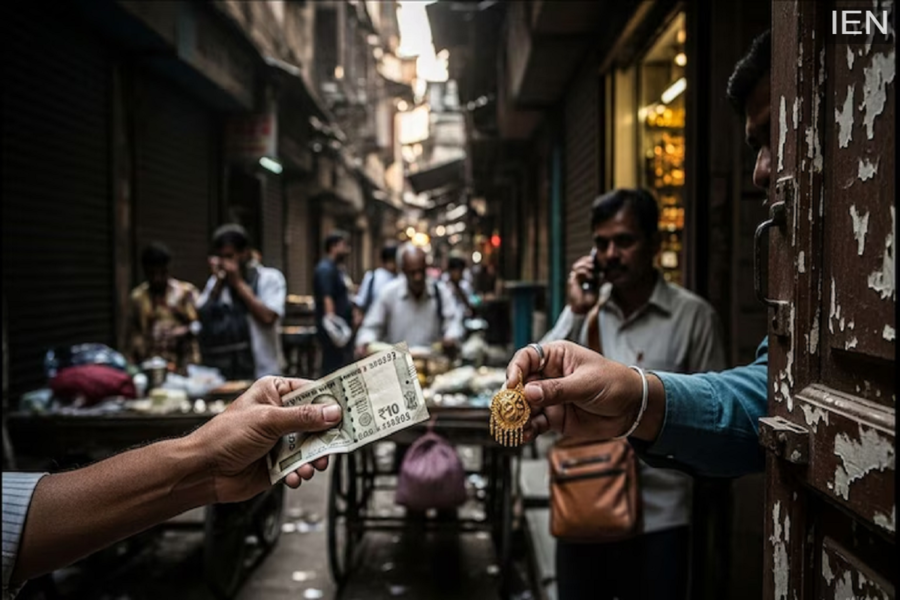
In an era where digital payments, UPI transfers, internet banking, and mobile wallets dominate financial transactions, one of India's oldest trading hubs continues to rely on a surprisingly simple system built on trust. Deep inside Mumbai's bustling jewellery district, high-value deliveries involving gold, diamonds, and cash often depend not on technology but on something as ordinary as a ₹10 currency note.
For decades, traders in the country's largest bullion and diamond market have used a traditional network that predates modern banking. Despite rapid digitisation, this age-old method remains popular among thousands of merchants who consider it fast, reliable, and highly secure.
The Traditional Network That Still Powers India's Jewellery Trade
Mumbai's jewellery and diamond market handles transactions worth crores of rupees every day. While many businesses use digital banking channels, a significant portion of valuable goods and cash continues to be transported through a trusted delivery mechanism known as the Angadia system.
The network operates as a specialised courier service that physically transports valuables between major commercial hubs such as Mumbai, Surat, Ahmedabad, Rajkot, and other business centres.
Unlike conventional logistics companies, Angadia operators have built their reputation over generations through personal trust, reliability, and close relationships with trading communities.
What Exactly Is the Angadia System?
The Angadia system originated within Gujarat's trading communities and has been functioning for centuries.
Under this arrangement, trained couriers personally carry:
-
Gold ornaments
-
Precious stones
-
Diamonds
-
Cash
-
High-value documents
-
Other valuable assets
from one city to another.
Many jewellery and diamond merchants continue to work with the same Angadia families for generations, relying on long-standing trust rather than complex paperwork.
The system is particularly popular in industries where speed, confidentiality, and personal accountability are highly valued.
The Fascinating Role of a ₹10 Note
One of the most intriguing aspects of this delivery mechanism is its verification process.
Instead of using digital authentication, QR codes, passwords, or banking records, merchants often use a simple currency note as proof of identity.
Here's how it generally works:
Step 1: A Currency Note Is Selected
The sender and receiver mutually agree on a specific ₹10, ₹20, ₹50, or ₹100 note.
Step 2: Serial Number Is Recorded
The unique serial number printed on the note is noted down and shared securely.
Step 3: Goods Begin Their Journey
The valuable package is handed over to the courier network for transportation.
Step 4: Verification at Delivery
When the shipment reaches its destination, the recipient must produce the agreed currency note or provide the exact serial number.
Step 5: Goods Are Released
Only after successful verification is the package handed over.
This simple yet effective process has been used for decades and remains trusted by many traders handling extremely valuable consignments.
Why Traders Continue to Trust This System
While digital payments have transformed business operations across India, many traders believe the Angadia network offers advantages that conventional systems sometimes cannot match.
Fast Delivery
Packages often reach their destination within 24 hours.
Personal Accountability
Unlike automated systems, specific individuals are responsible for handling deliveries.
Strong Community Trust
The network operates largely on relationships built over decades.
Competitive Costs
Transportation charges are often lower than those of specialised logistics services.
Minimal Documentation
Transactions can be completed quickly without lengthy administrative procedures.
Is Angadia the Same as Hawala?
A common misconception is that Angadia operations are similar to Hawala transactions.
However, the two systems are fundamentally different.
Angadia System
-
Physical transportation of cash or valuables.
-
Operates as a courier and delivery service.
-
Generally considered legal when conducted in accordance with regulations.
-
Actual movement of goods takes place.
Hawala System
-
Money is transferred through informal networks without physically moving funds.
-
Transactions occur outside formal banking channels.
-
Often associated with unregulated and illegal financial transfers.
Because of this distinction, Angadia services continue to operate openly in commercial markets, although they remain subject to regulatory oversight.
How Large Is This Network?
The Angadia system forms an important part of India's precious metals and gemstone trade.
Thousands of businesses involved in:
-
Gold trading
-
Diamond exports
-
Jewellery manufacturing
-
Bullion distribution
continue to use these services regularly.
Industry estimates suggest that valuables worth hundreds of crores can move through these networks during peak trading periods.
Regulatory Attention Has Increased
Although the system remains widely used, authorities closely monitor the sector.
Regulatory agencies regularly conduct inspections and investigations to ensure compliance with financial laws, taxation rules, and anti-smuggling regulations.
The jewellery and bullion industries remain under constant scrutiny due to their high-value transactions and sensitivity to financial regulations.
Why This Old System Survives in the Digital Age
The continued success of the Angadia network highlights an important reality about commerce: trust remains as valuable as technology.
Even as UPI transactions break records and digital payments become the norm, many merchants still prefer a system that combines personal relationships, speed, confidentiality, and decades of proven reliability.
For these traders, a simple currency note can sometimes serve as a stronger delivery guarantee than the most sophisticated digital authentication tools.
Final Takeaway
While India rapidly embraces cashless payments and digital banking, Mumbai's jewellery and diamond market continues to preserve a fascinating tradition. Through the Angadia system, valuables worth crores of rupees are transported daily using a network built on trust, reputation, and simple verification methods such as the serial number of a ₹10 note.
The practice serves as a reminder that in certain corners of India's business world, centuries-old systems still coexist successfully alongside modern financial technology.
