
No PAN? Court Ruling Clarifies Rules on High-Value Cash Loans Up to ₹80 Lakh
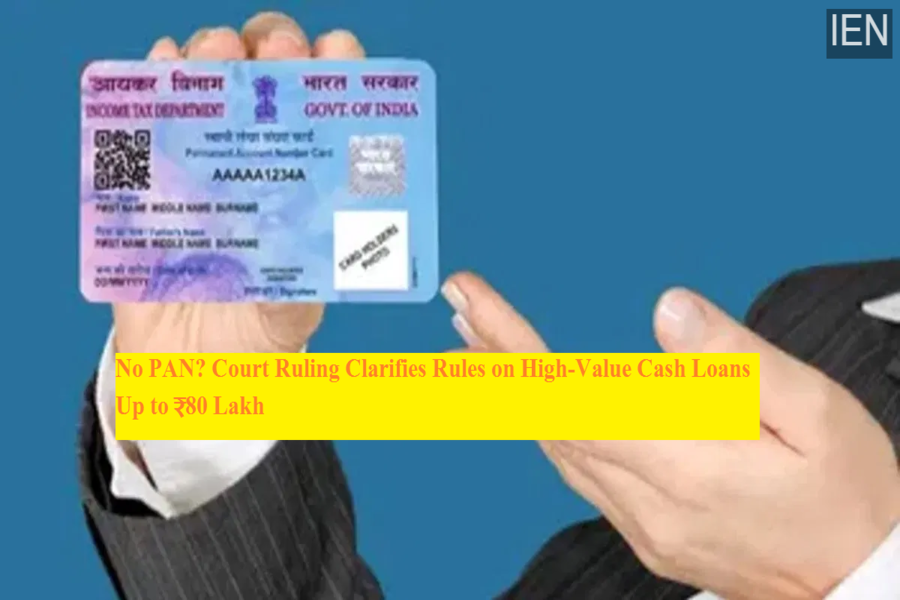
A recent judicial decision has sparked nationwide discussion about whether large cash loans can be given without quoting a PAN card and what that means for tax scrutiny. In a significant ruling dated January 7, 2026, the Madras High Court clarified that refusing to disclose a PAN number in court after lending a large sum in cash through a promissory note does not automatically trigger a tax investigation.
The judgment has drawn attention from financial experts, legal professionals, and borrowers alike because it touches on the delicate balance between private financial transactions, judicial authority, and tax enforcement powers. Here’s a detailed look at what the ruling actually means and why it matters.
Court’s Key Observation: PAN Disclosure Isn’t Always Mandatory
The court noted that if a person lends a substantial amount of money in cash and later declines to reveal their PAN details during legal proceedings, that refusal alone cannot be treated as sufficient grounds for tax authorities to initiate an investigation.
This clarification is crucial because many assumed that any undisclosed PAN in high-value transactions would automatically attract scrutiny. The court emphasized that legal proceedings and tax investigations operate within separate domains. Simply put, a civil dispute over repayment does not instantly become a tax violation case.
Possible Tax Violations Still a Separate Matter
While the court protected individuals from automatic scrutiny, it also made it clear that this does not grant immunity from tax laws. If there is suspicion that a transaction may violate provisions of the Income Tax Act—especially rules related to large cash dealings—the matter can still be examined by tax authorities.
For example, provisions such as Section 269ST restrict cash transactions above a specified limit. Determining whether such rules have been violated falls strictly within the jurisdiction of tax officials, not the civil court handling a dispute between lender and borrower.
In essence, the ruling draws a line: courts will not force immediate PAN disclosure, but they can inform tax authorities if circumstances warrant further review.
Reference to Apex Court Guidance
While delivering its decision, the High Court also referred to earlier guidance issued by the Supreme Court of India. That guidance outlined the boundaries between judicial proceedings and tax enforcement.
According to established legal principles, courts must ensure that their processes are not misused to bypass statutory frameworks. At the same time, they must respect the jurisdiction of specialized authorities such as tax departments. By citing this precedent, the High Court reinforced that legal transparency must coexist with procedural fairness.
Why This Ruling Matters for Borrowers and Lenders
This judgment does not legalize undisclosed large cash transactions, nor does it encourage lending without proper documentation. Instead, it clarifies procedural rights. Individuals involved in private lending disputes now have clearer legal protection against automatic tax scrutiny solely because PAN details were not disclosed in court.
However, financial advisors stress that transparency remains the safest approach. Maintaining proper records, reporting large transactions where required, and complying with tax laws is still essential. Failure to do so could invite investigation if authorities independently find irregularities.
Legal and Financial Implications
Experts say the ruling highlights three important principles:
-
Jurisdictional separation: Civil courts handle disputes; tax authorities handle tax compliance.
-
No automatic suspicion: Large cash lending without PAN disclosure does not instantly imply tax evasion.
-
Regulatory oversight remains: Authorities can still investigate if there is credible evidence of violations.
These distinctions are particularly relevant in India’s evolving financial ecosystem, where digital payments and regulatory monitoring are increasing but cash transactions still exist in certain sectors.
The latest judgment clarifies a commonly misunderstood issue: not every large cash loan without PAN disclosure becomes a tax case. The court has underscored that legal process and tax enforcement must function within their respective limits.
For borrowers and lenders, the takeaway is simple—while the law provides procedural safeguards, compliance with financial regulations remains essential. Transparency, documentation, and adherence to tax norms continue to be the safest way to avoid complications, regardless of the loan amount involved.
