
No more hassle of providing photocopies of your Aadhaar card, thanks to UIDAI’s new system..
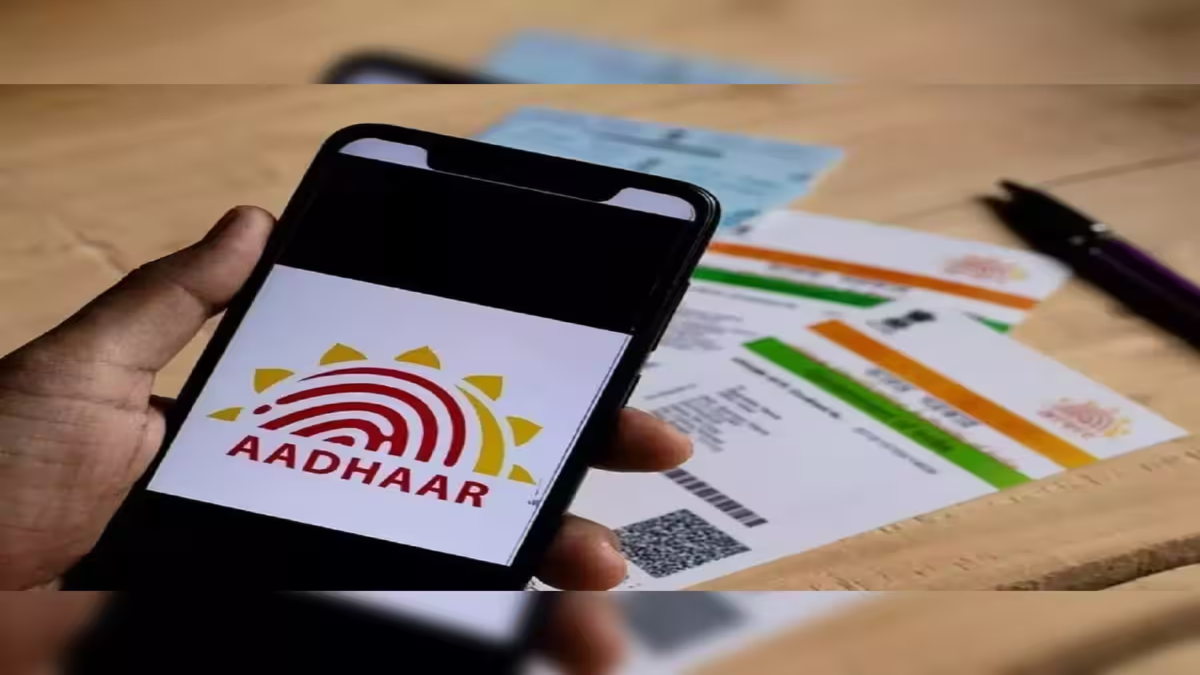
Nowadays, whether you visit a school, a hospital, or any government office, you are asked to provide your Aadhaar card. Even when traveling, you are often required to submit a photocopy of your Aadhaar. You may not even be aware of how many places your Aadhaar number is being used. From checking into a hotel to visiting a temple, the Aadhaar card has become essential. However, you will soon be relieved of the hassle of providing photocopies of your Aadhaar card. The Unique Identification Authority of India (UIDAI) is strengthening its digital network to address this. It is developing an offline verification system for over 300 organizations, which will allow for the automated authentication of an individual's identity for everyday requirements.
Inclusion of entities ranging from schools and hospitals to private companies
These 300 institutions have been registered as 'Offline Verification Seeking Entities' (OVSE). This group includes hotels and restaurants, hospitals, educational institutions like universities and colleges, event management companies, businesses such as Swiggy and Zomato, and organizations linked to government services. The system is set to be implemented more effectively starting in January 2027. For some time, the UIDAI has been working to onboard government and semi-government institutions, as well as private companies, hotels, and restaurants, into this system—encouraging them to adopt app-based digital identity verification instead of relying on physical photocopies. Over the past year, the UIDAI has successfully onboarded more than 100 such major organizations. Currently, photocopies of the Aadhaar card are required for everything from obtaining gas, water, or electricity connections to completing various government-related tasks. They are also frequently requested for both small and large transactions in banks and the marketplace.
Online Aadhaar Verification
The objective of this initiative is to replace the collection of physical, paper-based documents for identity verification with an online authentication process. This will reduce paperwork and eliminate the risk of misuse of an individual's personal information. When a user visits a school, hospital, or government department to avail of a service, they will simply need to provide their consent. Once the user provides consent, their identity details can be shared via the app. Users have the control to decide exactly how much information linked to their Aadhaar is shared with a government or private entity. In this process, the 12-digit unique ID number is not transmitted to the organization performing the verification.
The UIDAI has assured that this expansion of services is both legal and entirely secure under the Personal Data Protection Act. It relies on user consent and ensures that only the minimum amount of data is used. This facilitates identity verification via mobile phone, eliminating the need for cumbersome paperwork.
Rapid Growth in Aadhaar App Usage
Beyond digital identity verification, the app is also being used to update personal data. The Aadhaar app has been downloaded by 75 million (7.5 crore) users. Through the UIDAI app, addresses have been updated over 2.2 million (22 lakh) times, and email addresses have been updated 4 million (40 lakh) times. More than 8.6 million (86 lakh) people use it on a daily basis. The app is also increasingly being used for security-related features; over 45 million (4.5 crore) biometric updates have been completed. Users can update their identification details based on fingerprints and iris scans.
Disclaimer: This content has been sourced and edited from NDTV India. While we have made modifications for clarity and presentation, the original content belongs to its respective authors and website. We do not claim ownership of the content.
