
No More Cash at Tolls Starting Tomorrow; Vehicles to Become More Expensive; Updates on Cooking Gas; 10 Things Changing on the Morning of April 1st
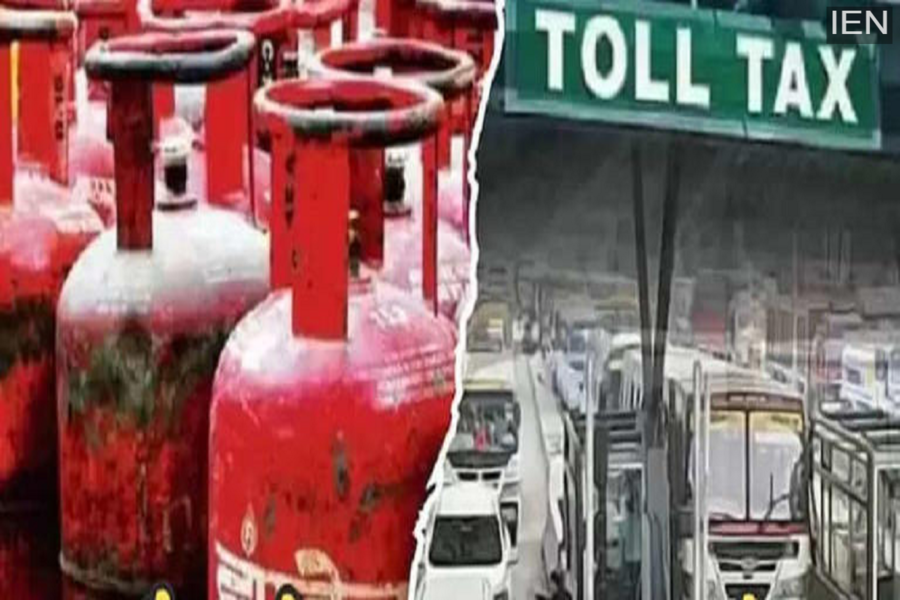
Major changes are coming into effect in India starting April 1st. Toll payments will become entirely cashless; vehicle prices are likely to rise; LPG rates will be updated; and tax regulations will undergo changes. So, find out which 4 essential tasks you need to complete today, and learn how these 10 major changes will impact your finances, travel, and savings.
If you think April 1st merely marks the beginning of a new financial year, you are missing out on some major news. In reality, the changes coming into effect this April 1st are set to transform everything—your expenses, taxes, travel, and savings. The changes taking place after midnight tonight will directly impact your finances and financial planning. Therefore, this news serves not just as information, but as a crucial alert.
A Quick Overview of the Key Changes:
- Toll plazas to become completely cashless
- Last chance for tax-saving investments is today
- 3 major deadlines expire
- Railways, Banking, Markets—10 major changes across sectors
- Miss these deadlines, and fines or increased costs are inevitable
Why are all these changes taking place?
- The government aims to accelerate the ‘Digital India’ initiative
- To make the tax system more transparent and user-friendly
- To curb fraud and reduce reliance on cash-based systems
- To save on traffic congestion, time, and operational costs
No More Cash at Tolls—What Happens Now?
What is changing?
- Cash payments are now discontinued at all toll plazas across the country
- Payments can be made only via FASTag or UPI
Why is this change necessary?
- To eliminate long queues at toll plazas
- To save on fuel consumption and travel time
- To promote digital transactions
What if you don’t have a FASTag?
- You will have to make the payment using UPI
- Otherwise, you may face a fine or be denied entry
How does the FASTag system work?
- The vehicle enters the designated lane
- The FASTag is scanned
- A payment request is sent to the bank
- The NETC system verifies the transaction
- The corresponding amount is debited
- The entire process is completed within 4–5 seconds
These 4 Major Responsibilities Expire Tonight
1. Why is it crucial to keep your schemes/accounts active?
Which Schemes Require Investment?
Sukanya Samriddhi
What are the rules?
A minimum deposit of ₹250–₹500 is mandatory.
What happens if you don’t?
The account gets deactivated.
It entails penalties and administrative hassles.
Why is this the last chance to save on taxes?
What benefits will you receive?
Tax exemption of up to ₹1.5 lakh under Section 80C.
Tax exemption of up to ₹1 lakh under Section 80D.
What happens if you don’t act today?
You will have to wait until next year.
3. What is the alert for salaried employees?
What needs to be done?
Submit proofs for HRA, insurance, and loans.
What happens if you don’t?
Higher TDS (Tax Deducted at Source) will be deducted.
You will face a long wait for your tax refund.
What preparations should be made regarding tolls?
Activate your FASTag.
Keep your UPI active.
Tax and Banking: What’s New?
What are the benefits of the New Tax Regime?
Income up to ₹12 lakh is tax-free.
Relief extended up to ₹12.75 lakh for salaried individuals.
What are the new Forms 130 and 131?
These are the new versions of the old Forms 16/16A.
They provide greater detail and more accurate information.
Impact: Filing your ITR (Income Tax Return) becomes easier.
Why have ATM withdrawal limits changed?
PNB: Limit revised to ₹25,000–₹50,000.
Impact:
If you require a larger amount of cash, you will need to visit the bank branch.
What has changed regarding PAN rules?
Aadhaar is no longer accepted as proof of Date of Birth (DOB).
You will be required to submit alternative documents.
What is the new rule for ticket refunds?
Cancellations must now be made at least 8 hours prior to departure.
Impact: If cancelled late, you may forfeit your money.
What is the benefit of changing your boarding station?
Changes can now be made up to 30 minutes prior to departure.
Impact: Increased flexibility for travelers.
Why has FASTag become more expensive?
What has changed?
The annual pass has become 2.5% more expensive.
How much will you have to pay now?
- Between ₹3,000 and ₹3,075.
- Impact: Expenses will increase for regular travelers.
- Impact on the Kitchen and the Market
Why are LPG and ATF rates changing?
- Monthly Review
- Impact: Hotel food and flight tickets become more expensive.
Why will car prices rise?
- Likely price hike of 2-3%
- Impact: Buying a new car becomes more expensive.
- Understand PPF vs. NPS vs. SSY at a glance:
- PPF: Safe, fixed returns
- NPS: Market-linked, higher returns
- SSY: Best savings option for a daughter
| Parameter | PPF (Public Provident Fund) | NPS (National Pension Scheme) | SSY (Sukanya Samriddhi Yojana) |
|---|---|---|---|
| Interest Rate | 7.1% | 9% – 12% (Market-based) | 8.2% |
| Annual Investment | ₹500 – ₹1.5 lakh | ₹1000 – No Limit | ₹250 – ₹1.5 lakh |
| Lock-in Period | 15 years | Till 60 years of age | 21 years or until marriage |
| Risk Level | Zero (Government-backed) | Low to Medium | Zero (Government-backed) |
Why is this important for you?
- A direct impact on your wallet
- Savings, taxes, and expenses—all three will change
- If you don’t plan ahead, financial loss is inevitable
What does this mean for you?
- You will no longer be able to pay tolls in cash
- Opportunities for tax savings may come to an end
- Certain schemes may be discontinued
- Higher TDS (Tax Deducted at Source) may be applicable
- Your overall expenses may increase
What should you do immediately?
- Activate your FASTag
- Ensure your UPI is active
- Complete your tax-saving investments
- Deposit the minimum required balance in your savings schemes
- Submit necessary proofs to your employer/office
Key Takeaways for You
Starting April 1st, your digital life is set to become even more indispensable. Essentially, the move to a ‘cash-free’ environment at toll plazas means that your smartphone has now effectively become your ‘wallet.’ While the new tax slabs may leave you with more disposable income, the new ATM withdrawal limits imposed by banks could force you to make frequent trips to the bank just to withdraw cash. All in all, this is the year of ‘Digital Discipline.’
Important Questions Related to this Article (FAQs)
Q1: Will toll payments become completely cashless starting April 1st?
Yes, payments will be accepted exclusively via FASTag and UPI.
Q2: What should I do if I do not have a FASTag?
You can make the payment using UPI.
Q3: When is the last day for tax-saving investments?
March 31st is the final deadline.
Q4: Will there be any tax exemptions under the new tax regime?
Yes, income up to ₹12 lakh could potentially be tax-free.
Q5: Have the refund rules for railway tickets changed?
Yes, cancellations must now be made at least 8 hours prior to departure.
