
NHAI: This machine can determine exactly how many potholes are on any given road—in just minutes..
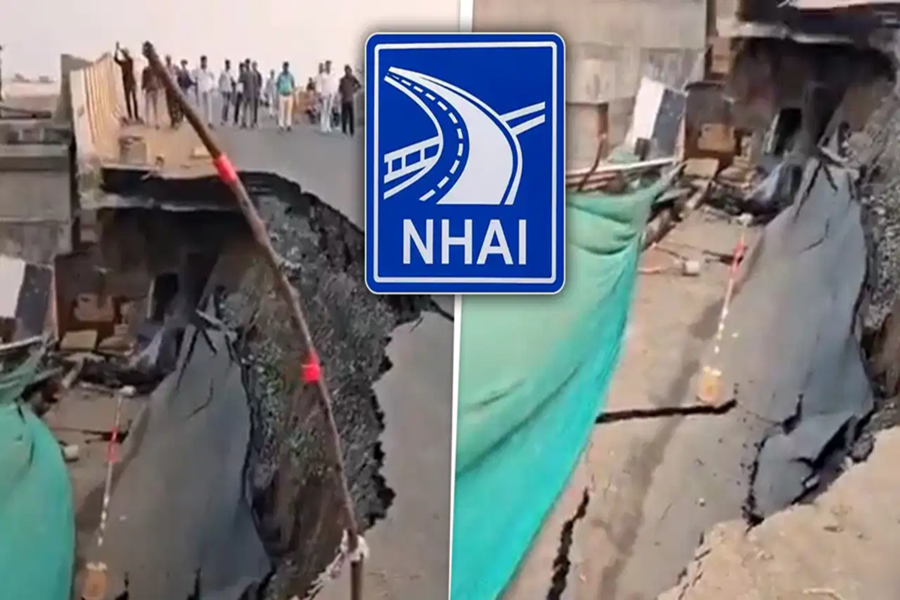
By now, you have likely heard about, seen, and understood the concept of an ultrasound machine for the human body. But have you ever wondered what happens if a road sustains damage or encounters structural issues? To address this, the National Highway Authority has developed a device capable of detecting every aspect of a road—from minor wear and tear to major structural defects—in real-time.
This machine is named the NSV (Network Survey Vehicle). In an exclusive conversation with TV9 Bharatvarsh, road safety expert Anurag Kulshrestha explained that this system provides highly precise data regarding roads, which can be utilized to improve their quality and condition. He noted that this type of technology is already being employed in numerous countries across the globe, and it is now set to be implemented in India as well.
**How Does This System Stand Out?**
Typically, when conducting a manual road survey, a team of eight members can audit approximately 80 kilometers of road in a single day. With this new technology, however, it is possible to survey up to 300 kilometers in a single day. Moreover, the system is so sensitive that it will record even a crack as minute as one millimeter.
**What Are Its Applications?**
Anurag Kulshrestha stated that the NSV is a high-tech vehicle designed to automatically survey the condition, quality, and inventory of roads and highways. It is utilized by the National Highways Authority of India (NHAI) to measure detailed data regarding road quality—including potholes, cracks, and surface roughness. It is even claimed that the system can generate precise data on roadside fixtures, such as signboards, streetlights, and drainage systems.
**How Does the System Work?**
The NSV is equipped with an array of state-of-the-art sensors that collect precise road data even while the vehicle is traveling at normal speeds. Specifically, a laser road profilometer is used to measure surface irregularities and the depth of the road's texture. **The Magic of Cameras**
Anurag Kulshrestha explained that the NSV (Network Survey Vehicle) is equipped with high-resolution cameras positioned all around it. These cameras capture 360-degree images—covering the right, left, front, and the road surface beneath—as well as 3D point cloud data. Additionally, through Differential GPS (DGPS), the system tracks the vehicle's precise geographical location (latitude, longitude, and elevation). With the aid of Artificial Intelligence (AI) and lasers, it automatically detects cracks and potholes present on the road.
**Data at the Command Center**
The Command Center is the first to receive the data transmitted from the NSV. By analyzing this data, a determination is made regarding whether or not the road requires repairs. Once the data has been processed and prepared, the necessary action is initiated. The entire process operates online, thereby ensuring accountability for all parties involved.
**Establishing Accountability**
Anurag Kulshrestha stated that once road repairs are carried out using this system, the generated records will serve as invaluable evidence for establishing accountability. Since all records are stored digitally rather than manually, any discrepancies or issues identified will trigger immediate action, and the necessary corrections will be implemented through technological means.
**Why Better Roads Are Essential**
According to statistics, approximately 180,000 deaths resulted from road accidents in India during the first half of 2025, with over 29,000 of these fatalities occurring on National Highways. Estimates suggest that road accidents inflict a loss of approximately 3% on India's GDP. Most alarmingly, 66.4% of these fatalities involve young individuals aged between 18 and 45. The states reporting the highest incidence of road accidents include Uttar Pradesh, Tamil Nadu, Maharashtra, Madhya Pradesh, and Karnataka.
Disclaimer: This content has been sourced and edited from TV9. While we have made modifications for clarity and presentation, the original content belongs to its respective authors and website. We do not claim ownership of the content.
