
New UPI Payment Rule: Will a 0.4% charge apply to payments over ₹2,000? Government clarifies who pays—customer or merchant.
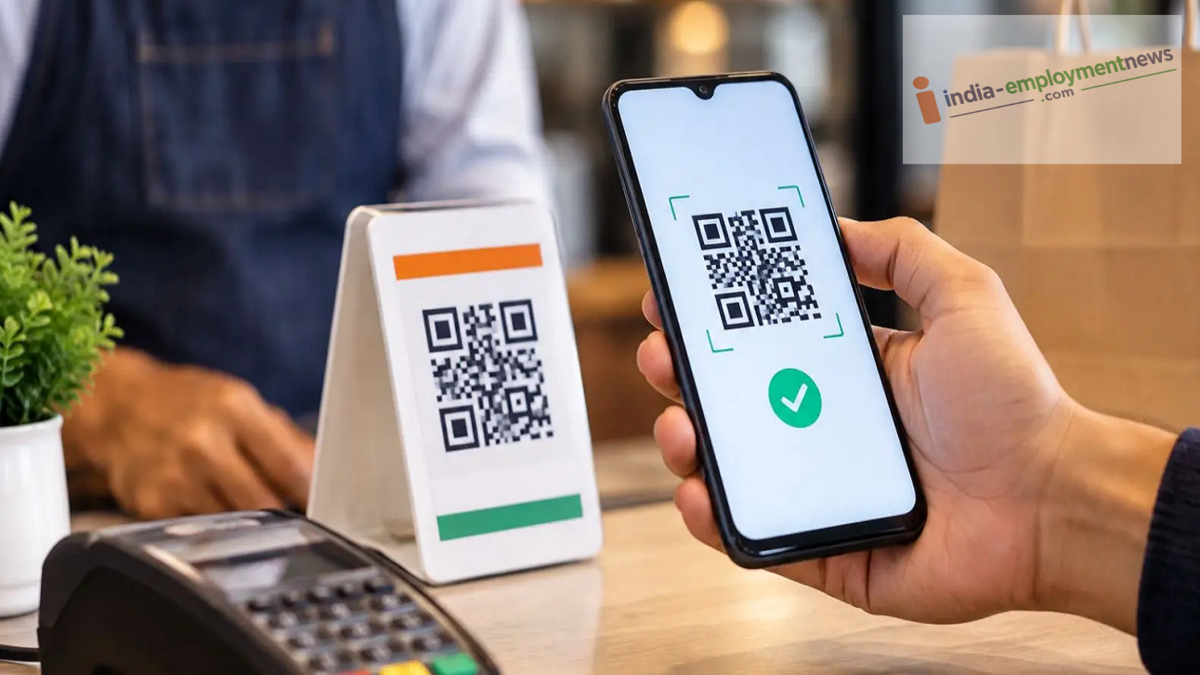
New UPI Payment Rule: With the new MDR (Merchant Discount Rate) rule regarding UPI payments exceeding ₹2,000, questions have arisen about whether customers will now be charged. The government has clarified that this fee will not be imposed on ordinary UPI customers; the MDR will apply only to select merchant transactions.
New UPI Payment Rule: The new MDR framework for UPI payments exceeding ₹2,000 will come into effect on October 15, 2026. However, general customers need not worry. The Ministry of Finance has clarified that no fee will be charged to customers making UPI payments. The 0.4% MDR will apply at the merchant level only for specific 'Person-to-Merchant' (P2M) transactions.
New rule to take effect from October 15
According to official information from the Department of Financial Services (Ministry of Finance), the new MDR framework and its transaction limits will become effective on October 15, 2026. An MDR of 0.4% will apply to eligible P2M UPI transactions exceeding ₹2,000. For transactions of ₹75,000 or more, the MDR will be capped at a maximum of ₹300 per transaction.
Customers will not be charged the 0.4% fee
The government has clarified that MDR is not a charge levied on customers. A customer making a purchase via UPI will pay only the fixed price of the goods or services. Merchants will not be permitted to pass the MDR cost on to customers. UPI app companies will also be prohibited from levying platform fees or any other charges on UPI payments.
Merchant payments up to ₹2,000 will remain free.
P2M payments of up to ₹2,000 made via UPI to a shop or other merchant will be exempt from MDR. According to the Ministry of Finance, approximately 96% of merchant transactions will remain unaffected by the new MDR, as they either fall within the ₹2,000 limit or belong to the zero-MDR category.
What is the MDR for payments of ₹3,000 and ₹50,000?
The Ministry of Finance has also explained the MDR calculation with examples. Accordingly, for a UPI payment of ₹3,000 in the general P2M category, the merchant will have to pay an MDR of ₹12 (calculated at 0.4%). For a payment of ₹50,000, the MDR will be ₹200. For payments of ₹75,000 and above, the maximum MDR will be capped at ₹300.
| Merchant Payment | Applicable MDR | MDR Charged to Merchant |
|---|---|---|
| ₹2,000 | 0% | ₹0 |
| ₹3,000 | 0.4% | ₹12 |
| ₹50,000 | 0.4% | ₹200 |
| ₹75,000 and above | Maximum Cap | ₹300 |
The zero-MDR regime will continue for street vendors and small merchants who receive payments of up to ₹1 lakh per month via UPI QR codes under the P2PM category. According to the Ministry of Finance, such eligible small merchants will not incur MDR charges simply by receiving an amount exceeding ₹2,000 in a single transaction; MDR eligibility will depend on the category of the merchant account.
No charges for sending money to friends or family
Person-to-Person (P2P) UPI transactions will remain completely free. Regardless of the amount, no transaction fee will be charged for sending or receiving money via UPI to or from friends, family members, or other personal accounts.
Different rules for railways, fuel, and insurance
For UPI payments exceeding ₹2,000 in designated sectors—such as railways, telecom, insurance, fuel, and agricultural inputs—a flat MDR of ₹5 per transaction will apply instead of the standard 0.4% MDR. Meanwhile, for UPI payments related to mutual funds, securities, stockbrokers, and dealers, the MDR will be 0.02%, subject to a maximum cap of ₹300.
MDR is not a tax
The Ministry of Finance has also clarified that MDR is not a tax, nor is this money collected by the government or the NPCI. It is shared among the banks, payment service providers, and UPI app providers associated with the payment system.
