
New rules for disability assessment implemented; certificate to be issued 6 months after the onset of the condition..
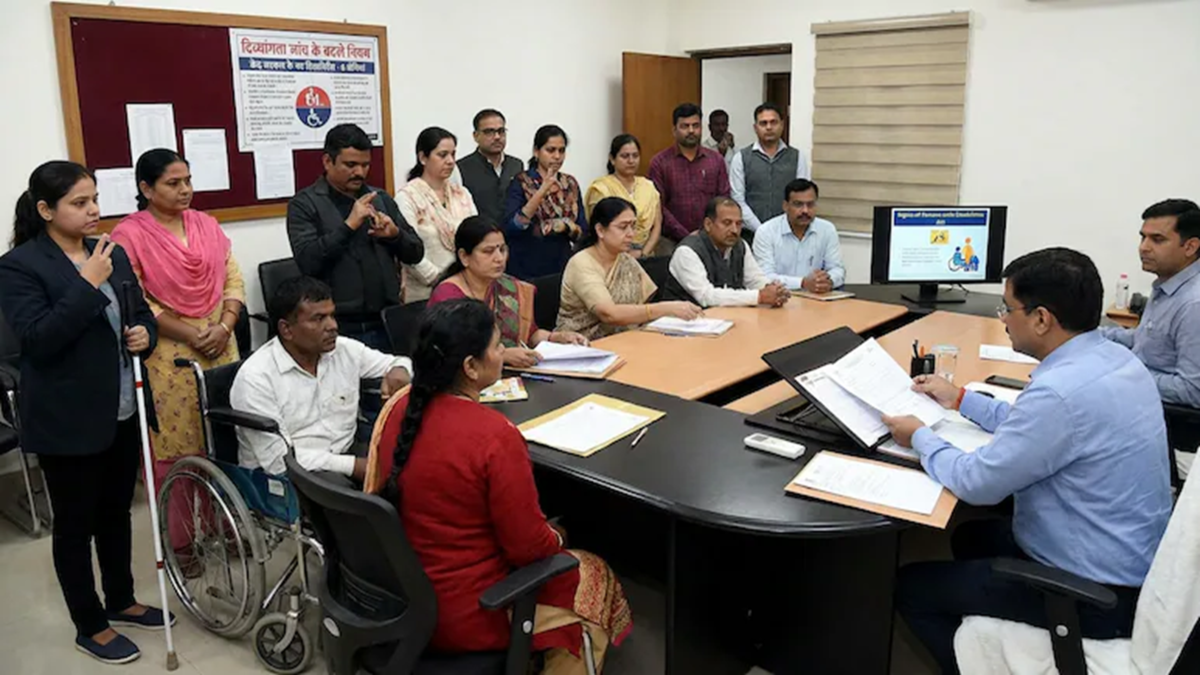
The central government has issued new rules for determining disability, categorizing it into eight distinct groups. These guidelines will replace the rules established in March 2024 under the Rights of Persons with Disabilities Act. The categories encompass disabilities related to mobility, vision, hearing, speech and language, learning, intellectual impairments, autism, mental illnesses, blood-related disorders, and conditions involving multiple disabilities. For mobility-related disabilities, assessments will cover issues affecting the upper limbs (including the hands), muscle weakness, coordination, and the ability to grasp or hold objects.
The scope also includes conditions such as limb amputation, the aftermath of a brain stroke, recovery from leprosy, dwarfism, muscle-weakening disorders, and spinal cord-related impairments. Except in cases of limb amputation, a temporary disability certificate will be issued six months after the onset of symptoms. A permanent disability certificate will be issued only after the individual reaches the age of 18. A re-assessment will be conducted every 10 years, either upon the applicant's request or based on the recommendation of a health expert.
Inclusion of Dwarfism as a Disability
Dwarfism has been officially recognized as a disability. An adult with a height of less than 147 centimeters (4 feet 8 inches) is considered to have a disability. For every inch below this height threshold, a 4 percent permanent physical disability will be assigned. Skeletal deformities will be assessed separately. Regarding vision, the criteria include total blindness, a visual acuity of less than 3/60 (even with the best possible correction/treatment), or a field of vision of less than 10 degrees. Hearing impairments will be evaluated using a pure-tone audiometry test.
**Speech and Language-Related Disabilities**
Speech and language-related disabilities include conditions such as the surgical removal of the larynx, partial or complete removal of the tongue, paralysis of the vocal cords, issues with the control of muscles involved in speech, and apraxia of speech (difficulty in executing the motor movements required for speech). Intellectual disability is assessed based on an individual’s intellectual capacity and their ability to function and behave in everyday situations.
**Validity of Disability Certificates**
The minimum age for the issuance of a disability certificate is one year. For children aged one to five years, the assessment may consider "global developmental delay." Children over the age of five are assessed for intellectual disability. Specific learning disabilities encompass difficulties related to reading, writing, and mathematics; however, such a disability must persist for at least six months, even after appropriate interventions have been provided. An IQ score of at least 85 is a criterion for the assessment of such disabilities. State governments are authorized to appoint qualified and experienced professionals to issue disability certificates and Unique Disability ID (UDID) cards. The assessment process will utilize tools developed by NIMHANS and AIIMS.
**Identification of Autism**
For individuals aged six years and older, the determination of disability is based on their score on the Indian Scale for Assessment of Autism (ISAA). A score of less than 70 indicates that the individual does not have autism.
40 percent for a score of 70
50 percent for a score between 71 and 88
60 percent for a score of 89–106
70 percent for a score of 107–123
80 percent for a score of 124–140
90 percent for a score of 141–153
100 percent for a score above 153
How is disability due to mental illness determined?
Mental illness is evaluated by a psychiatrist through a clinical examination and the use of the Indian Disability Evaluation and Assessment Scale (IDEAS). This assessment covers factors such as self-care, social interaction, communication, and cognitive/comprehension abilities. To obtain a permanent disability certificate, the illness must have persisted for at least two years. If the illness has existed for less than two years, a certificate valid for a specific, limited duration may be issued. In extremely severe cases, the issuance of a permanent certificate will be considered.
Scale for mental disability:
25 percent for mild cases
55 percent for moderate cases
85 percent for severe cases
100 percent for extremely severe cases
Disclaimer: This content has been sourced and edited from NDTV India. While we have made modifications for clarity and presentation, the original content belongs to its respective authors and website. We do not claim ownership of the content.
