
New or Old Tax Regime? Here’s Which Tax System Can Help You Save More in 2026
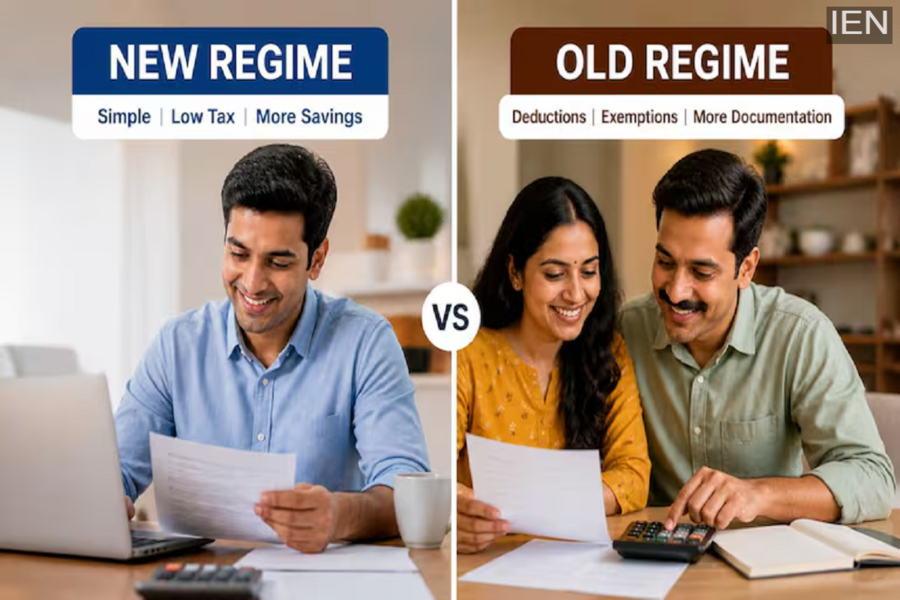
India’s income tax system has entered a new phase from April 1, 2026, with the implementation of the new Income Tax Act 2025 and Income Tax Rules 2026. While the Union Budget 2026 did not introduce major changes to tax slabs, several important rule revisions and enhanced allowances have significantly changed the tax-saving calculations for salaried individuals.
As taxpayers begin planning investments and filing strategies for the new financial year, one question is dominating discussions: Should you choose the new tax regime or stick with the old one?
The answer depends largely on your salary structure, investments, deductions, and financial goals.
New Tax Regime Continues as the Default Option
Finance Minister Nirmala Sitharaman confirmed during Budget 2026 that the government would continue with the current tax slab structure under the new tax regime.
However, the new regime has now officially become the default tax system for taxpayers unless they specifically opt for the old regime.
The revised tax slabs under the new tax regime are as follows:
| Annual Income | Tax Rate |
|---|---|
| Up to ₹4 lakh | NIL |
| ₹4 lakh – ₹8 lakh | 5% |
| ₹8 lakh – ₹12 lakh | 10% |
| ₹12 lakh – ₹16 lakh | 15% |
| ₹16 lakh – ₹20 lakh | 20% |
| ₹20 lakh – ₹24 lakh | 25% |
| Above ₹24 lakh | 30% |
One of the biggest advantages under the new system is the enhanced standard deduction and rebate benefits.
According to the updated rules, salaried individuals earning up to ₹12.75 lakh annually may effectively pay zero tax after factoring in the ₹75,000 standard deduction and rebate benefits available under Section 87A.
This has made the new regime particularly attractive for middle-income salaried taxpayers who do not claim many deductions.
Old Tax Regime Slabs Remain Unchanged
The traditional or old tax regime continues with the existing slab rates:
| Annual Income | Tax Rate |
|---|---|
| Up to ₹2.5 lakh | NIL |
| ₹2.5 lakh – ₹5 lakh | 5% |
| ₹5 lakh – ₹10 lakh | 20% |
| Above ₹10 lakh | 30% |
Although the slab rates are higher under the old regime, taxpayers still get access to several exemptions and deductions that are unavailable in the new system.
This is why the old regime continues to remain beneficial for many taxpayers with substantial investments and eligible expenses.
Big Relief in Allowances Under New Tax Rules 2026
One of the most significant developments under the Income Tax Rules 2026 is the sharp increase in exemption limits for certain allowances.
Experts believe these revisions could become “game changers” for taxpayers choosing the old tax regime.
Children Education Allowance Increased
The children education allowance exemption has reportedly increased from ₹100 per month to ₹3,000 per month per child.
This change could offer substantial relief to families with school-going children.
Hostel Allowance Gets Major Revision
The hostel allowance exemption has also been significantly increased—from ₹300 per month to ₹9,000 per month.
This is expected to particularly benefit employees whose children study in residential schools or colleges away from home.
Free Meal Allowance Enhanced
The exemption limit for employer-provided meals has reportedly increased from ₹50 to ₹200 per meal.
This revision may improve tax savings for salaried employees working in corporate sectors where meal benefits are common.
HRA Benefits Expanded to More Cities
Another major update under the revised rules relates to House Rent Allowance (HRA).
Cities such as Bengaluru, Pune, Hyderabad, and Ahmedabad have now reportedly been included in the 50% HRA exemption category.
This means taxpayers living in these high-rent urban locations may now claim larger HRA benefits under the old tax regime.
Importantly, HRA exemptions are available only under the old regime, making it especially attractive for salaried individuals living in metro and high-cost cities.
Which Tax Regime Is Better for You?
Financial experts say there is no universal answer because the ideal tax regime depends entirely on individual financial profiles.
New Tax Regime May Be Better If:
- You prefer a simpler tax filing process
- You do not want to invest heavily in tax-saving products
- You have limited deductions and exemptions
- You want lower tax slab rates directly
The new regime is designed for taxpayers who prefer flexibility and reduced paperwork without worrying about investment-linked deductions.
Old Tax Regime May Be Better If:
- You claim large deductions under Section 80C
- You pay home loan interest
- You invest in LIC, PPF, ELSS, or tax-saving FDs
- You pay significant medical insurance premiums under Section 80D
- You receive HRA benefits
- You qualify for higher allowance exemptions
For taxpayers with substantial deductions, the old regime may still result in lower overall tax liability despite higher slab rates.
Experts Recommend Careful Comparison Before Switching
Tax professionals advise taxpayers not to switch regimes blindly based only on slab rates.
Instead, individuals should calculate their total taxable income after considering all exemptions, investments, allowances, and deductions under both systems.
A salaried employee with limited deductions may benefit more from the new regime. On the other hand, someone with home loans, insurance investments, HRA benefits, and family-related allowances may save more under the old system.
Income Tax Forms Also Simplified
The Income Tax Department has also reportedly simplified several compliance procedures under the updated framework.
For example:
- Form 16 has been renamed as Form 130
- Annual Information Statement (AIS) has reportedly been renamed Form 168
The government says these changes are aimed at simplifying compliance and making tax filing easier for ordinary taxpayers.
Final Decision Depends on Your Financial Planning
The new tax system offers simplicity and lower rates, while the old regime continues to reward disciplined investing and tax-saving planning.
As financial conditions, salary structures, and deduction limits evolve, taxpayers may need to reassess their tax strategy every year instead of sticking permanently to one option.
Before choosing between the two regimes, experts recommend reviewing salary components, investments, insurance premiums, rent payments, and long-term financial goals carefully.
In many cases, the regime that appears simpler may not always be the one that saves the most money.
