
New Labour Codes Implemented: Double Overtime Pay, Stronger Worker Rights and Major Benefits for Gig Employees
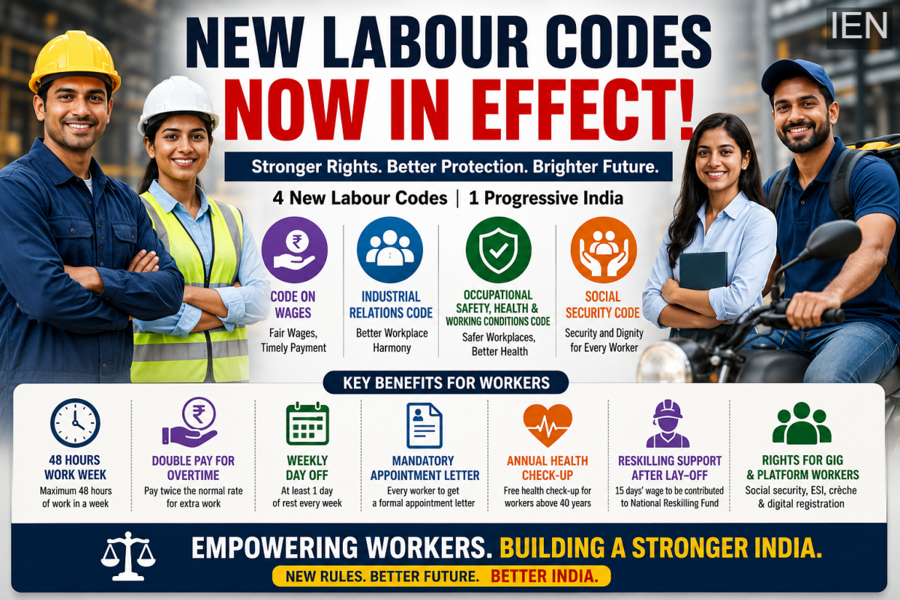
India’s labour system is entering a major phase of transformation after the Central Government officially notified the final rules under the country’s four new Labour Codes. The long-awaited reforms are expected to modernize workplace regulations, improve employee protection, strengthen social security coverage, and simplify compliance rules for employers across sectors.
The new labour framework introduces several major changes related to working hours, overtime wages, appointment letters, women employees, health benefits, and gig workers. Labour experts say these reforms could significantly impact both traditional industries and the rapidly growing digital workforce economy.
Since labour falls under the Concurrent List of the Constitution, both the Centre and individual states are required to frame implementation rules. With the Centre now issuing the final notification, states are expected to move quickly toward operational rollout.
What Are the Four New Labour Codes?
The government has consolidated dozens of older labour laws into four broad labour codes:
- Code on Wages
- Industrial Relations Code
- Occupational Safety, Health and Working Conditions Code
- Social Security Code
The objective is to simplify India’s complex labour law structure while improving worker welfare and compliance transparency.
Major Changes in Working Hours and Overtime Rules
One of the most significant updates under the Occupational Safety, Health and Working Conditions Code relates to employee working hours and overtime payments.
Maximum 48-Hour Work Week
Under the new framework:
- Employees cannot be required to work more than 48 hours per week
- Workers must receive at least one mandatory weekly holiday
This rule aims to standardize working conditions and reduce excessive labour exploitation.
Double Overtime Wages
Employees working beyond:
- 8 hours per day, or
- 48 hours per week
will now be entitled to overtime payment at double the normal wage rate.
Labour experts say this provision could significantly benefit factory workers, shift-based employees, and staff in sectors where long working hours are common.
Quarterly Overtime Limit Introduced
Employers will also face restrictions on overtime utilization.
Under the new rules:
- No worker can be asked to perform more than 144 hours of overtime in a quarter
This limit has been introduced to improve worker health and prevent excessive workload pressure.
Mandatory Overtime Records
Companies must now maintain:
- Electronic or manual overtime registers
- Separate overtime details in employee wage slips
This step is aimed at increasing transparency and reducing wage-related disputes.
Stronger Rights and Better Protection for Women Employees
The new labour structure places special emphasis on workplace equality and safety for women workers.
Equal Pay for Equal Work
The updated rules guarantee:
- Equal wages for equal work
- Equal employment opportunities
Experts say this could strengthen gender equality across both organized and unorganized sectors.
Flexible Shift Opportunities
Women employees will now be allowed to work across different shifts, subject to prescribed safety measures.
This change may expand employment opportunities in sectors such as manufacturing, IT services, logistics, healthcare, and customer support.
Annual Health Check-Ups
Employers will be required to provide:
- Free annual health check-ups for workers aged 40 years and above
This provision is expected to improve workplace healthcare standards and encourage preventive medical screening.
Appointment Letters Now Mandatory
For the first time, formal appointment letters have effectively become mandatory for all workers under the updated framework.
This could benefit millions of workers who earlier worked without proper documentation, leaving them vulnerable during disputes related to salary, termination, or benefits.
Labour analysts believe this step will improve accountability in hiring practices.
National Reskilling Fund for Laid-Off Workers
One of the most notable reforms under the Industrial Relations Code is the creation of the National Reskilling Fund.
What Happens During Layoffs?
If a worker is laid off:
- The employer must deposit an amount equal to 15 days’ wages into the reskilling fund
- Payment must be made within 10 days of retrenchment
The idea behind this initiative is to help workers acquire new skills and adapt to changing industry requirements.
Experts say this could become particularly important as automation and artificial intelligence continue reshaping employment markets.
Big Relief for Gig and Platform Workers
The Social Security Code brings major attention to gig workers and platform-based employees working with:
- Food delivery platforms
- Ride-sharing apps
- Freelance digital services
- E-commerce delivery networks
Easier Registration and Digital Access
The new system aims to simplify worker registration through digital platforms.
Workers may receive access to:
- Social security schemes
- ESI-related benefits
- Digital enrollment systems
- Crèche facilities in applicable sectors
Labour specialists say this marks an important step toward formally recognizing India’s growing gig economy workforce.
Why These Labour Reforms Matter
The government says the new labour codes are designed to:
- Modernize labour regulations
- Increase worker protection
- Improve ease of doing business
- Expand social security coverage
- Digitize labour compliance systems
Industry bodies believe the simplified structure may reduce legal complexity for businesses, while labour unions are closely watching how states implement worker protections on the ground.
Challenges May Still Remain
Despite the reforms, experts believe implementation will be the biggest challenge.
Some concerns include:
- State-level differences in enforcement
- Employer compliance costs
- Monitoring overtime violations
- Protecting gig workers effectively
- Ensuring transparency in digital systems
Labour unions have also demanded stronger safeguards to ensure workers fully benefit from the announced reforms.
A Major Shift in India’s Labour Landscape
The implementation of the new Labour Codes represents one of the biggest labour law reforms in India in decades. From overtime rules and appointment letters to social security for gig workers, the changes could reshape how millions of Indians work in the coming years.
For employees, employers, and gig workers alike, understanding these new rules may become increasingly important as the reforms begin taking effect across different states and industries.
