
New Labour Code Won’t Reduce Take-Home Salary; ₹15,000 PF Limit Keeps Earnings Safe
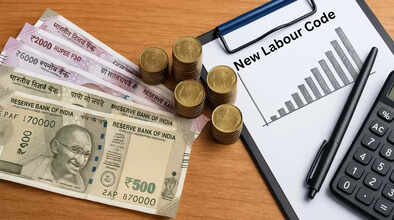
Concerns over reduced take-home salaries under India’s new Labour Codes have been addressed by the Ministry of Labour. Employees had feared that changes in wage definitions might automatically increase provident fund (PF) deductions, thereby lowering monthly salaries. However, the ministry clarified that as long as the ₹15,000 statutory PF limit remains in place, employees’ take-home pay will remain unaffected.
Why the Confusion Arose
Under the new Labour Code, the definition of “wages” has been revised. It mandates that basic pay, dearness allowance (DA), and retaining allowances together must constitute at least 50% of an employee’s total CTC. Previously, companies structured salaries to keep basic pay low and provide higher allowances, which reduced the PF, gratuity, and other social security contributions. With the new code, the minimum 50% wage requirement prompted fears that PF contributions would increase automatically, lowering take-home salaries.
Ministry’s Clarification
The Ministry of Labour explained that PF deductions are capped at the statutory wage ceiling of ₹15,000. Contributions above this limit are voluntary. This ensures that, despite structural changes in salaries, employees’ take-home earnings will not be automatically affected. Any change will only occur if employees opt to contribute PF on actual wages exceeding the ₹15,000 limit, or if the government raises the statutory ceiling in the future.
Illustrative Example
Consider an employee earning ₹60,000 per month, with ₹20,000 as basic + DA and ₹40,000 in allowances. Previously, PF contributions applied only to the ₹15,000 mandatory limit, with both employee and employer contributing ₹1,800 each.
Under the new code, due to the 50% wages rule, basic + DA increases to ₹30,000. However, as long as PF is calculated on the ₹15,000 statutory limit, the PF deduction remains the same, keeping the take-home salary at ₹56,400.
When Will Take-Home Salary Change?
Take-home pay will only decrease if:
-
Employees and employers voluntarily decide to contribute PF on the actual wages (e.g., ₹30,000 in the example above).
-
The government increases the mandatory PF wage limit above ₹15,000.
While such changes may reduce immediate take-home pay, they will enhance retirement savings in the long run.
Union Demands
Labour unions have urged the government to revise the ₹15,000 PF ceiling, arguing it is outdated. The limit was last revised in 2014 and has remained unchanged since. Until any adjustment is made, the new Labour Code will not negatively impact employees’ take-home salaries.
