
Monsoon Trouble for E20 Petrol! Ethanol Absorbing Moisture; Pump Owners Issue Warning
E20 Fuel Side Effects: Amidst the ongoing nationwide debate surrounding E20 petrol, new information has emerged, prompting warnings from petrol pump owners.
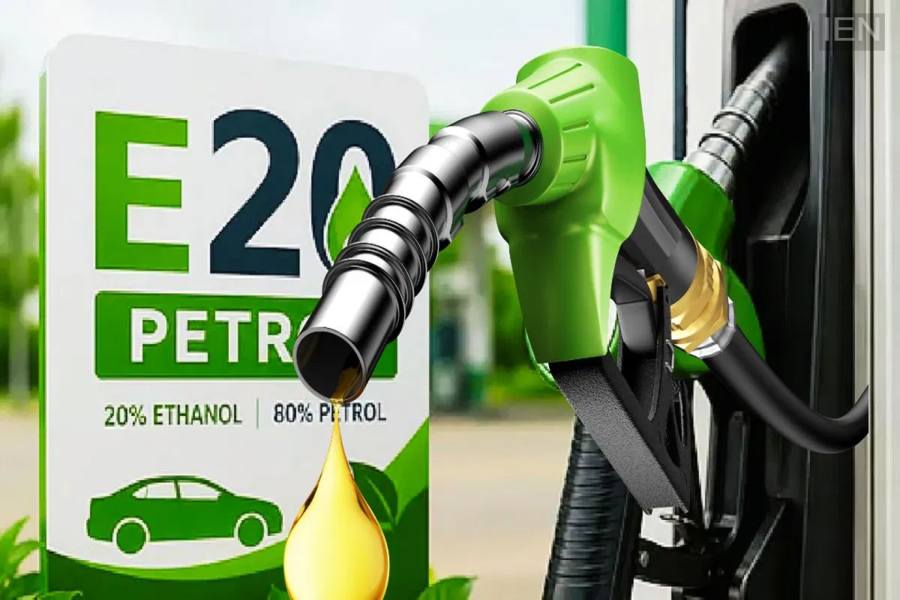
E20 Fuel News: Amidst the intensifying controversy over E20 fuel across the country, a new issue has come to light that petrol pump owners have highlighted as a challenge. Three petrol pump owners have identified a specific problem with E20 fuel.
According to a report by *The Hindu*, some petrol pump owners stated that due to ethanol's hygroscopic nature—its tendency to absorb and retain moisture from the surrounding atmosphere—their E20 stocks are becoming contaminated in monsoon and coastal regions.
Phase Separation: A Key Challenge
The issue arises because existing underground storage tanks at petrol pumps were designed for conventional petrol, not for fuel with high ethanol blends. Consequently, during the rainy season, moisture ingress in these underground tanks causes the ethanol to separate and settle at the bottom, mixing with the accumulated water.
An expert explained, "If the water content in the stored E20 stock exceeds 0.5%, the ethanol—due to its moisture-absorbing nature—mixes with the water. This leads to 'phase separation,' where the water-ethanol mixture settles at the bottom of the tank, while the petrol forms a separate layer on top."
Impact on Vehicles
As a result, instead of pure E20, a contaminated mixture of water and ethanol could enter the vehicle's engine, leading to operational issues. The vehicle might fail to start altogether or stall after running for a short distance. This concern is particularly significant in coastal areas, where high groundwater levels can compromise stored E20 fuel stocks if underground tanks are not properly sealed.
There is also an increased risk of corrosion in underground tanks and pipelines made of mild steel, as ethanol has a tendency to absorb water, which can lead to fuel contamination. However, it is reported that oil companies have replaced the seals and washers in petrol dispensing units with neoprene rubber to accommodate E20.
