
Money Tips: Money lying in the bank could make you poor! Find out what the hidden loss is..
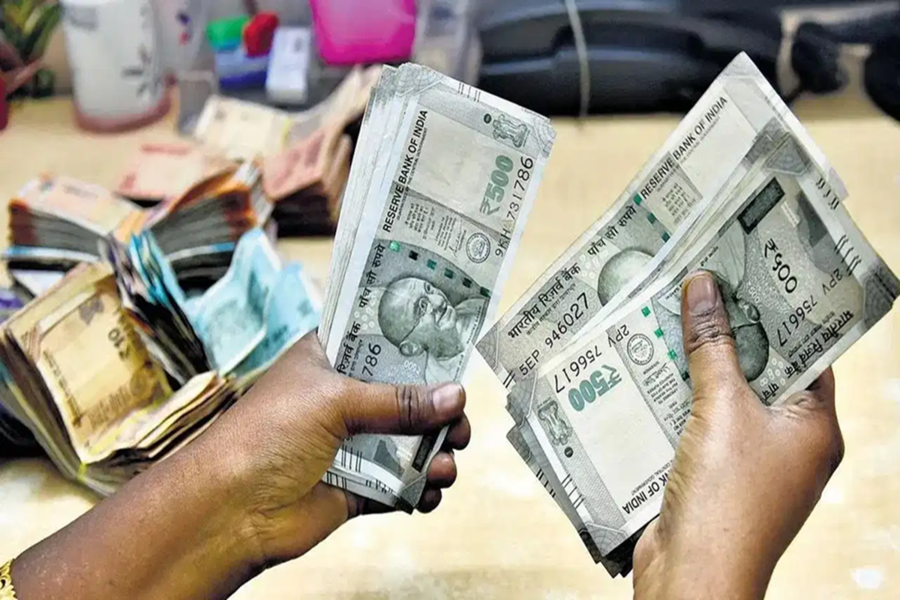
After receiving their monthly salaries, most people simply leave their savings in their savings accounts. Many individuals keep large sums—such as ₹10 lakh, ₹20 lakh, or even more—sitting in these accounts for extended periods. They believe that since the money is completely safe in the bank, there is no risk involved. However, financial experts argue that keeping excessive funds in a savings account for the long term can prove to be a losing proposition rather than a beneficial one.
**Inflation Erodes the Real Value of Your Savings**
Currently, most banks offer an annual interest rate of around 2.5% to 3% on savings accounts, whereas the average long-term inflation rate hovers between 5% and 6%. This means that while your bank balance may appear to be growing, the purchasing power of that money is steadily declining. In other words, in the future, that same amount of money will buy fewer goods or services than it does today.
Amitabh Lara, Executive Director at Anand Rathi Wealth Limited, states that savings accounts should be used for maintaining an emergency fund, not for parking large sums of money over the long term. He believes that merely preserving the principal amount is insufficient; the money's purchasing power must also be safeguarded.
**Consider the Example of ₹10 Lakh**
Suppose you keep ₹10 lakh in a savings account earning 2.5% annual interest. After 10 years, this amount would grow to approximately ₹12.8 lakh. However, if inflation runs at 6% annually during this period, you would need about ₹17.9 lakh to maintain your current lifestyle. This means your savings would fall short by approximately ₹5 lakh.
According to Adhil Shetty, CEO of BankBazaar, the real question is not whether your savings have grown, but whether they have grown enough to meet your financial goals.
**How Much Money Should Be Kept in a Savings Account?**
Financial experts advise keeping only enough money in a savings account to cover essential expenses for 6 to 12 months—essentially, an emergency fund. Additionally, funds not required in the near future can be invested in options such as liquid funds, fixed deposits, debt funds, or—for long-term goals—equities. This offers the potential for better returns and provides significant protection against the impact of inflation.
Disclaimer: This content has been sourced and edited from News18 Hindi. While we have made modifications for clarity and presentation, the original content belongs to its respective authors and website. We do not claim ownership of the content.
