
Minimum Wage to Rise to ₹36,000? Trade Unions Intensify Demand as Labour Code Debate Heats Up
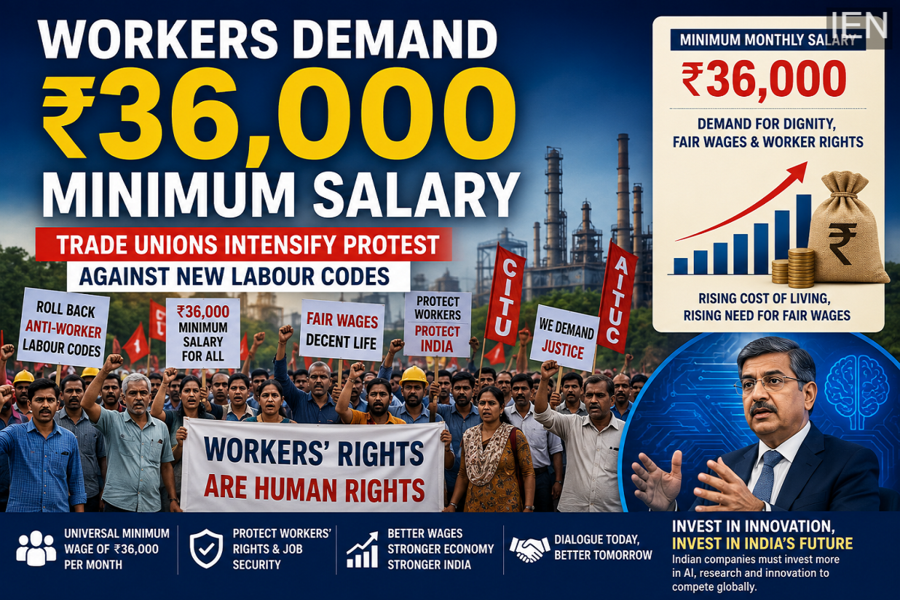
A fresh debate over workers' wages and labour rights has gained momentum after major trade unions renewed their demand for a substantial increase in the minimum monthly salary for employees across India. During a protest held in Mysuru, Karnataka, labour organizations called for a nationwide minimum wage of ₹36,000 per month, arguing that current pay levels are insufficient to meet rising living costs.
The demand comes amid growing opposition to the implementation of the country's new labour codes, with worker representatives claiming that several provisions could weaken employee protections and reduce bargaining power.
Trade Unions Push for Higher Minimum Wages
The Centre of Indian Trade Unions (CITU) and the All India Trade Union Congress (AITUC) jointly organized demonstrations in Mysuru, where workers and union leaders voiced concerns over labour reforms and wage policies.
A key demand emerging from the protest was the introduction of a universal minimum wage of ₹36,000 per month for all categories of workers. Union leaders argued that inflation, rising household expenses, healthcare costs, and education expenses have significantly increased the financial burden on working families.
According to labour representatives, existing wage levels are no longer adequate to ensure a reasonable standard of living, especially in urban areas where the cost of living has risen sharply in recent years.
Concerns Over New Labour Codes
The demonstrations were also directed against the proposed labour code framework. Trade unions contend that certain provisions in the new labour laws may dilute long-standing worker protections and reduce safeguards related to employment conditions.
Union leaders have expressed concerns regarding working hours, job security, dispute resolution mechanisms, and collective bargaining rights. They argue that labour reforms should strike a balance between improving ease of doing business and protecting employee welfare.
Worker organizations have called on policymakers to engage in broader consultations before fully implementing the new framework.
Why the ₹36,000 Demand Is Gaining Attention
The proposal for a ₹36,000 minimum monthly salary has attracted attention because it is significantly higher than many existing wage benchmarks currently applicable across sectors and states.
Labour groups believe that such a revision would improve workers' purchasing power, support domestic consumption, and provide greater financial stability to low-income households.
Supporters of the demand also argue that stronger wages could help reduce income inequality and improve overall living standards for millions of workers employed in both organized and unorganized sectors.
Rising Cost of Living Driving Wage Demands
Employee organizations point to persistent inflation and increasing costs of essential goods and services as major reasons behind the demand for higher wages.
Over the past few years, expenses related to housing, food, transportation, healthcare, and education have increased considerably. Labour representatives say that wage revisions must reflect these economic realities to ensure workers can maintain a decent quality of life.
The issue has become particularly important for lower-income workers, who are often the most affected by rising prices and economic uncertainty.
Industry Focus Shifts Toward Innovation and AI
While labour organizations were focused on wage and employment issues, leading industrialist Uday Kotak highlighted another challenge facing India's corporate sector.
Speaking about the future of business competitiveness, he emphasized the need for Indian companies to invest more aggressively in artificial intelligence, research, and innovation. According to him, global technology giants are allocating billions of dollars toward AI development, while many Indian firms continue to lag behind in research-driven growth.
He suggested that sustained investments in innovation will be critical if Indian businesses want to compete effectively in an increasingly technology-driven global economy.
Balancing Worker Welfare and Economic Growth
The ongoing debate reflects two important priorities for India's economy: protecting workers' interests and enhancing business competitiveness.
Trade unions are seeking stronger wage protections and employee benefits, while industry leaders are calling for greater investment in technology and innovation. Policymakers may eventually need to strike a balance between these objectives to ensure sustainable economic growth.
What Happens Next?
The demand for a ₹36,000 minimum monthly salary is currently a proposal put forward by labour unions and has not been adopted by the government. However, growing discussions around wages, labour reforms, and worker welfare suggest that these issues will remain at the center of policy debates in the coming months.
As consultations on labour regulations continue, workers, employers, and policymakers will be closely watching whether wage reforms and labour code implementation move forward together or become subjects of prolonged negotiation.
For millions of workers across the country, the outcome could have a significant impact on future earnings, workplace protections, and overall financial security.
