
MGNREGA Ends! ‘G RAM G’ Mission to Launch on July 1st; 125-Day Employment Guarantee to be Provided...
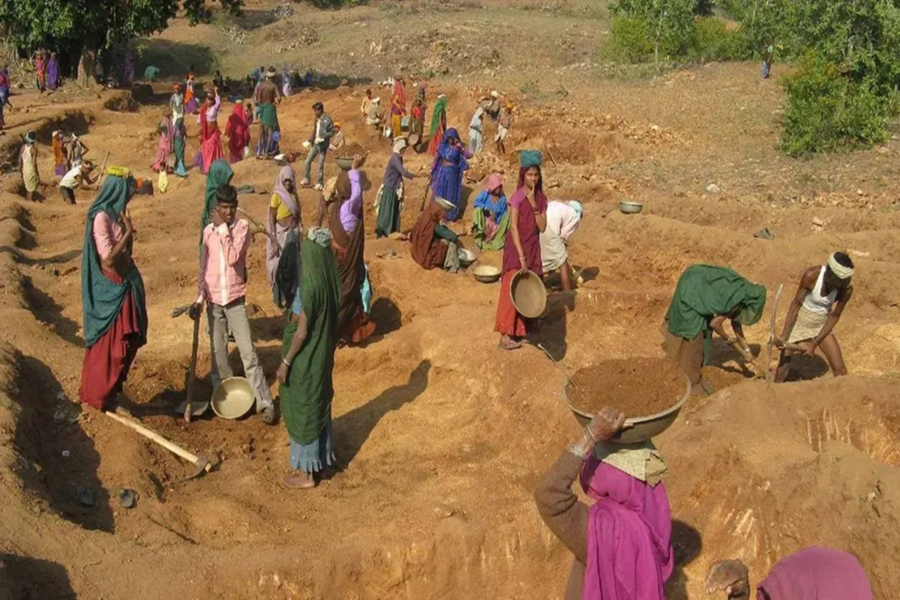
Making a significant shift in the rural employment framework, the Central Government has issued a notification for the implementation of the 'Viksit Bharat Rozgar aur Aajeevika Guarantee Mission (Rural)'—also known as the VB-G RAM G Act. This new legislation is set to come into force across the entire country on July 1, 2026, and will replace the existing Mahatma Gandhi National Rural Employment Guarantee Act (MGNREGA).
According to the Union Ministry of Rural Development, this new framework will not limit rural employment solely to wage-based work; instead, it will also focus on the creation of infrastructure and livelihood-generating assets within villages. Union Minister for Agriculture and Rural Development, Shivraj Singh Chouhan, stated that this scheme would mark a new dawn for rural India. Speaking to the media in Bhopal, he explained that under the new law, rural households would be guaranteed 125 days of employment annually—an increase from the 100-day limit stipulated under MGNREGA.
The government has clarified that during the transition period, all ongoing works under MGNREGA will continue, and all unfinished projects are to be completed by July 1. Additionally, states have been granted a six-month window to implement the new system. However, post-July, funding related to rural employment will be disbursed exclusively under the VB-G RAM G framework.
**Scheme Budget Details**
The Central Government has allocated a budgetary provision of over ₹95,000 crore for this scheme. Once the states' contributions are factored in, the total annual expenditure is estimated to exceed ₹1.51 trillion. Under the new scheme, infrastructure projects such as water conservation initiatives, rural roads, bridges and culverts, school buildings, Anganwadi centers, and agriculture-related facilities will be constructed. Furthermore, assets such as workspaces and sheds will be built for Self-Help Groups (SHGs) and Farmer-Producer Organizations (FPOs). The scheme also incorporates the construction of retaining walls and other disaster-resilient structures in flood-prone regions.
**Compensation for Delayed Payments**
The government has also made a significant commitment regarding the timely payment of wages to laborers. Wages will be transferred directly into their bank or post office accounts via Direct Benefit Transfer (DBT). The government aims to process payments within three days, although a maximum limit of 15 days has been established. In the event of delayed payments, workers will receive compensation; furthermore, an unemployment allowance will be provided if they do not receive employment despite requesting it.
To ensure the more efficient operation of the scheme, the cap on administrative expenses has been raised from 6 percent to 9 percent. The government states that this will enable field staff to receive their salaries on time and gain access to better resources. The Centre believes that this mission will reinforce Prime Minister Narendra Modi's vision of "Developed Villages for a Developed India."
Disclaimer: This content has been sourced and edited from TV9. While we have made modifications for clarity and presentation, the original content belongs to its respective authors and website. We do not claim ownership of the content.
