
Major update from the RBI regarding ₹10 and ₹20 plastic notes! New polymer currency will be in your hands starting from this date..
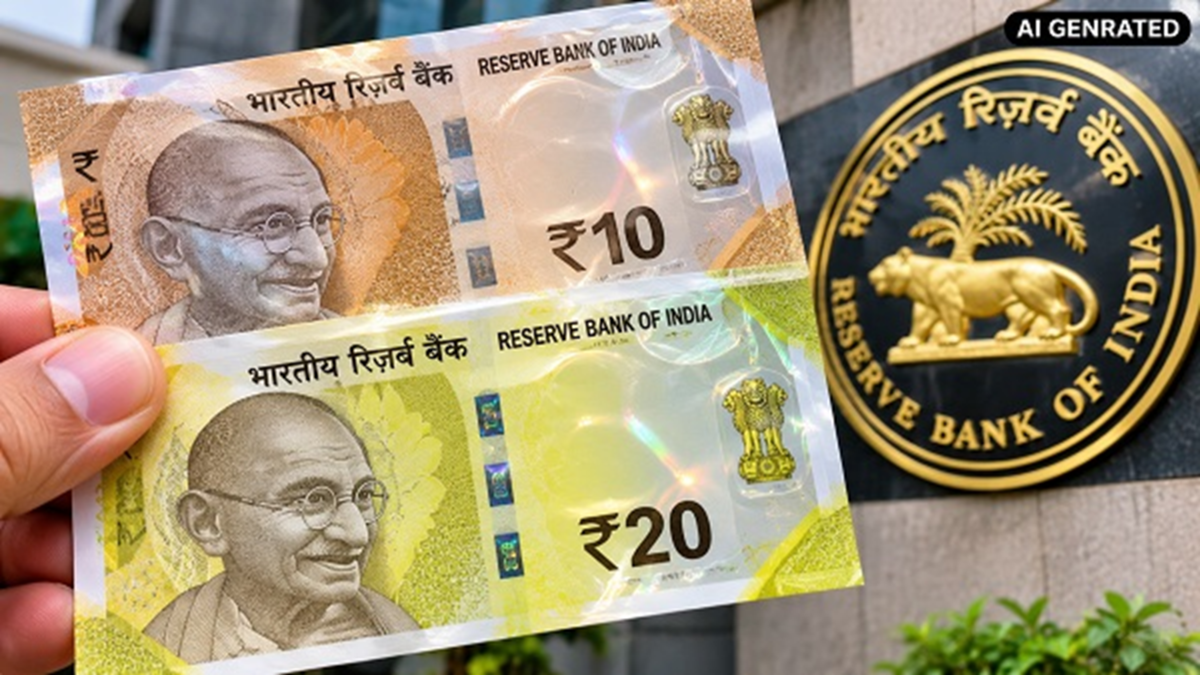
RBI Polymer Banknotes Launch: We are often quite curious about the colorful, vibrant, and plastic-based banknotes used in various countries around the world. Now, the Reserve Bank of India (RBI) is set to introduce something similar in India. A date has been finalized for the launch of a pilot project involving new polymer banknotes in the ₹10 and ₹20 denominations. Notably, the RBI has decided to keep the dimensions of these new notes unchanged.
Starting April 1, 2027—the beginning of the next financial year—you will see new plastic ₹10 and ₹20 notes in circulation. Since the size of the notes remains the same, banks will be spared the significant costs associated with reconfiguring their ATMs.
Why are plastic banknotes being introduced? Here are 5 key reasons:
1. Durability of up to 30 years: According to RBI official Sanjay Malhotra, polymer banknotes in many countries have remained in good condition for over 30 years. Lower-denomination currency (₹10 and ₹20) sees high circulation and frequent use, which often causes paper notes to tear or deteriorate quickly.
2. Field trial involving 2 billion (200 crore) notes: BRBNMPL, a wholly-owned subsidiary of the RBI, has issued a 'Global Expression of Interest' for this initiative. As part of the trial, 1 billion (100 crore) polymer notes each of the ₹10 and ₹20 denominations—totaling 2 billion (200 crore) notes—will be introduced into the market.
3. Paper notes will not be discontinued: The government has clarified that this is strictly a 'field trial.' The introduction of polymer notes will not lead to the withdrawal of existing paper currency; both will continue to remain in circulation simultaneously.
4. No polymer notes for higher denominations: The RBI has clarified that there are currently no plans to introduce plastic banknotes for higher denominations, such as ₹100, ₹200, or ₹500.
5. Claim about a new ₹1,000 note turns out to be completely fake: Recently, reports regarding the issuance of new polymer ₹1,000 notes were circulating on social media. The PIB Fact Check has refuted this claim, labeling it as entirely 'fake'.
Banks to save crores of rupees.
According to a senior official at a public sector bank, "Maintaining the dimensions of the existing notes will help banks avoid the upfront capital expenditure required for reconfiguring ATMs. Since this initiative will initially be a pilot project covering smaller denominations, the resulting savings could be quite significant."
Disclaimer: This content has been sourced and edited from Money Control. While we have made modifications for clarity and presentation, the original content belongs to its respective authors and website. We do not claim ownership of the content.
