
LPG Shortage? Switch to PNG Connection — Check Availability in Your City and Know How Long It Takes
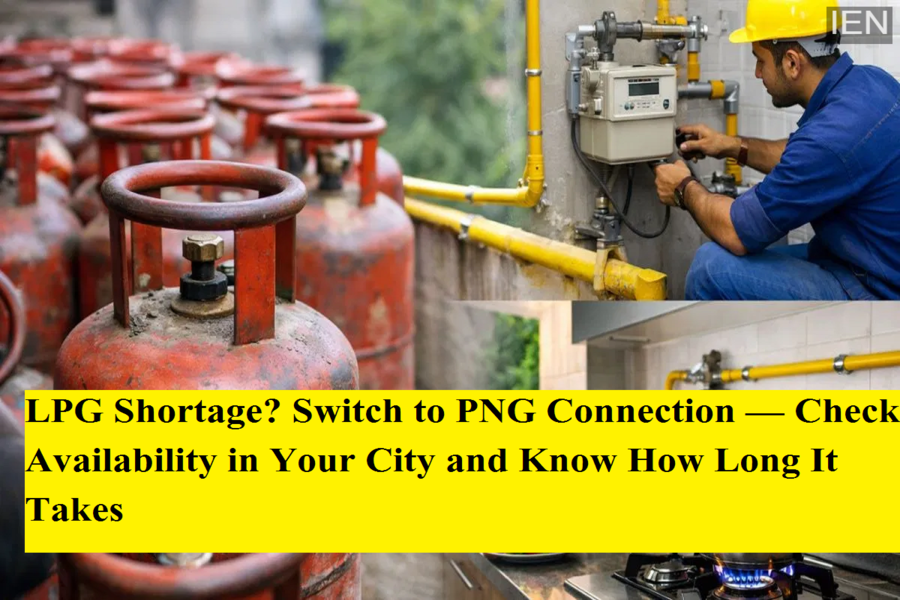
Amid rising concerns over LPG cylinder availability due to the ongoing energy crisis in West Asia, the Indian government has urged households to consider switching to Piped Natural Gas (PNG) wherever possible. Authorities say this move can reduce pressure on LPG supplies while ensuring continuous gas availability for cooking.
The appeal comes as reports of delayed LPG cylinder deliveries and increased demand have surfaced in several regions. Officials believe that households located near gas pipeline networks can easily adopt PNG, which offers uninterrupted supply directly through pipelines.
According to government estimates, around 1.5 crore households in India are already using PNG connections, while nearly 60 lakh additional homes are located close to gas pipeline infrastructure and could switch to piped gas services with minimal effort.
Why the Government Is Encouraging PNG Connections
The Ministry of Petroleum and Natural Gas has advised consumers not to panic-buy or hoard LPG cylinders. Instead, households living in areas with gas pipelines are encouraged to shift to PNG connections.
Officials say that this transition could significantly reduce the burden on LPG distribution networks, especially during times when global energy markets face disruptions.
Senior government officials have also clarified that although the LPG situation is being closely monitored, authorities are actively working to maintain supply across the country.
Understanding the Difference Between LPG and PNG
LPG, or Liquefied Petroleum Gas, is delivered to households in cylinders. Once the gas is used up, consumers must book a refill and wait for delivery. This system often leads to delays during periods of high demand.
PNG, or Piped Natural Gas, works differently. Instead of cylinders, gas is supplied directly to homes through underground pipelines connected to the kitchen.
There are several advantages of PNG over LPG:
-
Continuous 24-hour gas supply
-
No need to book refills
-
No cylinders occupying kitchen space
-
Bills based on actual gas consumption
-
Reduced risk of supply delays
Because of these benefits, PNG is becoming increasingly popular in major urban areas across India.
How Long Does It Take to Get a PNG Connection?
The process of obtaining a PNG connection is generally straightforward and relatively quick.
Once an application is submitted, the gas distribution company conducts a technical survey to check whether pipeline connectivity can be extended to the applicant’s residence.
If the installation is technically feasible, the process usually moves forward quickly.
-
Initial survey and approval: within 2–4 weeks
-
Pipeline installation and setup: 3–5 weeks in most cases
-
Total completion time: often within 1 to 3 months
The exact timeline depends on factors such as pipeline distance, infrastructure availability, and technical requirements.
How to Apply for a New PNG Connection
Applying for a PNG connection has become simple and can be done either online or through customer support services.
Consumers can visit the website of their city’s gas distribution company and complete an online registration. Alternatively, they can apply through the company’s customer service helpline.
For example, residents in Delhi can apply through Indraprastha Gas Limited (IGL). The company also provides assistance via a toll-free number for new connection inquiries.
After registration, the company’s technical team conducts a site survey. If the property is suitable for pipeline installation, the customer is required to pay the installation charges and security deposit.
In many cases, the total cost of installation and equipment is around ₹6,000, although the amount may vary depending on the provider and infrastructure requirements.
Documents Required for PNG Connection
Applicants must submit a few basic documents to obtain a PNG connection. These typically include:
-
Aadhaar card or identity proof
-
Address proof
-
Property owner’s No Objection Certificate (NOC)
If the applicant lives in a rented house, a rent agreement may be required instead of the ownership certificate.
Some companies may also collect a refundable security deposit of around ₹7,000, which covers safety and installation requirements.
How to Check PNG Availability in Your Area
Consumers can easily check whether PNG service is available in their locality.
One of the simplest ways is to search online using the name of the city along with the PNG provider. Many gas companies provide a “Check PNG Availability” or “New Connection Inquiry” option on their websites.
By entering details such as state, district, and PIN code, users can see whether their area is eligible for PNG service. If the system shows the area as “Available” or “Open for Registration,” customers can proceed with the application process.
Contacting Gas Distribution Companies
If online information is not clear, consumers can directly contact the local gas distribution company.
Calling the company’s toll-free customer care number or visiting the local City Gas Distribution (CGD) office can help confirm whether PNG connections are available in a specific neighborhood.
Major PNG Service Providers in India
Several companies currently provide piped gas services across Indian cities. Some of the major providers include:
-
Indraprastha Gas Limited (IGL) – Delhi-NCR
-
Mahanagar Gas Limited (MGL) – Mumbai and Pune
-
Gujarat Gas Limited – Gujarat cities
-
Adani Total Gas – Multiple cities across India
-
GAIL Gas
-
Think Gas
-
Megha Gas
These companies operate city gas distribution networks and are gradually expanding their services to new regions.
Growing Importance of PNG in India
As India continues to expand its natural gas infrastructure, PNG is expected to play a bigger role in household energy consumption. It offers convenience, efficiency, and reduced dependency on LPG cylinders.
For households living near pipeline networks, switching to PNG can be a practical solution—especially during periods when LPG demand rises due to global energy disruptions.
