
LPG and PNG are used for cooking, while CNG is used to power vehicles—so what is the use of LNG?
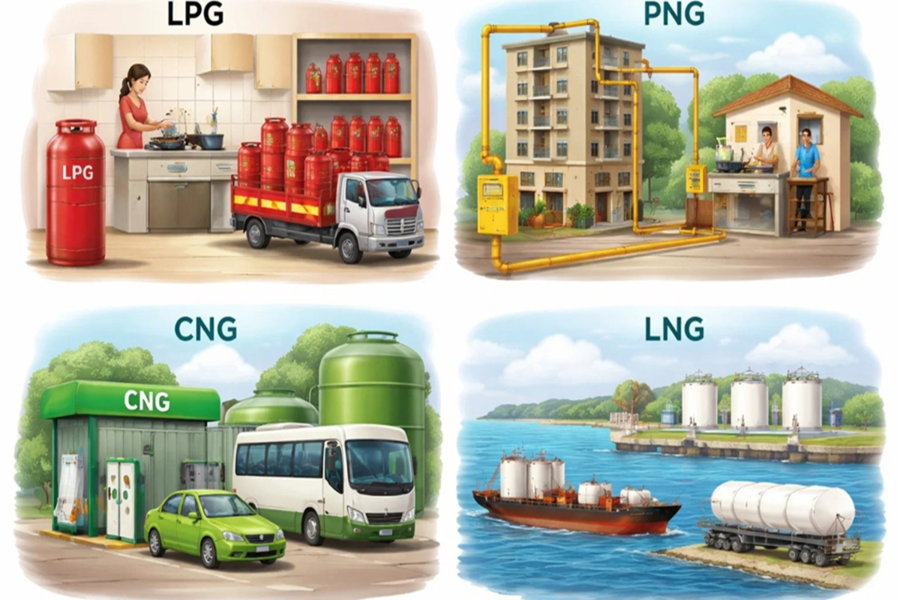
Due to the ongoing tensions in the Middle East, discussions within the country regarding LPG, PNG, CNG, and LNG show no signs of subsiding. The shortage of LPG in the nation is escalating day by day, directly impacting everything from our home kitchens to the speed of our vehicles for commuting, and even employment opportunities.
While the government is indeed taking steps to address this issue, has the question ever crossed your mind: what exactly do the acronyms LPG, PNG, CNG, and LNG—which sound so similar—actually stand for?
If so, today we will explain the true meaning of these four gases in extremely simple language. Furthermore, we will outline where we utilize LPG, PNG, CNG, and LNG in our daily lives, and highlight the key differences that distinguish these four gases from one another.
LPG
LPG—typically found in a red cylinder—has become an integral part of our daily lives. The full form of LPG is Liquefied Petroleum Gas. LPG is primarily used for cooking purposes in households. However, did you know that LPG is actually a blend of Propane and Butane gases? Compared to petrol and diesel, this gas is significantly cheaper and more economical.
How LPG is Produced: The process of manufacturing the LPG used in homes, hotels, and restaurants is quite complex. Essentially, this gas is released during the refining of crude oil. It is then subjected to immense pressure to transform it into a liquid state. Once liquefied, the gas becomes suitable for transportation from one location to another and is ultimately filled into cylinders. As of January 2026, there are approximately 332.1 million domestic LPG connections across India.
PNG
Residents of major cities are likely well-acquainted with this term and its usage. This gas, too, is utilized for cooking in homes; however, unlike LPG, it is not delivered via cylinders but through a network of pipelines. PNG is considered safer than cylinder-based gas. Its full form is Piped Natural Gas. PNG gas consists of methane (CH4) and hydrocarbons. As of November 2025, there are approximately 15.8 million PNG connections in India.
How it is supplied: PNG gas is supplied through a network of polyethylene, carbon steel, and galvanized iron pipes.
CNG
This is a gas that causes less pollution compared to other gases and is also "pocket-friendly"—that is, affordable. The full name of this gas is Compressed Natural Gas. CNG contains approximately 93 percent methane. Additionally, it contains small amounts of carbon dioxide, nitrogen, propane, and ethane. CNG can be easily used in cars and heavy trucks. CNG is considered the safest fuel for vehicles, whereas LNG is primarily used in heavy-duty vehicles.
Key Features of CNG: In addition to being economical, it extends the lifespan of vehicle components. Furthermore, its maintenance costs are relatively low.
LNG
LNG stands for Liquefied Natural Gas. This gas is transported via ships. To safely transport this gas across the oceans, it is cooled to a temperature of -162°C; when the gas transforms into a liquid state, its volume is drastically reduced. It is then stored in ships and transported from one country to another.
Where it is used: LNG is utilized for cooking, industrial processes, and electricity generation, as well as in railways and ships.
Disclaimer: This content has been sourced and edited from Dainik Jagran. While we have made modifications for clarity and presentation, the original content belongs to its respective authors and website. We do not claim ownership of the content.
