
Low EMI Trap Explained: Why Smaller Monthly Payments Can Cost You More in the Long Run
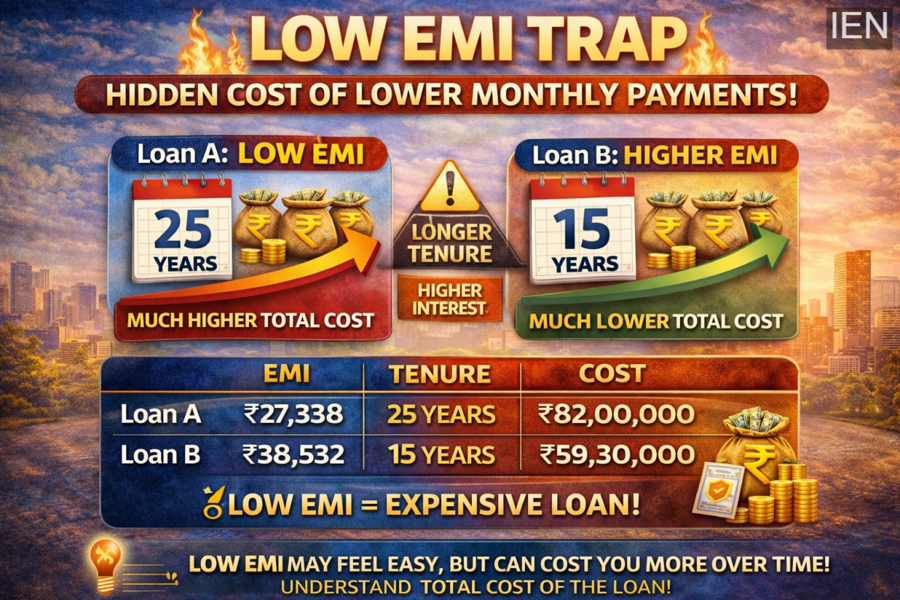
At first glance, choosing a low EMI (Equated Monthly Installment) option seems like a smart financial move. After all, a smaller monthly outflow makes loans feel more affordable and easier to manage.
But here’s the reality: lower EMIs often come at a hidden cost—higher total repayment. If not understood properly, this can quietly increase your financial burden over time.
Let’s break down how this works and how you can avoid falling into the low EMI trap.
Why Low EMI Looks Attractive
In today’s consumer-driven economy, EMIs have become a common way to finance big purchases—from gadgets to homes.
Lower EMIs appeal because:
- They reduce monthly financial pressure
- Make expensive purchases feel affordable
- Help maintain cash flow
However, this convenience can be misleading if you don’t look at the bigger picture.
The Real Math Behind Low EMI
The only way lenders reduce your EMI is by increasing the loan tenure.
👉 What happens when tenure increases?
- Your monthly EMI goes down
- But the interest is charged for a longer period
- Result: You pay more in total
📌 Key Insight:
Lower EMI = Longer tenure = Higher total interest
Why Longer Tenure Means Higher Cost
Loan interest is calculated on the outstanding principal. In longer tenures:
- The principal reduces slowly
- Interest keeps accumulating for years
- A larger portion of your EMI goes toward interest in early years
This significantly increases your overall repayment amount.
Biggest Impact: Home Loans
The effect of low EMI is most visible in home loans, which typically run for 15 to 25 years.
- A slightly longer tenure can increase interest by lakhs of rupees
- In some cases, borrowers end up paying almost double the principal amount
👉 This makes it critical to evaluate long-term costs before choosing a lower EMI.
When Is Low EMI Actually Useful?
Low EMI is not always a bad choice. It can be helpful in certain situations:
✔️ Suitable When:
- Your income is unstable
- You need better monthly cash flow
- You plan to invest the saved amount elsewhere for higher returns
⚠️ Risky When:
- You ignore total repayment cost
- You choose long tenure unnecessarily
- You rely only on affordability, not efficiency
Smart Strategy: How to Choose the Right EMI
Before taking any loan, follow these practical tips:
1. Focus on Total Cost, Not Just EMI
Always calculate the total amount payable, including interest.
2. Choose Shorter Tenure (If Possible)
Higher EMI with shorter tenure = less total interest
3. Use Prepayment Wisely
If your income improves, make partial prepayments to reduce tenure.
4. Balance Cash Flow and Cost
Pick an EMI that is affordable but doesn’t stretch the tenure unnecessarily.
Example Insight
- Loan A: Low EMI, 25 years → Higher total interest
- Loan B: Slightly higher EMI, 15 years → Much lower total cost
Even a small EMI increase can save lakhs over time.
Final Takeaway
Low EMI may feel comfortable today, but it can silently increase your financial burden in the future. The smartest borrowers don’t just look at monthly payments—they evaluate the total loan cost.
👉 The golden rule:
“Affordable EMI + Shorter Tenure = Better Financial Decision”
Disclaimer
This article is for informational purposes only. Loan terms vary by lender. Always evaluate your financial situation and consult a financial expert before taking a loan.
