
Looking to open a flour mill or a dairy business? Here's how and where to get an affordable loan..
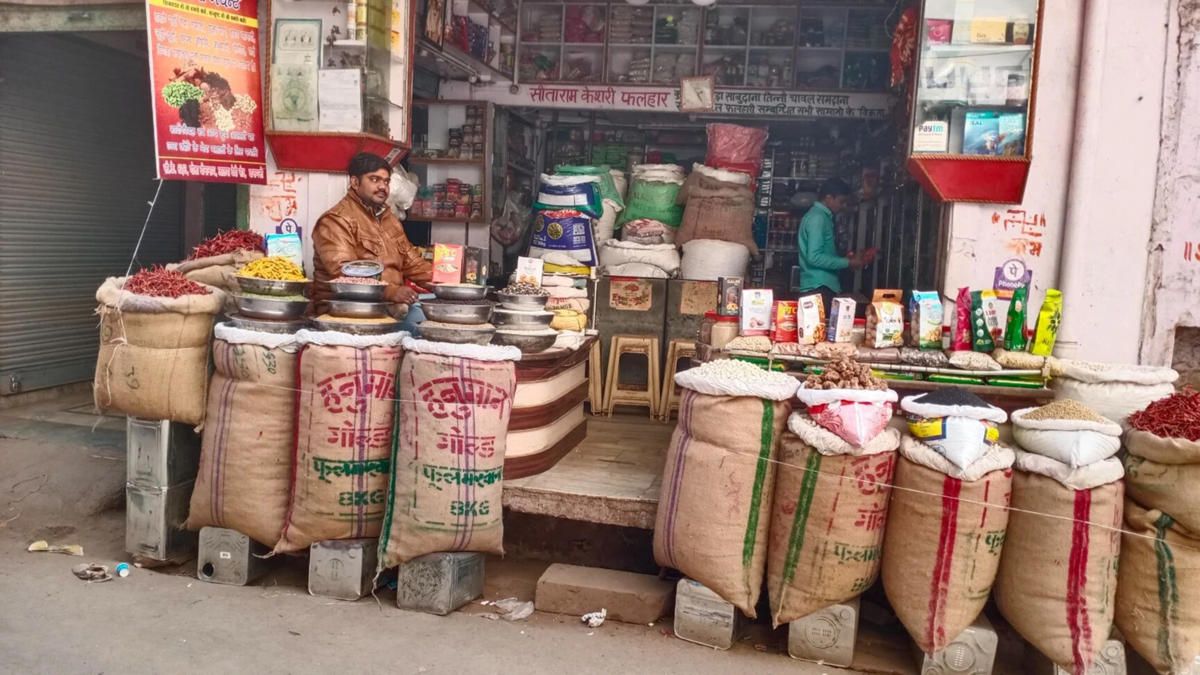
If you are considering starting a new business—such as a flour mill, a grocery store, or a dairy—a lack of capital will no longer be an obstacle. Government schemes like the Prime Minister's Employment Generation Programme (PMEGP), Mudra loans, and the AHIDF (Animal Husbandry Infrastructure Development Fund) offer loans at highly competitive interest rates, accompanied by substantial subsidies ranging from 15% to 35%. However, applying for a loan under these government schemes requires several important documents.
Both central and state governments offer excellent schemes to support self-employment and the launch of startups. By following the correct procedure and providing the necessary documentation, you can easily secure a loan at a low interest rate without any hassle. The Prime Minister's Employment Generation Programme (PMEGP), managed by the Ministry of MSME (Government of India), is a credit-linked subsidy scheme designed to create employment opportunities by establishing new micro-enterprises in both rural and urban areas. The Khadi and Village Industries Commission (KVIC) serves as the nodal agency for this programme at the national level. Loans of up to ₹50 lakh are available for the manufacturing sector, and up to ₹20 lakh for the service sector. Government subsidies range from 25% to 35% for projects in rural areas, and from 15% to 25% for those in urban areas. Applicants are required to contribute only 5% to 10% of the total project cost. Furthermore, no collateral (guarantee) is required for loans of up to ₹10 lakh. To be eligible, an applicant must be at least 18 years old. The scheme is exclusively for starting a new business, and there is no cap on family income.
How to Apply
First, visit the KVIC PMEGP e-Portal (or KVIC Online) and click on the "Application for New Unit" option. Enter your identification details and verify them using the OTP sent to your mobile number. An online form will then appear; accurately fill in your personal information, the total cost of your project, and your complete bank account details. Next, select an implementing agency—such as KVIC, KVIB, or DIC—according to your preference. Upload all required documents, including a passport-sized photograph, project report, PAN card, and proof of your educational qualifications. Once the form is finally submitted, you will receive an application ID and password, which you can use to check the status of your application at any time.
Mudra Loan
This scheme is highly beneficial for small shopkeepers, traders, and small-scale entrepreneurs. Under this scheme, one can easily obtain a loan of up to ₹10 lakh without the need for any collateral (guarantee). You can apply through the 'Jan Samarth' portal, or by visiting the website or a branch of your nearest bank. To apply, visit the Jan Samarth portal, select the "Business Activity Loan" option, and check your eligibility.
Choose the appropriate loan category based on your requirements:
Shishu Loan: Up to ₹50,000
Kishore Loan: Up to ₹5 lakh
Tarun Loan: Up to ₹10 lakh
Register on the portal by entering your mobile number and email ID. Provide the necessary details, such as your PAN card, Udyog (enterprise) registration, and your business's financial records. Once you receive digital approval, select your preferred bank. The bank will then verify your documents and transfer the loan amount into your account. AHIDF (Animal Husbandry Infrastructure Development Fund)
If you wish to set up a dairy farm, a meat processing unit, or a plant related to animal feed, this infrastructure fund offers loans at highly affordable rates, along with a 3% interest subsidy.
How to Apply
Visit the 'AHIDF Udyami Mitra' portal and select the 'Apply for Loan' option. Enter your mobile number and create an account using the OTP received. Select your category (e.g., individual entrepreneur, FPO, or company) and ensure your Detailed Project Report (DPR) is ready. Fill in all the required information about yourself and your business in the online form. Upload all necessary documents, such as your project report, land-related documents, KYC, and financial statements. Once the form is submitted, the Ministry of Animal Husbandry will conduct an initial assessment of your project; if it passes, it will be forwarded to the bank for final approval.
Documents Required for Loan Application
Identity Documents
Applicant’s PAN card and proof of residence (such as a Voter ID card, driving license, or electricity bill).
Business and Project Details
A detailed and professional project report (to be submitted to the bank). Official quotations for the purchase of plant, machinery, or equipment. An 'Udyam Registration' certificate (which can be obtained online for free).
Educational and Category Proof
Proof of educational qualification (minimum 8th-grade pass). Caste certificate. Location and bank records: a rent agreement for the shop/warehouse, or proof of ownership if the premises are self-owned. An updated bank statement for the last 6 months.
Food and Business Licenses
An FSSAI food license is mandatory for businesses related to flour mills, grocery, or food products.
Important Points to Consider
Exclusively for New Ventures
These government schemes are intended solely for those starting entirely new businesses. Generally, this subsidy is not available for the expansion of existing, ongoing businesses.
Margin Money
According to the guidelines, you are required to contribute 5% to 10% of the project cost yourself; this is known as 'margin money.' The remaining amount—up to 90%—is financed by the bank.
Mandatory EDP Training
Under the PMEGP scheme, it is mandatory to undergo Entrepreneurship Development Programme (EDP) training once a loan has been sanctioned.
Dairy and Agricultural Loan Updates
Please note that the erstwhile DEDS (NABARD) scheme has been discontinued. For small-scale dairy ventures, a 'Mudra Loan' is currently the best option, while for larger dairy infrastructure, one can avail of a 3% interest subsidy under the AHIDF scheme. However, a clean credit history is essential for all such loans. If an individual has defaulted on a previous loan, it may hinder the processing of an application for a government-subsidized scheme.
Disclaimer: This content has been sourced and edited from NDTV India. While we have made modifications for clarity and presentation, the original content belongs to its respective authors and website. We do not claim ownership of the content.
