
ITR Notice: Filed your ITR on time? You could still receive an income tax notice! Learn the right way to protect yourself..
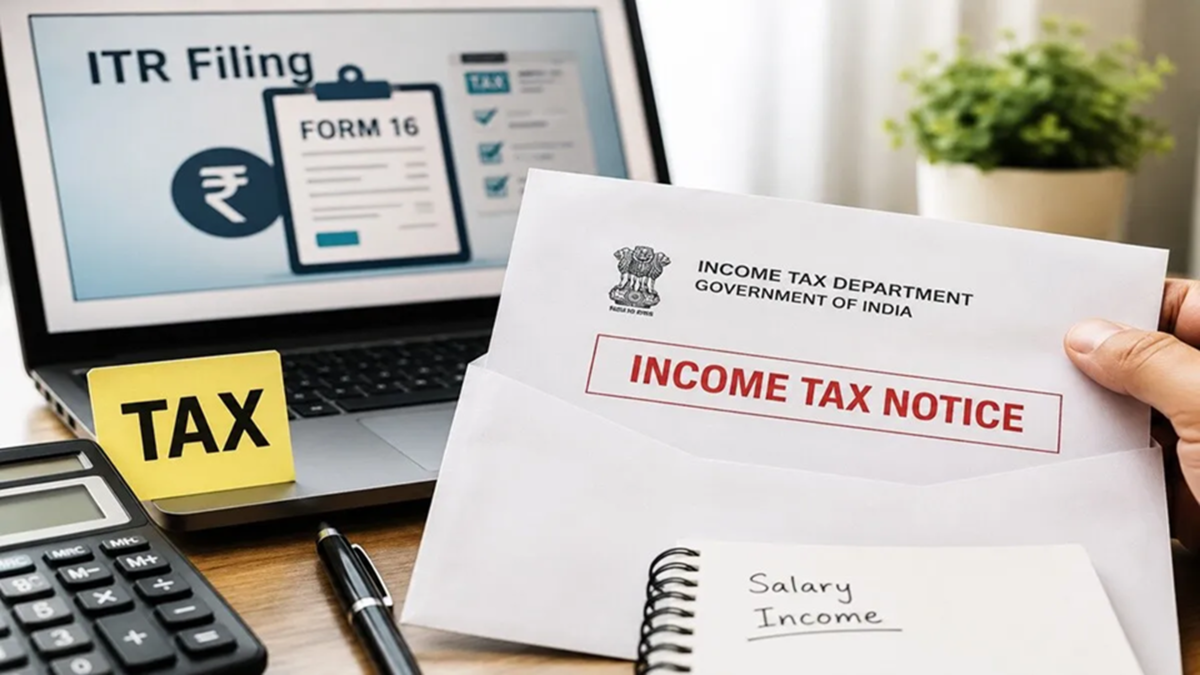
Income Tax Notice After Filing ITR: Filing your income tax return by July 31 or within the stipulated deadline does not mean your responsibility has ended. Filing the ITR on time merely meets the deadline; it does not guarantee that your return is entirely accurate and error-free.
You may receive an income tax notice if there is even a slight discrepancy between the information you provided and the data available to the Income Tax Department (such as in the AIS or Form 26AS).
Why do tax notices arrive even after filing the ITR on time?
According to experts, filing the tax return is just the first step. Here are some key reasons for receiving a notice:
TDS and Tax Credit Mismatch: A mismatch between the TDS/TCS reflected in Form 26AS or AIS and the TDS claimed in the return.
Omitted Income: Failure to disclose income such as savings account interest, FD interest, dividends from shares or mutual funds, and capital gains in the ITR.
High-Value Transactions: Discrepancies between the return and details regarding real estate transactions, high credit card bills, or large cash deposits.
Choosing the Wrong ITR Form: Selecting an incorrect form (ITR-1, 2, 3, or 4) instead of the one appropriate for your sources of income.
Incorrect Deductions or Claims: Claiming HRA, Section 80C benefits, or other tax exemptions without valid supporting evidence.
Types of Income Tax Notices
The department issues notices under various sections for different reasons:
Section 143(1) Intimation Notice: This is issued after the return has been processed. It is sent if the department detects any arithmetical errors in the calculation of your income, tax credits, or deductions.
Section 139(9) Defective Return: A notice regarding a 'defective return' is issued if information in the return is incomplete or if the wrong form has been selected. Section 142(1) Inquiry Notice: Issued when the Assessing Officer (AO) requires additional information or documents regarding your tax return.
Section 143(2) Scrutiny Notice: Issued when your return is selected for detailed examination. You are required to provide evidence to substantiate your claims.
Section 148 – Income Escaped Assessment: Issued when the tax authority has reason to believe that some of your income has escaped taxation.
Section 156 – Demand Notice: Issued if, following an examination, the department determines that you have an outstanding liability for tax, interest, or penalties.
What to do upon receiving a notice? Follow these steps:
If you receive a notice from the Income Tax Department, there is no need to panic. Follow these steps:
First, log in to the official income tax e-filing portal (incometax.gov.in). Ensure you verify the notice's DIN, the assessment year, and your PAN. Compare the issues raised in the notice with your ITR, Form 26AS, AIS/TIS, and bank statements.
If the error is on your part, file a revised return or an updated return (ITR-U) within the stipulated timeframe. If your return is correct, present your case by uploading the requested documents and evidence directly onto the portal.
Never ignore the deadline specified in the notice, as failure to respond could lead to heavy penalties, additional interest, or legal action.
Disclaimer: This content has been sourced and edited from Money Control. While we have made modifications for clarity and presentation, the original content belongs to its respective authors and website. We do not claim ownership of the content.
